Court of Appeal clears Gatwick’s northern runway: What it means for flights and noise

Key Points
- The Court of Appeal refused permission to appeal to both challengers on Tuesday (4 August), ending legal opposition to Gatwick's northern runway.
- The £2.2 billion scheme moves the standby runway 12 metres north to allow dual-runway operations, with first flights expected in 2030.
- Capacity rises towards 80 million passengers a year, adding roughly 100,000 flights and 13 million passengers.
- Judges rejected arguments on national airport policy, economic benefits, carbon and non-CO2 emissions, Jet Zero delivery risks and wastewater.
- Noise was not among the grounds heard; controls remain within the development consent order.
The Court of Appeal refused permission to appeal to both challengers of Gatwick Airport’s £2.2 billion northern runway project on Tuesday (4 August), clearing the way for the airport to run two runways from 2030.
Lord Justice Holgate and Lord Justice Dove rejected every ground advanced by local campaigner Peter Barclay and Communities Against Gatwick Noise Emissions (CAGNE), following a two-day hearing on 27 and 28 July.
The judges concluded that none of the proposed appeal grounds had a realistic chance of succeeding, finding each unarguable and adding: “Neither appeal has a real prospect of success.” The court also certified the decision as citable authority.
Because the Court of Appeal refused permission rather than dismissing an appeal, section 54(4) of the Senior Courts Act 1981 leaves no further route to the Supreme Court, ending the litigation that began when the transport secretary granted development consent in September 2025.
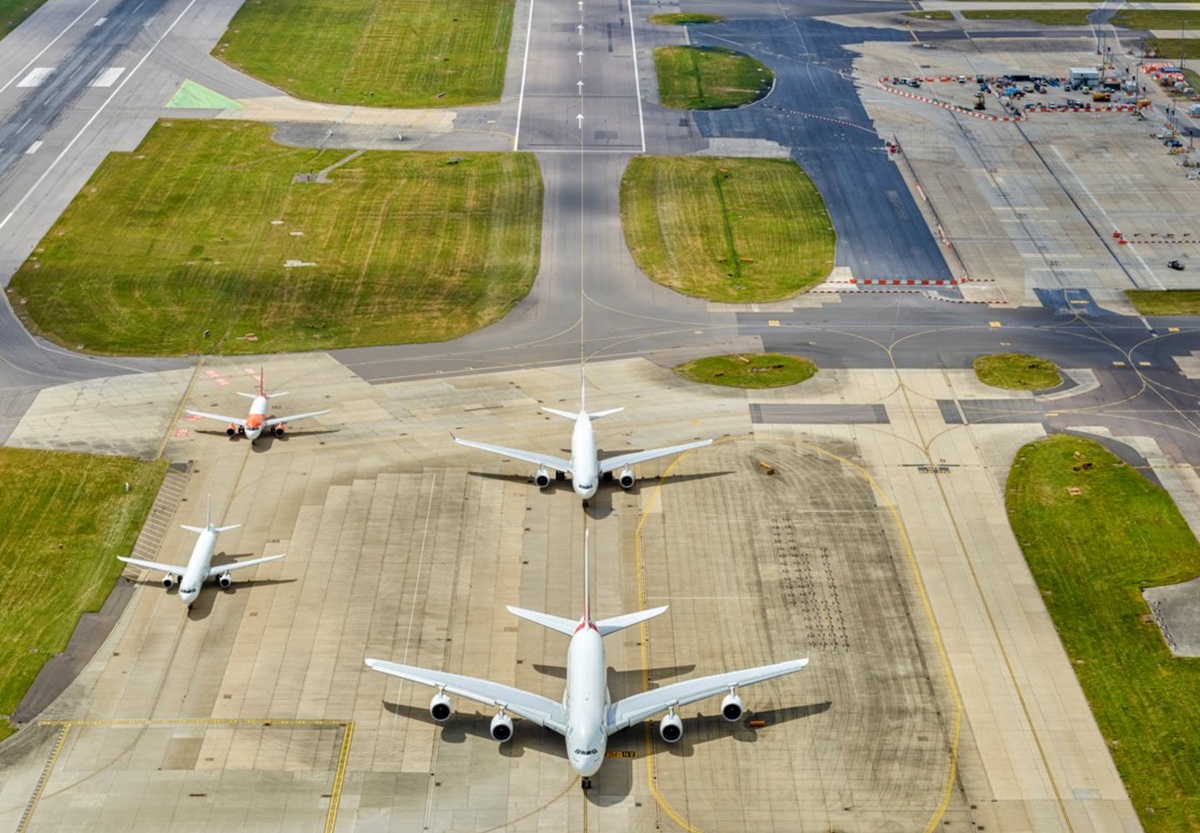
The scheme moves Gatwick’s existing standby northern runway 12 metres north so departing aircraft can use it alongside the main runway, while all arrivals continue to land on the main strip.
The development consent order also covers airfield and terminal works, new hotels and offices, additional parking and improvements to surface access. Gatwick Airport Limited is financing the project privately.
What it means for flights
First flights under routine dual-runway operations could begin in 2030, and the runway would lift Gatwick’s capacity to as many as 80 million passengers a year – up from the 42.8 million it handled in 2025.
The airport served 227 destinations with 57 airlines over the year, generating revenue of £1.13 billion and profit of £334.7 million. “This is a major milestone for Gatwick for local communities,” said Heidi Alexander, Transport Secretary, who put the gain at around 13 million more passengers and 100,000 more flights a year.
Pierre-Hugues Schmit, Chief Executive of Gatwick Airport, said the ruling confirmed the government’s September decision was taken properly and lawfully and brings an eight-year planning and legal process to a close, allowing the airport to move into design and delivery.
Gatwick has separately outlined a £1.9 billion capital programme covering terminal expansions, new taxiways, extra aircraft stands and emissions reduction at the airport.
What it means for noise and the environment
CAGNE’s grounds before the court covered greenhouse gas emissions, non-CO2 aviation effects, delivery risks in the government’s Jet Zero Strategy and wastewater treatment.
The judges found no contradiction in the transport secretary concluding both that the project carries a moderate significant adverse climate effect and that it would not materially affect the UK’s ability to meet its carbon budgets.
They also held that a qualitative rather than quantified assessment of non-CO2 emissions was a matter of judgment open to her, and described CAGNE’s concerns about sewage capacity as farfetched, accepting that Thames Water Utilities Limited, the Environment Agency and Gatwick would act rationally.
Noise itself did not form part of the grounds the Court of Appeal considered. Controls on noise sit within the requirements attached to the development consent order, and the additional movements will pass over communities in Surrey, Sussex and Kent.
“We are very disappointed with the Court’s decision,” said Peter Barclay, Chair of the Gatwick Area Conservation Campaign, who argued the expansion was not supported by government policy.
CAGNE called the ruling a reflection of changes to the legal process rather than of its case, while the Gatwick Area Conservation Campaign said it would continue using lawful channels to hold the airport to account.