The UK has spent £490 million on a Mars rover that still hasn’t launched

Key Points
- UK has invested around £490 million in ExoMars over 20 years
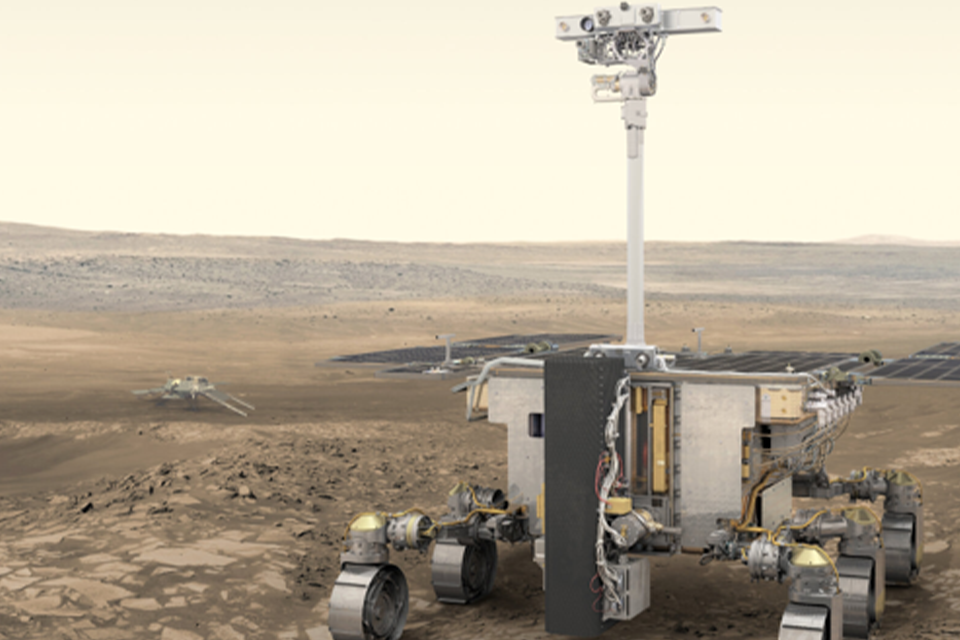
- Airbus built the Rosalind Franklin rover in Stevenage
- Launch is due in late 2028 on a SpaceX Falcon Heavy
- Rover was originally meant to land on Mars in 2021
- Russia's exit and parachute failures caused years of delays
The UK has invested around £490 million in the European Space Agency’s ExoMars programme, but its Mars rover won’t launch until late 2028.
The UK Space Agency disclosed the figure in an updated case study on Wednesday (30 September), covering two decades of UK funding for the mission.
The agency said the investment supports over 200 high-skilled jobs in the UK, alongside 31 UK scientists named as instrument team members and over 100 more working on the wider programme.
Airbus Defence and Space built the Rosalind Franklin rover at its UK facility in Stevenage.
NASA approved hardware and services for the mission in early 2026 through its Rosalind Franklin Support and Augmentation project, known as ROSA. NASA also picked SpaceX’s Falcon Heavy rocket to launch the rover from Kennedy Space Center.
The UK Space Agency said the launch is due for late 2028, with the rover landing on Mars in 2030.
Years of delays
When the rover was named after Rosalind Franklin in February 2019, ESA and Russia’s Roscosmos planned to land it on Mars in 2021.
The rover’s parachutes failed two drop tests in 2019, before the system passed its first full-scale high-altitude test in November 2020.
ESA then targeted a September 2022 launch, with the rover set to travel on Russia’s Kazachok landing platform.
ESA scrapped that launch over tensions with Russia, leaving a finished rover without a lander or a rocket.
ESA signed a deal with NASA in 2024 to replace the missing parts, including radioisotope heater units for the rover, braking engines for the lander and launch services.
Proposed cuts to NASA’s budget threatened US involvement in 2025, until ESA Director General Josef Aschbacher confirmed in November that NASA would keep its contribution.
What the rover will do
The rover will land in the Oxia Planum region of Mars, an area with clay-rich rocks dating back around 3.9 billion years.
It will drill up to two metres below the surface to collect samples, which an on-board laboratory will analyse for signs of past or present life.
UK institutions lead or partner on three of the rover’s instruments, including:
- PanCam, a panoramic camera system led by UCL’s Mullard Space Science Laboratory, which will build 3D maps to help choose drilling sites
- The Raman Laser Spectrometer, developed with the University of Leicester, Bradford University and STFC’s Rutherford Appleton Laboratory, which can identify minerals and biomarkers
- Enfys, an infrared spectrometer from Aberystwyth University, whose name means “rainbow” in Welsh
The programme’s other half, the Trace Gas Orbiter, has circled Mars since 2016 and has relayed more data than all other Mars orbiters combined.