A look at Vauxhall’s new logo – and how it has changed over the last 100 years

Key Points
- Vauxhall's new Griffin logo drops the flag for the first time.
- The simpler design looks sharper on illuminated Vizor grilles.
- It debuts on the STX Concept at the Paris Motor Show.
- The first production car with the new badge arrives in 2027.
- This is the Griffin's 13th major redesign since the 1920s.
Vauxhall has unveiled a sharper, more angular version of its famous Griffin badge.
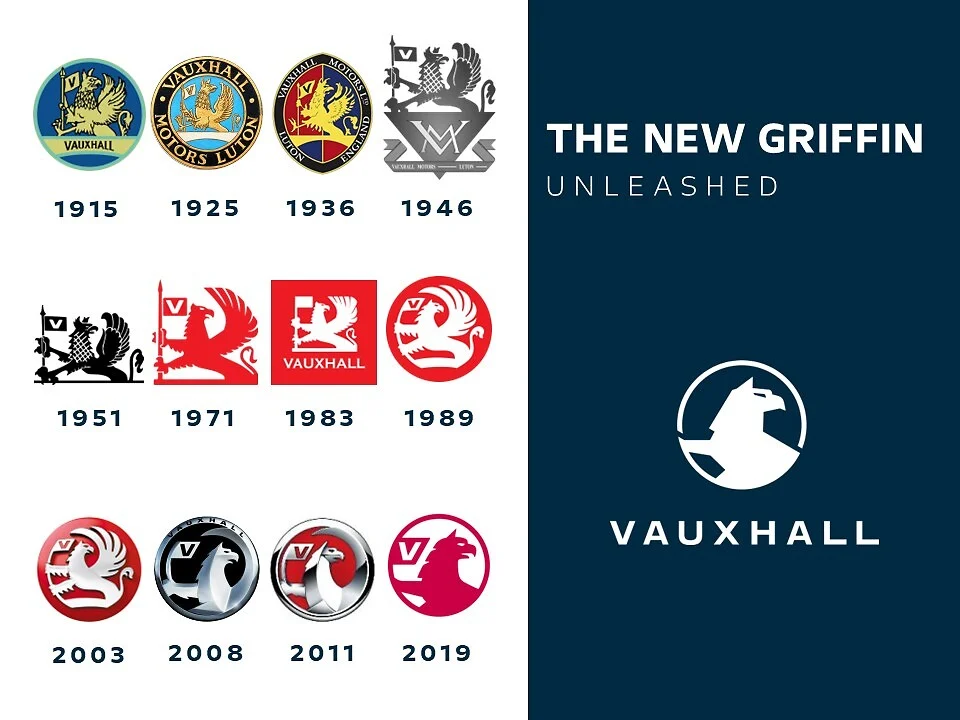
The British carmaker said the new design removes the Griffin’s flag for the first time and marks the 13th major redesign of the emblem since the 1920s.
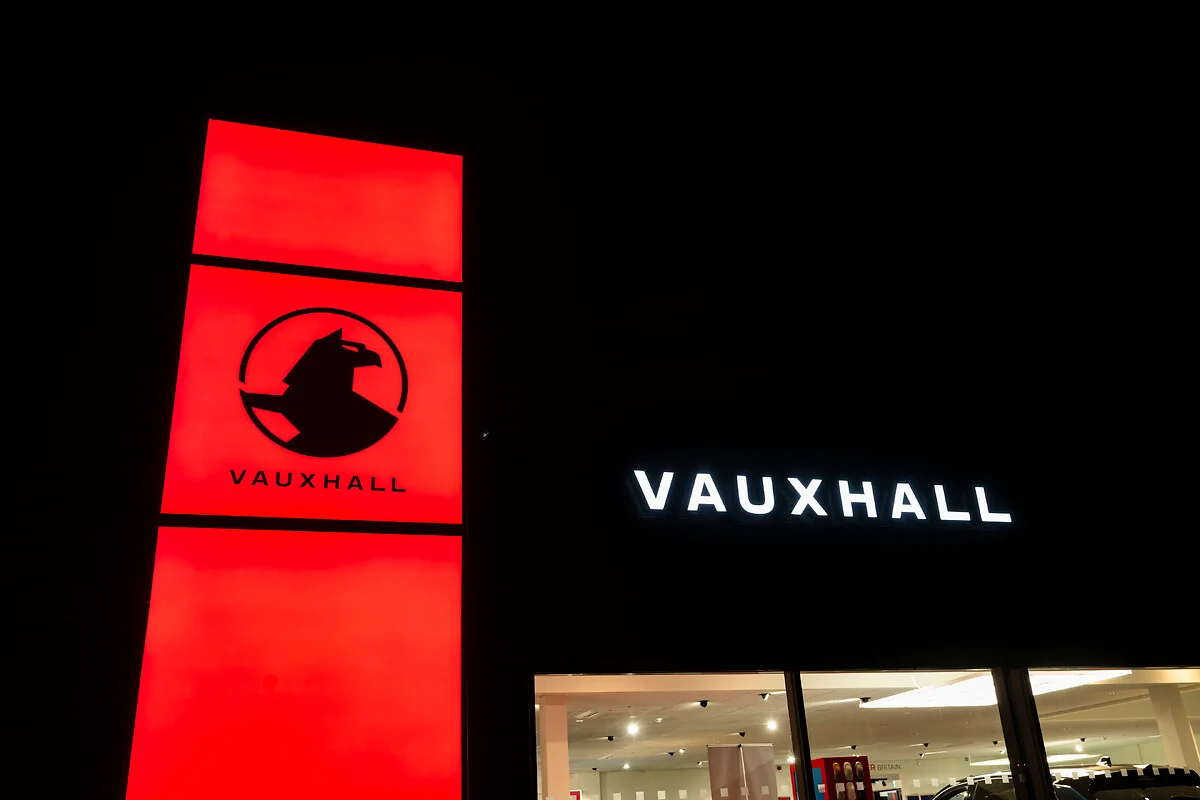
Vauxhall built the simpler logo to look sharper when lit up on its Vizor grille, a design feature it introduced in 2021 and now uses across its entire line-up.
The illuminated grille drew inspiration from the 2023 Vauxhall Experimental Concept, and the Grandland became the first production model to use it in 2024.
Vauxhall then added an illuminated logo to the New Astra in 2026 and plans to bring it to future models.
“Having adorned our vehicles in different forms for more than 120 years, we wanted to retain its essential elements while streamlining it for the next generation of electrified vehicles,” said Mark Adams, design vice-president at Vauxhall.
“As the Griffin is now illuminated on the front of our latest models, this simpler design also makes it clearer and easier to identify,” Adams added.
The new badge will make its debut at the Paris Motor Show on the Vauxhall STX Concept, an aerodynamic estate car whose name stands for Sports Tourer eXperimental.
Vauxhall said the STX Concept previews design elements that will appear on its future cars.
The logo will then appear on the next all-new Vauxhall production model, which the company plans to reveal in 2027.
Vauxhall is also rolling out a new corporate identity for its UK retailers built around the updated Griffin.
The redesign coincides with a new long-term brand campaign called Brit’s What We Do, which will later tie in with Vauxhall’s role as Team GB’s official car and van partner ahead of the 2028 Olympics.
How the badge has changed
Vauxhall built its first car in 1903, and those early models carried no manufacturer name at all.
The arrival of upright radiators brought the word Vauxhall to the front of its cars, followed by an intertwined VM logo that stayed on the radiator shell until 1913.
An apprentice named Harry Varley then won a company competition to design a new badge for the brand.
Varley based his design on a centuries-old heraldic crest, which produced the first circular Griffin badge.
The Griffin has gone through 12 main redesigns since the 1920s, and Vauxhall has updated it alongside the cars it appeared on.
A 700-year-old emblem
The Vauxhall Griffin dates back to the 13th century and the coat of arms of Sir Falkes de Bréauté, an Anglo-Norman mercenary who served as a lieutenant to King John.
Falkes received the Manor of Luton and married Margaret de Redvers, a wealthy heiress who owned property on the south bank of the Thames.
Locals first knew the land as Fulk’s Hall, a name that gradually became Vauxhall over the following centuries.
The Vauxhall Pleasure Gardens later occupied the site and used the Griffin emblem around its grounds.
Alexander Wilson borrowed the area’s name when he founded Vauxhall Ironworks in 1857, the business that would go on to build cars.
Vauxhall moved its car production to Luton in 1905, which connected the company once again with the manor Falkes held centuries earlier.
Griffins themselves are far older than the badge, with the earliest known depictions dating to around 3,000 BCE in ancient Egypt and early Mesopotamia.