The unsolved mystery in England’s greatest music


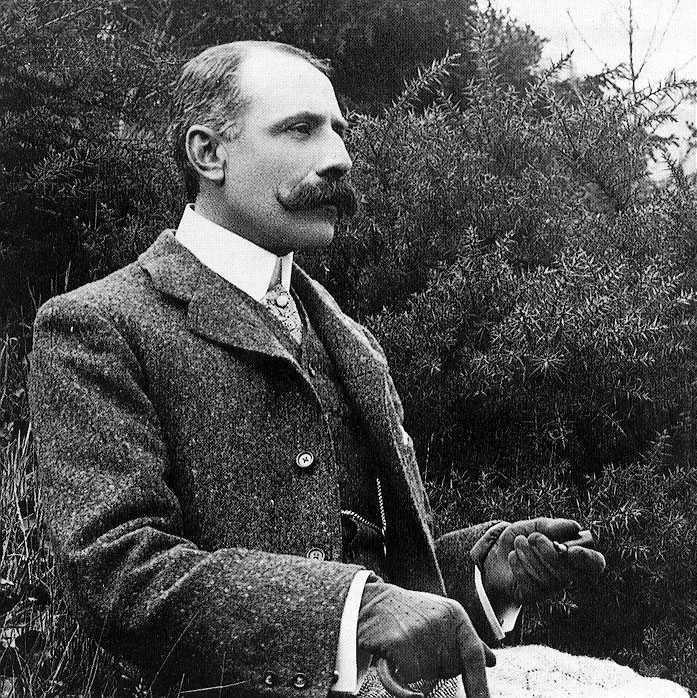
Even if you’re not a fan of classical music, if you live in the United Kingdom, you have most likely heard the music of Sir Edward Elgar.
Born in 1857, Elgar is lauded widely as one of the greatest English composers of all time, with his acclaim only grew beyond his death in 1934. Throughout his career, Elgar wrote or contributed to many of the most widely known hymns, marches, and patriotic pieces in England, intractably entwining the country’s musical identity with his music.
England has no official national anthem. Instead, it employs ‘God Save the Queen’ when it is represented as part of the United Kingdom internationally. There have been a few unsuccessful attempts to instate a national anthem for England, and where the country is represented at events as a single nation distinct from the UK, it favours a few select pieces to invoke its patriotism.
In a poll conducted ahead of the 2010 Commonwealth Games, the English public was asked which pieces should represent the country at the competition.
God Save the Queen ranked third with 12.5% of the vote, behind Land of Hope and Glory (32.5%) and Jerusalem (52.6%) – the last two are mainstay patriotic songs which regularly invoke a rousing sing-along at The Last Night of the Proms. These pieces are the most likely to be proposed as candidates for England’s national anthem, and both are in some way products of Edward Elgar’s musical genius.
Land of Hope and Glory is lifted directly from the trio section of Elgar’s Pomp and Circumstance March No. 1 in D, with lyrics added by A.C. Benson. The popular hymn Jerusalem was scored by English composer Hubert Parry and set to a poem by William Blake, but the famous orchestration of the piece was once again written by Elgar.
Despite their place as cornerstones of English patriotic music, these pieces are rivalled in popularity by another of Elgar’s most popular works: Variations on an Original Theme. This piece, also called the Enigma Variations, comprises fourteen variations on an original theme played at the beginning, each of which is dedicated to a close friend of the composer.
Easily the most famous variation is Nimrod (Variation IX, written for Elgar’s friend August Johannes Jaeger), which is often played at funerals and memorial services in England, as well as at the Cenotaph in Whitehall during the National Service of Remembrance. The piece was played as part of the funeral service for Prince Philip at Windsor Castle.
Like much of Elgar’s work, this set of variations is imbued with English patriotism, so much so that the World War II film Dunkirk featured a Nimrod-inspired score titled Variation 15 (Dunkirk), attempting to invoke the same patriotic solemnity elicited by Elgar’s original.
Elgar’s Variations on an Original Theme may have captured the hearts of patriotic Britons, but it also hides an unsolved mystery described by the title of the original theme on which all the variations are based: ‘Enigma’.
The Enigma Variations
It is from this single word written in Elgar’s hand at the top of the original manuscript that the Enigma Variations gain their popular name. Like many classical composers, Elgar had a healthy interest in cryptography and ciphers, and he often encoded hidden meanings and messages into his music.
In his Enigma Variations, Elgar hid a secret so obscure that it remains unsolved to this day, and its answer will likely never be confirmed.
Attention was first drawn to the secret of the piece in Elgar’s own programme note for the first performance of the Variations:
‘The Enigma I will not explain – its “dark saying” must be left unguessed, and I warn you that the connexion between the Variations and the Theme is often of the slightest texture; further, through and over the whole set another and larger theme “goes”, but is not played . . . . So the principal Theme never appears, even as in some late dramas – eg Maeterlinck’s L’Intruse and Les sept Princesses – the chief character is never on the stage.’
– Edward Elgar
In a later interview with The Musical Times, Elgar defined the puzzle more clearly. He said ‘it is possible to add another phrase, which is quite familiar, above the original theme…’ and that this theme never appeared in the Variations, being known only to him.
From Elgar’s description, it seems another popular piece of music can be added in counterpoint to the original ‘Enigma’ theme of the piece; creating a puzzle for listeners of his composition to solve.
A counterpoint is a melody that has its own rhythm and form, but is harmonically interdependent with another melody. Essentially, it is assumed that if you were to play the secret phrase of music that Elgar hints at at the same time as the ‘Enigma’ theme, it would ‘fit’ smoothly and sound harmonically correct.
If you listen to the Variations from the beginning, you find that, as is standard with this type of piece, the original theme is played first before the variations begin. It is presumably this original ‘Enigma’ theme that is compatible with the popular melody Elgar says is the solution to his puzzle.
The theme is the first part played, repeating once in its entirety before the first variation begins:
There are plenty of clues which may aid or hinder musical sleuths attempting to solve this puzzle, including a few quirks present on the original manuscript of the Variations, which may be relevant to the mystery or irrelevant red herrings.
At the sixth bar of the score, for instance, there is a double bar for seemingly no reason – is this a marker pointing us to the secret melody or a product of an idiosyncratic and overly annotative composer? The G, Bb, F sequence of semibreves annotated to the timpani stave may be simple direction, or a cryptic reference to the initials of the enigma’s solution.
Over the years, many solutions have been proposed to Elgar’s ‘Enigma’, including popular themes such as Auld Lang Syne, Bach’s Eine Feste Burg, Pergolesi’s Stabat Mater, Rule Britannia!, and even Twinkle, Twinkle Little Star.
However, many of these only work as a counterpoint to the ‘Enigma’ theme after much manipulation, and some were even directly refuted by Elgar during his lifetime (although even these denials can be argued and are debated hotly).
The rabbit hole of theories around the solution to the Enigma Variations is a murky spiral of musical examination – important pieces of evidence may be twisted, then disavowed, and later recovered. Theories are sometimes pulled from thin air, and animosity between competing sleuths often results in each one skewing the other’s solution to an unrecognisable degree.
Still, the mystery of the Enigma Variations continues to attract a certain kind of hubristic amateur detective, provided they bear a passing knowledge of musical theory and a proclivity for poring through old books. Naturally, I fell to researching the mystery almost immediately as I learned of it.
Sitting quietly in the British Library’s reading rooms, I rifled through 100 years of articles from the Music Review, Music & Letters, and The Musical Times – journals that interview peers and relatives of Elgar, and which provided contemporary accounts of the Enigma Variations and the quest to find its solution.
I spent twice as long bathed in the blue light of my laptop screen, as I scoured forums and blogs for convincing theories. Some seemed plausible and straightforward, others verged on conspiracy. Each time a new piece of information surfaced that I hoped would leave me more informed, I ended up more confused as to whether a solution actually existed.
The difficulty in finding the solution to the Enigma Variations is best shown through the conflict of two major theories, separated by more than a century.
One theory originates from ‘Dorabella’ herself, a contemporary of Elgar’s and the subject of Variation X, the other from Robert Padgett, a music teacher and blogger currently living in Plano, Texas.
‘Dorabella’ and Auld Lang Syne
One of the most well-known proposed solutions to Elgar’s Enigma Variations is the melody of the traditional folk song Auld Lang Syne. This was the solution proposed by Dora Penny (later Mrs. Dora Powell), to whom the tenth variation of the composition is dedicated.
She continued to believe Auld Lang Syne was the solution even after Elgar answered her proposed solution with, ‘No. Auld Lang Syne won’t do’.
One would think that having the creator of the enigma refute this solution would nip it in the bud, but Auld Lang Syne remains a popular solution to the puzzle and continues to be contemplated almost a century after Elgar’s death.
Certain aspects of this argument are encouraging; the theme that ‘goes over’ the Enigma Variations but is not played and is of ‘the slightest texture’ may be that of friendship – a theme shared by Auld Lang Syne, which is traditionally sung at New Year’s celebrations and other events to commemorate or bid farewell to past friendships.
Many of those who attempt to solve Elgar’s mystery using the tune of Auld Lang Syne have pointed out the similarity between its subject and that of the Variations themselves, as the piece is dedicated by Elgar ‘to my friends pictured within’.
This is the logic employed by Richard Powell, husband to Dora Penny and personal acquaintance of Elgar, in an article published in Music & Letters after the composer’s death. He argues that ‘…the tune to look for is a very well-known traditional song having peculiar associations with the idea of friendship’.
‘There is one song in English, and I think only one, which exactly fulfils these conditions; namely, “Auld Lang Syne”,’ he writes.
The fact that Auld Lang Syne is written in a major key and the Enigma theme begins in G minor is no real obstacle to this theory, as it was relatively common for composers to modify the solutions to these puzzles in this way to fit with the theme they are writing. Powell also claims that Auld Lang Syne is one of those rare pieces which can be shifted to the tonic minor with only minor melodic changes.
He has also accounted for the mysterious double bar at the end of the sixth bar, noting that ‘it is not uncommon for a double bar to be written between the first section and the refrain of such a tune as Auld Lang Syne’.
Musically speaking, there are two major issues with Auld Lang Syne being the mystery behind the Enigma Variations. Firstly, the initial note of Auld Lang Syne must be discarded, as it falls on the fourth beat of the bar and secondly, the first section of the Enigma theme is too long for the proposed solution. Powell explains this away as purposeful obfuscation on the part of Elgar, arguing that it would be too easy to identify Auld Lang Syne as the counterpoint if it was the correct length.
Why, though, has Auld Lang Syne remained a credible theory despite it being apparently rejected by Elgar himself? The answer lies in an article written for The Musical Times by Robert Fiske in November 1969. In his piece, Fiske revives Powell’s theory that Auld Lang Syne is the key to Elgar’s puzzle and bolsters his position with surprising evidence – Mrs. Powell’s insistence to him that she knew it was the solution despite Elgar’s denial.
Mrs. Powell, Dorabella, reportedly told Fiske that Elgar had lied to her when pressed on whether Auld Lang Syne was the secret, as he had not wanted the secret to be discovered:
‘…Richard had been right, it was “Auld Lang Syne”, and only recently had she been able to face up to the fact that, at their very last meeting, Elgar had lied to her. She had known for years that he had stopped wanting her to solve the puzzle. Looking back on that last conversation, she had come to realise that his tetchy behaviour had been quite out of character. He was a bad liar, and had shown it.’
Despite its various issues and Powell’s admission that we can never be certain of the answer to Elgar’s greatest mystery, the argument for Auld Lang Syne is among the most compelling, especially when played as Powell described in his proposed solution:
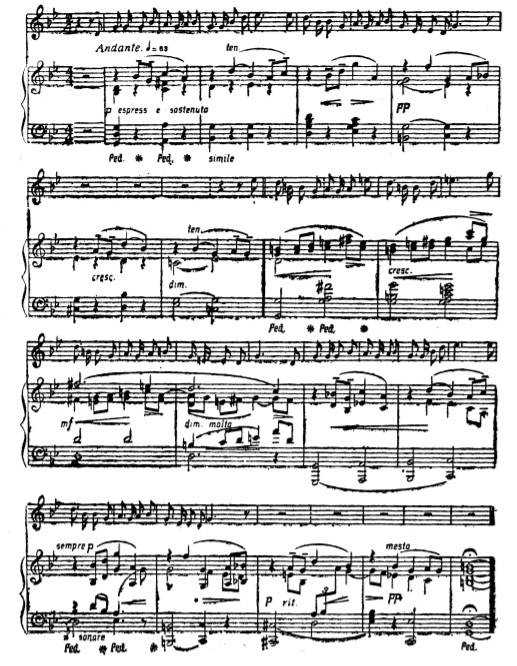
Fiske believes that Mrs. Powell’s account of Elgar’s response, when paired with additional though less firm accounts from other Variations dedicatees, solves the problem once and for all.
However, sleuths have also explored many more detailed theories, some of which lean on more befuddling and cryptographic methods to conclude with absolute certainty they have solved the mystery. For a prime example, we must lurch from 20th-century journals to the modern-day United States.
Robert Padgett’s Ein feste Burg theory
Robert Padgett, a Texas-based music teacher and member of the North American chapter of the Elgar Society, has laid out in excruciating detail his proposed solution to the theme of the Enigma Variations.
In his eBook, which comprises a comprehensive series of blog posts, he examines the most minute aspects of the Enigma score and reaches what he believes is the only possible conclusion: the hidden theme behind the Enigma Variations is Ein feste Burg ist unser Gott – a hymn first composed between 1527 and 1529 by protestant reformer Martin Luther.
Padgett is serious about the business of Elgar’s enigma, and he does not waste much time in refuting Powell’s Auld Lang Syne theory, stating that Elgar’s refutation and the inability for the tune to be imposed easily as a counterpoint over the main theme of the piece are more than enough evidence.
His approach is based on literal interpretation: the idea that the theme which ‘goes over’ the entire set of variations is friendship is dismissed immediately. Instead, Padgett has focused on finding a theme which can function as a counterpoint to the entirety of Elgar’s piece, encompassing all variations.
‘Auld Lang Syne fails to produce a complete or credible counterpoint over the full seventeen measures of the Enigma Theme, cadencing in bar 16 rather than the final bar. More fatally, it has also never been shown to play “through and over” any of the other movements,’ he writes.
‘If he were alive today, Elgar’s response to Powell’s solution would undoubtedly be, “No. Auld Lang Syne still will not do.” Powell’s flawed theory should be forgot and never brought to mind.’
Padgett’s critics would likely note that in an attempt to disprove Powell, he has forgotten to omit the first note of the tune when overlaying Auld Lang Syne on the opening theme of the variations, which Powell argues is necessary to make the two melodies fit in counterpoint.
As vehement as he is in dismissing his opponent’s interpretations of Elgar’s statements, Padgett is scrupulous to the point of concern in his quest to solve the composer’s Enigma. The key evidence that supports his Ein feste Burg theory is the ability for the piece to be played over the Variations, to varying degrees of success.
The best fit between Ein feste Burg and the Variations is to be found in Nimrod, where the theme from Felix Mendelssohn’s arrangement of the hymn fits neatly as a counterpoint:
Like Auld Lang Syne and others, this solution is not perfect, either. Ein feste Burg may fit well with Nimrod, but it does not fit as neatly with the rest of the variations or the theme played at the beginning of the piece. A level of uncertainty is innate to any proposed solution, but Padgett is insistent on his position. His theory goes beyond musicology; he also uses cryptography in an attempt to prove for certain that Ein fest Burg is the hidden theme behind Elgar’s Enigma Variations.
Padgett uses an ‘alphanumeric cipher based on Mendelssohn fragments’, linking the date published on the score to that of Martin Luther’s death, and positing that the title of the Nimrod variation relates to Ein feste Burg through worldplay that references source material as diverse as Dante’s Inferno and the Old Testament.
A detailed examination of Padgett’s theory and the cryptographic arguments that support his proposed solution is a daunting task and beyond my will. A multifaceted breakdown of his theories can be found on his blog.
A puzzle without a solution
Perhaps the only solution to Elgar’s enigma is that proposed by many theorists: if there ever was an answer to be found, it has been hidden behind so much obscurity and inconsistency that it would now be impossible to prove.
There is no truly certain way of knowing which of the proposed solutions to Elgar’s enigma is correct – whether it is Auld Lang Syne, Ein Feste Burg – or even Stabat Mater, Twinkle Twinkle Little Star, or Rule Britannia!, as proposed by other theorists.
Unlike the puzzle which shared its name, the cipher device used by the Nazis to send encrypted messages during World War II, Elgar’s enigma will likely remain forever uncracked.
At the end of the Enigma Variations, Elgar quotes an adage by Henry Wadsworth Longfellow:
‘Great is the art of beginning, greater the art is of ending.’
After poring over the Enigma Variations and the reams of century-spanning material theorising over this, as well as the original manuscript and articles by those who have argued over its solution, I appreciate this quote from a perspective certainly different to that the composer intended.
I am happy to embrace the art of ending and to surrender the mystery of Elgar’s greatest piece unsolved – although these days I often find myself humming Auld Lang Syne when I hear it played.