Navy chief says enemies will cut the UK’s undersea cables in a war

Key Points
- First Sea Lord says any future enemy would try to sever Britain's undersea cables
- Cables carry almost all UK data, transactions and communications
- Russia is "probing, testing, and mapping" critical undersea infrastructure
- Two Royal Navy warships a week now deployed to track Russian vessels
- Atlantic Bastion programme to build a defensive net of drones and sensors across the North Atlantic
First Sea Lord General Sir Gwyn Jenkins said any enemy in a future war would try to sever the undersea cables that carry almost all of Britain’s data, transactions and communications.
Jenkins delivered the speech at Admiralty House on Wednesday (16 September) at a symposium organised by the Department for Naval Research.
“The day that the UK declared war on Germany, the allies severed its transatlantic telegraph cables,” said Jenkins, First Sea Lord and Chief of the Naval Staff. “I pray it does not happen, but were we to go to war again, we know our enemies will try to use the same playbook against us.”
He said undersea cables now carry almost all the data, transactions and communications on which modern life depends, and that the seabed has become a new arena of contest.
Jenkins said cables, pipelines, sensors and energy networks are difficult to monitor, hard to repair at speed and increasingly integral to national resilience.
He named Russia as the greatest threat to UK security and said it is most active in the maritime domain, particularly around critical undersea infrastructure.
“Russia is probing, testing, and mapping,” said Jenkins. “It seeks advantage in the grey zone, particularly around the critical undersea infrastructure on which modern societies rely.”
He said Russia retains advanced submarines that are increasingly difficult to track, long-range precision weapons and specialist systems designed to operate deep underwater.
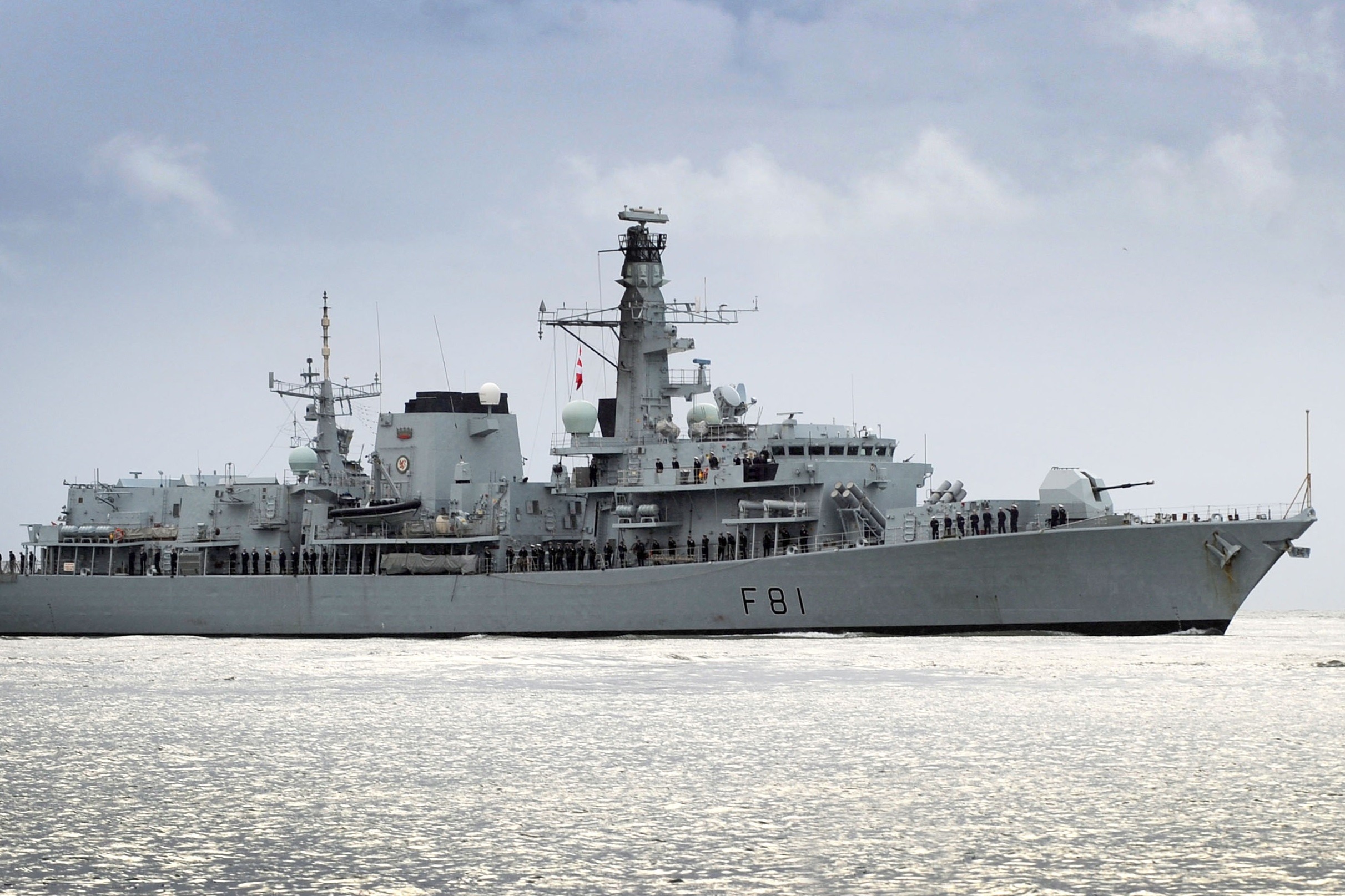
The Royal Navy now deploys two warships a week on average to monitor Russian vessels and the shadow fleet, according to Jenkins.
He said Russia considers the UK one of its greatest foes among Ukraine’s western allies and that Britain faces threats in a way it has not since the Cold War, while adding that he does not believe war is inevitable.
Jenkins said protecting undersea infrastructure rests on intelligence, industry, law enforcement and commercial partnerships as well as naval capability.
The Navy’s answer is a programme it calls Atlantic Bastion, which Jenkins described as a defensive net across the North Atlantic of crewed and uncrewed ships, drones, sensors and artificial intelligence working above, on and below the sea.
He said the programme covers both the undersea cables and the continuous at-sea nuclear deterrent, and forms part of a wider shift to a Hybrid Navy that mixes crewed warships with uncrewed escorts and autonomous sensors.
Jenkins said the public has lost sight of how much the country depends on the sea even as that dependence has grown.
“Supermarket shelves are filled, homes are heated, money moves instantly and the internet turbocharges our modern lives,” he said. “And if that defence fails, the consequences will be felt quickly in every household, every business and every department of state.”