What Canada’s associate EU membership offer could mean for the UK

Key Points
- The door is open for Canada to become an "associate member" of the EU - but what does this mean for the UK?
- Associate membership is currently undefined, but it could set an important precedent for a UK seeking stronger ties with Europe.
- Emulating Canada's position could be a way back for the UK into EU cooperation, but without rejoining the single market.
- However, the UK-EU relationship is still injured from the fallout of Brexit, and the economic factors influencing such a deal would differ substantially in the case of the UK over Canada.
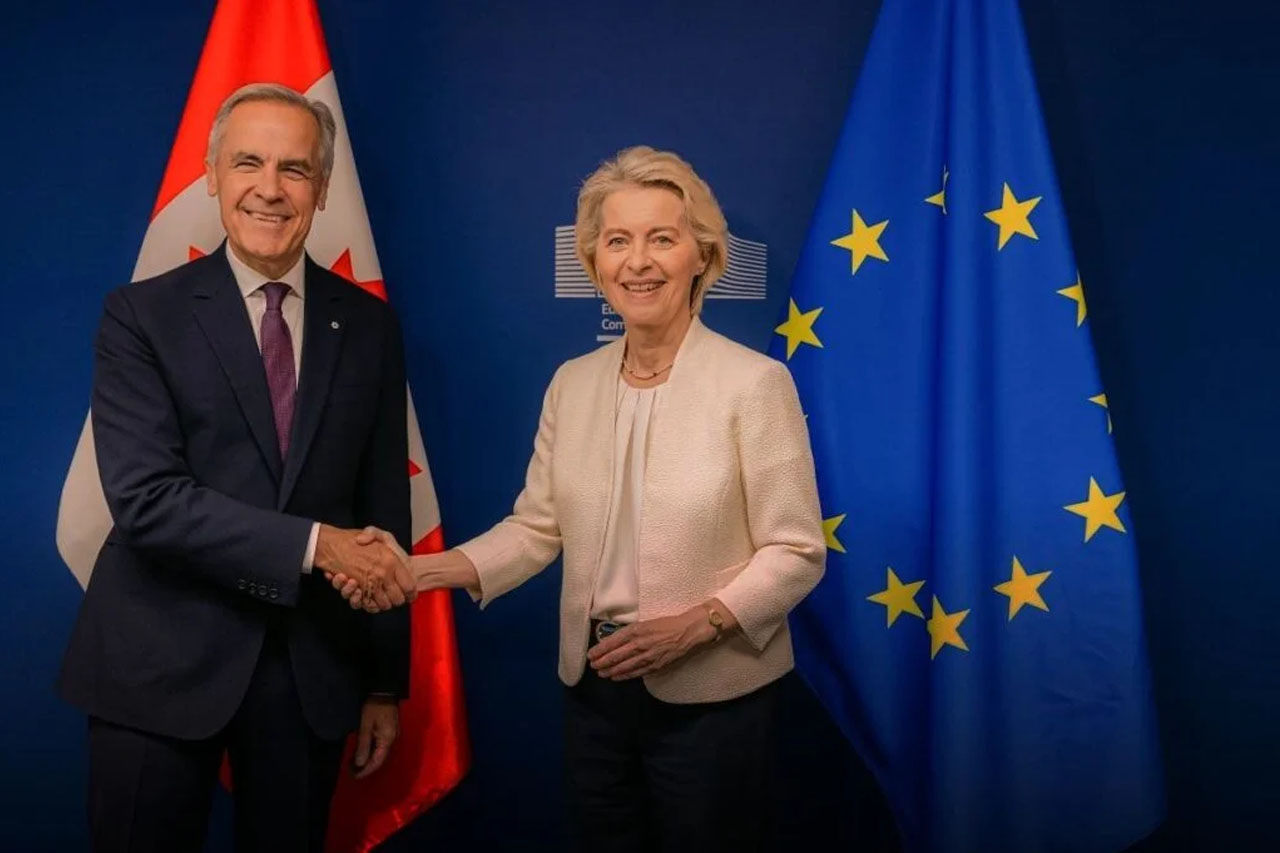
European Commission President Ursula von der Leyen has opened the door to Canada becoming the EU’s first associate member, which holds some interesting implications for the United Kingdom.
In her State of the Union address on Wednesday 16 September, von der Leyen told Canadian Prime Minister Mark Carney that both the EU and Canada must urgently reimagine their partnerships.
“So, I would like to work with you on opening the door for Canada to be the first associate member of the EU,” she told the Canadian PM.
Carney followed with his own address to the European Parliament, where he said he welcomed this ambition but has clarified that Canada will not seek to become a full member of the EU.
So what is an associate member, exactly? And what could this mean for the United Kingdom, severed from the EU in a hard Brexit and increasingly under the same US trade pressure faced by the union but without the protection of a large trading bloc?
Vague ambitions
Joël Reland, Senior Research Fellow at academic think tank UK in a Changing Europe (UKICE), notes that the increased flexibility of the EU to different types of membership has pricked up ears of those in the UK seeking a closer relationship to the EU.
He said term “associate member” is a vague one, with no technical meaning beyond implying a limit to cooperation compared to full membership of the EU.
“We simply do not know what associate membership means,” Reland said.
“Von der Leyen’s ambition to ‘to bring the relationship with Canada to the highest level possible’ is deliciously vague: it implies some limit on the extent of possible cooperation, but does not tell us where it exactly lies.”
This strengthened cooperation will likely see the expansion of the existing trade agreement between the EU and Canada, or its replacement with a far more cooperative partnership.
Reland said it remains unclear, however, whether Canada will join the single market in all or some of the areas outlined by this agreement, whether it will influence EU policy formation, or whether this will be a looser partnership based on joint initiatives and coordinated policy.
“Any deep Canadian integration into the EU market would take some very heavy work to negotiate a defined set of treaty-bound rights and obligations, and so it seems more likely that – at least in the short term – cooperation will focus on more vaguely-constructed alliances for ‘prosperity’ and ‘security’.”
What this could mean for the UK
While the nature of associate membership is currently undefined, what it does unlock is a possible path forward for the UK to a closer relationship with Europe.
Reland said that Canada’s model of associate membership could set an important precedent for the UK.
“In principle, the new models of cooperation open to Canada, with its level of economic and political integration into the EU, are also up for grabs for the UK,” he said.
“That model of membership is not likely to create a shortcut back into the single market. At least to begin with, the focus seems likely to be on looser cooperation and initiatives rather than a structured set of rights and obligations à la Norway or Switzerland.”
This could appeal to Andy Burnham’s government, Reland noted, as he believes Burnham is less interested than Starmer was in closer alignment with the EU’s single market.
However, Reland adds that none of this means UK associate membership is there for the taking now it is open to Canada, in part thanks to the damage done by Brexit to the UK-EU relationship.
“While the UK might resemble Canada legally, it does not do so politically,” Reland said.
“Canada carries a lot less baggage than the UK. It did not initiate a dramatic divorce a decade ago, before starting to plead for special access to the single market from outside, while Mark Carney is the poster boy of the emerging ‘middle powers’ movement.”
“Burnham would not have been afforded the same ovation that Carney received in Brussels this week,” he said.
The economic picture is also different, with far more UK exports reaching the EU than those from Canada, and direct competition between the UK and EU in emerging technologies is fiercer than between the EU and Canada.
“We may come to look back on von der Leyen’s address today as a major tectonic shift in the history of the EU and its approach to third countries,” Reland said.
“But, for the UK to harness that shift to its advantage, it is going to have to do a lot of work to both think about what UK ‘associate membership’ could look like, and to convince the EU that it is is an idea worth bringing to the table.”