Bank of England rate hike will make it more difficult to build data centres in the UK
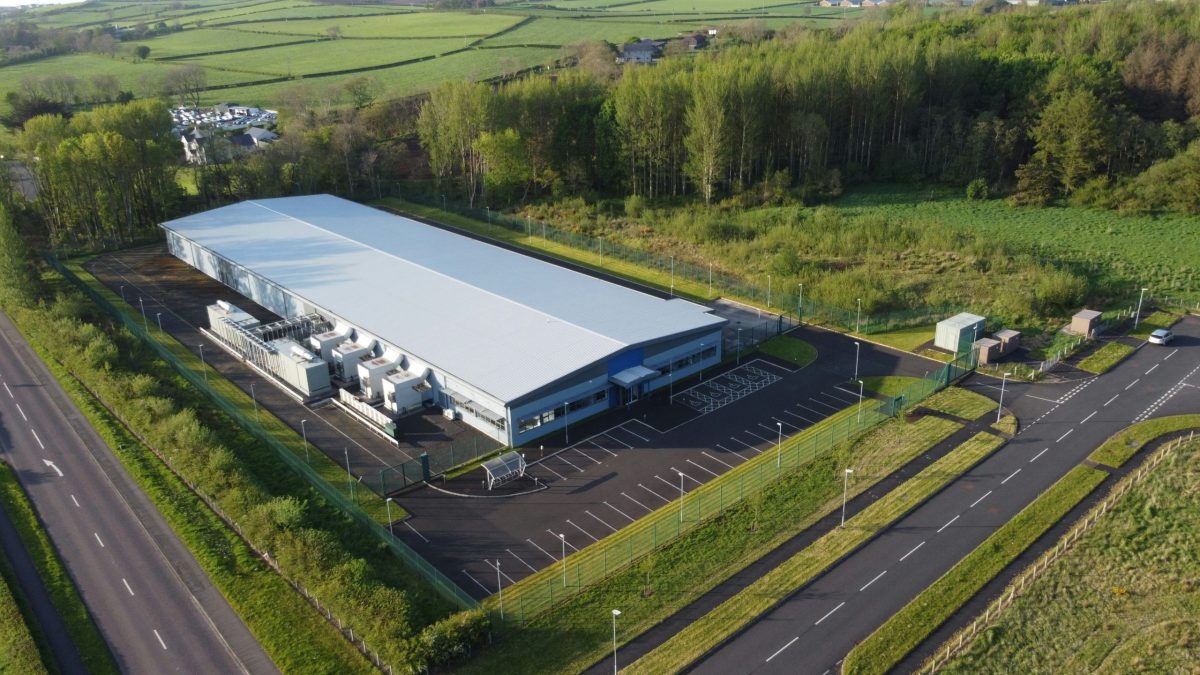

Higher borrowing costs will make UK data centres more expensive to build, and developers who borrow at floating rates would be the first to feel the pain.
This is the view of Charles Lagares (Chief Operating Officer at EBC Financial Group), who was speaking to HotMinute ahead of Thursday’s rate decision.
“Large sums for data centres are expected to come from investment funds that lend directly to companies, a type of lending called private credit.
“The Bank of England’s Financial Policy Committee (FPC), which watches for risks to the financial system, pointed to a Morgan Stanley estimate that US$700 billion of data centre spending between 2026 and 2028 would be funded this way,” he said.
Lagares noted that the FPC added that private credit and syndicated loans, where several lenders share one loan, are mostly floating-rate, so their interest costs adjust quickly when central banks raise rates.
“Even so, the extra cost of a quarter-point rise is modest: about £2.5 million a year in interest on every £1 billion of floating-rate debt. Equally, planning rules continue to be inflexible, and the speed of AI firms and local government strategy is not aligned,” Lagares said.
Costs to fall unevenly
Lagares noted that the extra cost would fall unevenly, because the largest cloud companies borrow differently from independent developers.
The FPC found that AI hyperscalers, the large cloud companies that build and run data centres, accounted for 47% of the bonds that companies sold in pounds in 2026 up to September.
A bond usually pays a fixed rate until it is repaid, and these companies can also draw on their own earnings, so a rise in the BoE’s rate reaches them slowly, Lagares said.
“Independent developers and operators that rely on bank loans and private credit would see their interest bills rise soon after a rate rise, because the rate on a floating-rate loan follows the market.
“Energy prices could add to a developer’s costs twice, through the power bill and through interest rates. UK wholesale gas prices had risen by 78% since the period leading up to the BoE’s July Monetary Policy Report, according to its September minutes, a bigger rise than the 36% for Brent crude oil. Higher gas prices can raise what data centres pay for power.”
Lagares noted that the same energy costs also feed into inflation, which can lead the BoE to raise rates and push up the cost of floating-rate loans.
“For a UK data centre, a wait for a power connection can cost a developer more than a quarter-point rise would. Interest starts on the day the money is borrowed, but the site earns nothing until it has power. Each year of waiting is a full year of interest with no income to pay for it, while a quarter-point rise adds only a small slice to that bill.”
The government’s AI Growth Zones plan, published in November 2025 to create locations where large AI data centres can be built quickly, calls timely grid connections the single biggest blocker.
It estimates that its measures together could cut the time to get power by up to five years and save a 500-megawatt data centre up to £80 million a year in electricity bills.