Sadiq Khan to bring more swimming areas to London for future heatwaves


Key Points
- London Mayor Sadiq Khan has published a new heat plan for London that includes provision for more swimming spaces and water recreation.
- The plan comes as London suffers an extreme heatwave, which has prompted a red alert from the Met Office.
- Called Heat Ready London, the plan focuses on greenifying the capital, bringing more shaded public areas, water fountains, and other changes to protect residents from heat.
- London is expected to have two or three times as many heatwaves in 20 years, making it important for the city to adapt with the changing climate.
- Khan previously committed to making London a swimmable city - an effort hampered by the sewage regularly dumped into its rivers by Thames Water.
Mayor of London Sadiq Khan plans to fund more swimming areas and water recreation spaces to London as part of a plan to make the capital more resilient and comfortable during heatwaves.
Khan announced the city’s first-ever heat plan – called Heat Ready London – on Thursday, 25 June, during a severe heatwave that resulted in the Met Office issuing a red alert warning for extreme heat in the city.
The heat plan focuses on protecting the capital from extreme heat and providing residents with access to spaces and amenities that will make warmer temperatures in London more bearable.
Part of this plan includes a drive to increase ‘urban blue spaces’ and infrastructure that gives residents the opportunity to cool down during warm days. These include swimming pools and new waterside recreation areas around the city’s waterways.
In addition to funding more swimming and recreation spaces, the Mayor’s plan also includes a drive to plant more trees, reducing the urban heat island effect which London suffers from during heatwaves.
The heat plan will focus on providing people in London with more access to water fountains and shade, as well as generally making the city greener through public spaces that incorporate green space over asphalt and concrete.
Research cited by the Mayor found that around 1 million homes in London may be at the risk of overheating, and that the capital could face two or three times as many heatwaves in 20 years as it does today.
“Rising temperatures are no longer a future threat – they are becoming a growing reality for Londoners,” Khan said.
“It is affecting our communities, from homes and high streets to schools, hospitals and care services.”
“No single organisation can address the scale of the challenge alone, so this is a call to action to our partners to use this framework to drive collective delivery so we can protect lives and strengthen the resilience of our city,” he said.
Making London a swimmable city
Just over two years ago, the Mayor committed to making London’s waterways swimmable by 2034 – an effort doubtlessly hampered by Thames Water’s predilection for dumping sewage in the Thames during rainfall.
Khan’s commitment came on the back of the revelation that in 2023/2024, Thames Water released four-times as much sewage into London’s waterways as the year before.
The Mayor has committed to the Swimmable Cities charter, joining cities such as Paris and Budapest in pledging to clean up their waterways and make them suitable for residents to swim in.
This mission has been aided by the completion of the Thames Tideway Tunnel, which has been instrumental in reducing sewage entering the river during times of overflow.
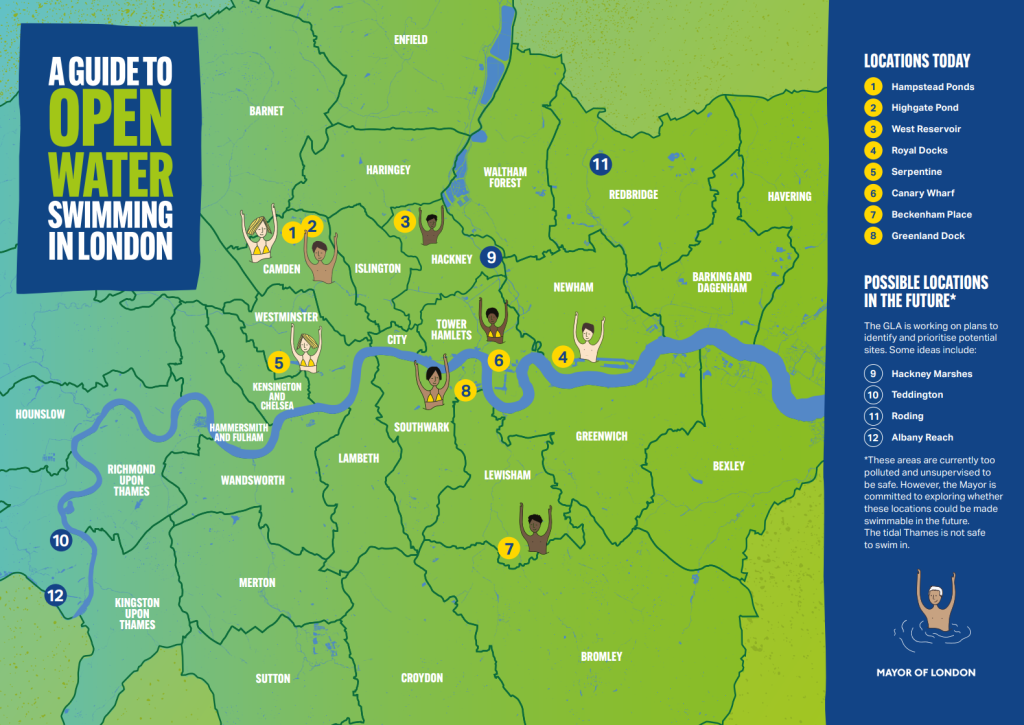
Khan also previously published an Open Water Swimming Guide for London, detailing the places where residents can enjoy open water swimming in the city.
These include the Hampstead and Highgate Ponds, West Reservoir, Royal Docks, Serpentine, and Canary Wharf.
The guide also states that the GLA is working to bring make new sites available and safe for outdoor swimming, including the Hackney Marshes.
View the full guide below.