UK population to hit 70 million by mid-2028


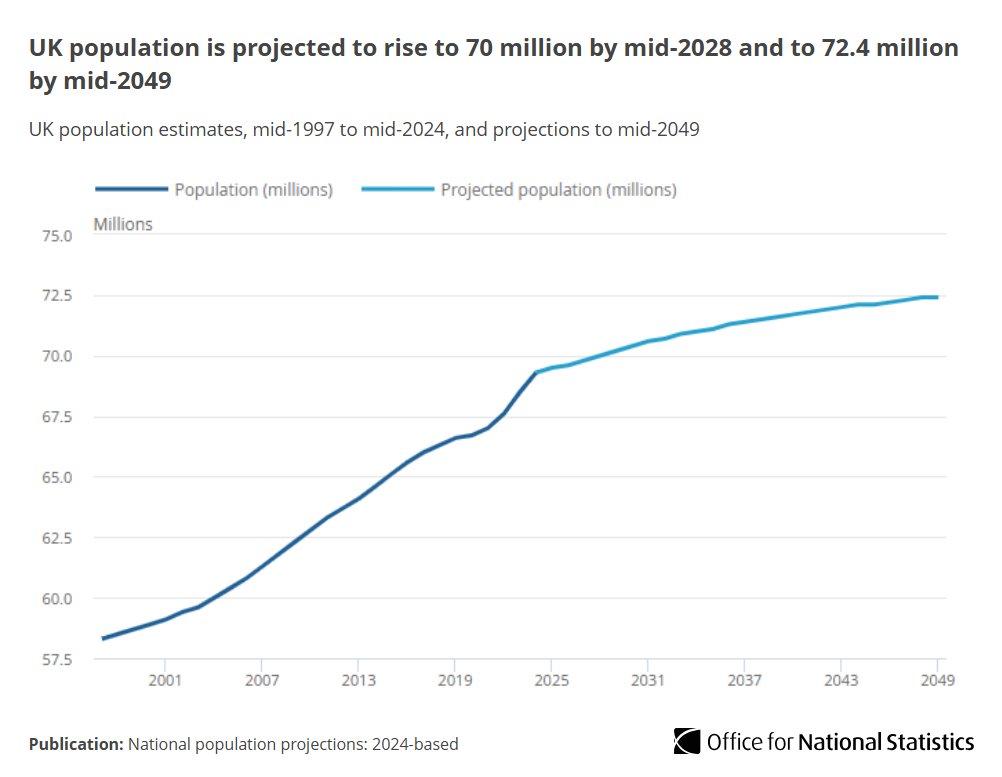
The UK population is projected to exceed 70 million by mid-2028, according to the latest 2024-based national population projections released by the Office for National Statistics (ONS) on Tuesday (28 April).
The population stood at an estimated 69.3 million in mid-2024 and is expected to reach 71 million by mid-2034, representing a 2.5% increase over the decade.
This growth is markedly slower than in the previous 2022-based projections, which had anticipated a faster rise to 72.2 million by mid-2034.
Migration drives growth as natural change turns negative
The data shows that net international migration remains the primary driver of population increase.
Over the 10 years to mid-2034, it is projected to add around 2.2 million people, while natural change (births minus deaths) is expected to be negative by approximately 450,000.
Deaths are projected to exceed births from mid-2026 onwards.
The ONS has revised its long-term net migration assumption downward to 230,000 per year, from 340,000 in the previous projections.
This reflects the sharp decline in net migration since its 2023 peak and incorporates expert advice.
The UK population is now projected to peak at 72.5 million in mid-2054 before beginning to decline, rather than continuing to grow through the 2090s as previously forecast.
England is expected to see the strongest growth (2.9% over the next decade), while increases in Wales (1.0%), Northern Ireland (0.6%), and Scotland (0.3%) will be more modest.
Ageing population puts pressure on services
The projections highlight a significant shift in age structure.
The number of people of pensionable age is expected to rise by 1.8 million (14.6%) between mid-2024 and mid-2034, reaching 14.2 million.
Meanwhile, the proportion of children under 16 is set to fall from 18.2% to 15.5% of the total population.
These demographic changes will have wide-ranging implications for planning in areas such as healthcare, pensions, education, and housing.
With the population rising by around 1.7 million in the next decade, pressure will intensify on housing stock, new developments, and urban expansion, all of which require robust fixed and mobile infrastructure rollout.