Flying 5G base stations being tested in the UK

Key Points
- Britten-Norman is preparing a BN2T-4S Islander aircraft for airborne 5G base station testing in the UK
- Advanced phased-array antenna system is being integrated, with test flights scheduled for summer 2026
- The project aims to deliver 5G connectivity to remote areas and restore communications in disaster zones
- Partnership involves World Mobile Stratospheric and BT, building on previous airborne 5G demonstrations
- The Islander serves as a testbed for future stratospheric connectivity platforms
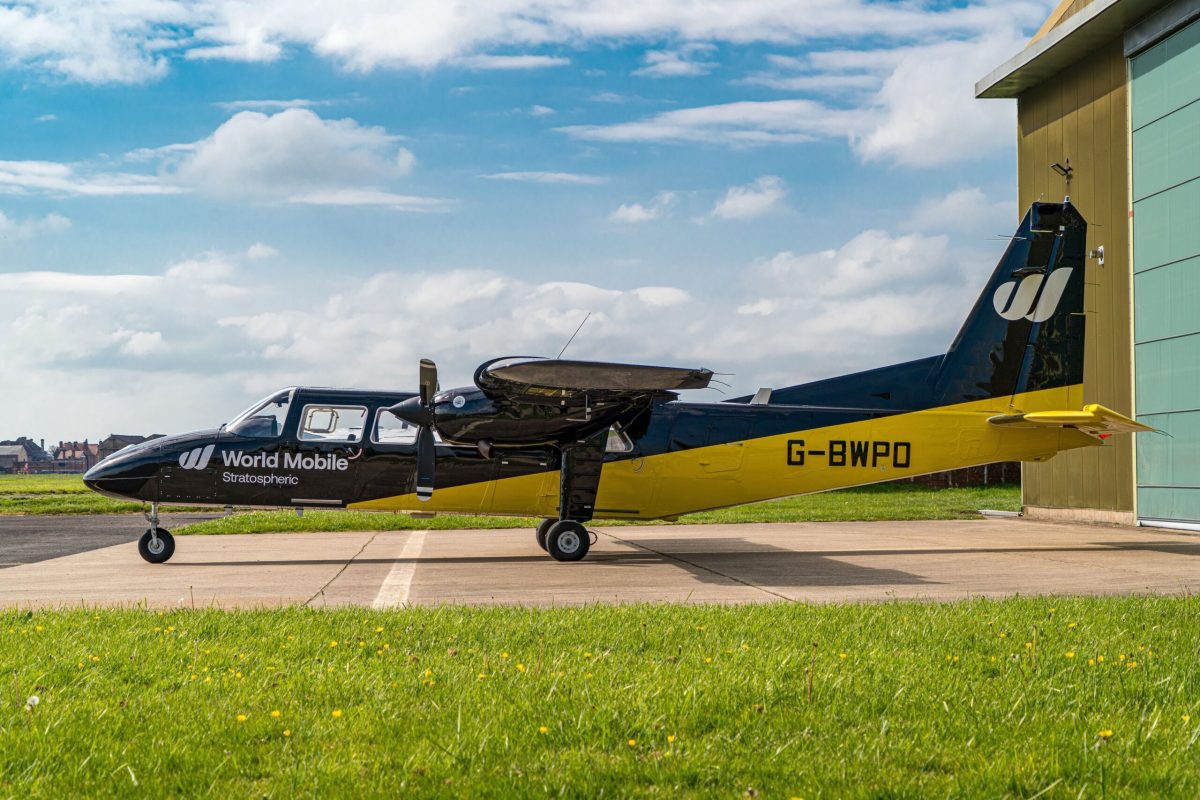
Britten-Norman has reached a significant milestone in its airborne 5G programme, preparing a BN2T-4S Islander aircraft for the integration of an advanced phased-array antenna system.
The development, in partnership with World Mobile Stratospheric, aims to demonstrate how aircraft can deliver 5G mobile connectivity from the sky.
The BN2T-4S Islander, a turbine-powered variant of the versatile British utility aircraft, is now at Britten-Norman’s MRO facility where installation of the 5G antenna system is underway.
Over 100 engineering drawings were produced to support the complex structural and systems integration. Test flights are scheduled to begin in the summer of 2026.
Connectivity from the skies
Once equipped, the aircraft will validate real-time 5G connectivity to ground-based mobile devices.
Potential applications include extending coverage to remote and underserved communities as well as rapidly restoring communications in disaster-affected regions where terrestrial infrastructure has been damaged.
Flight testing will be conducted by Britten-Norman’s team in collaboration with World Mobile Stratospheric and BT at its Adastral Park R&D facility near Ipswich.
“Reaching the installation phase is a significant milestone for the programme,” said Mark Shipp at Britten-Norman.
“The scale of the design effort reflects the complexity of integrating advanced communications systems onto the Islander platform and demonstrates the depth of engineering capability within Britten-Norman. We now look forward to progressing into flight assessment and validating the aircraft’s role in enabling airborne connectivity.”
This was echoed by Richard Deakin, CEO of World Mobile Stratospheric. “We are very happy to have reached this important milestone in our joint work with Britten-Norman to deliver connectivity from the sky – both for disaster resilience using the Islander platform and, ultimately, for wider communications coverage from our future stratospheric aircraft,” he said.
Why the Islander?
The BN2T-4S’s endurance, payload capacity, and modular design make it particularly well-suited for specialist missions like airborne connectivity.
The aircraft serves as a practical testbed for technologies that could eventually be deployed on high-altitude stratospheric platforms.
This initiative builds on earlier UK efforts in airborne 5G, including previous demonstration flights with phased-array antennas on Islander aircraft. It forms part of a broader global push toward non-terrestrial networks (NTN) to complement traditional ground-based infrastructure.
The group noted that the project is progressing in line with expectations, with further updates anticipated following the commencement of flight testing later this year.