EE dominates London borough coverage test – O2 comes last


Key Points
- Independent Streetwave survey in Southwark, London shows significant network performance gaps, with EE leading and O2 trailing behind
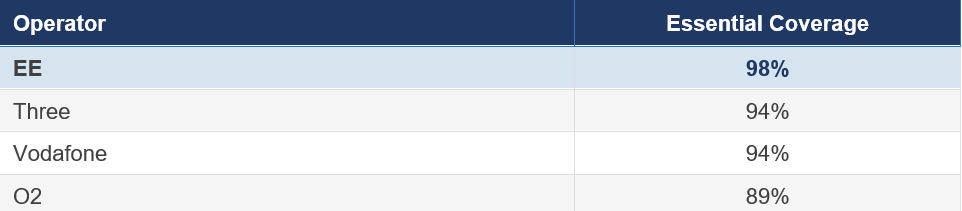
- Borough-wide Essential Coverage (1 Mbps download / 0.5 Mbps upload / <100ms latency): EE 98%, Three 94%, Vodafone 94%, O2 89%
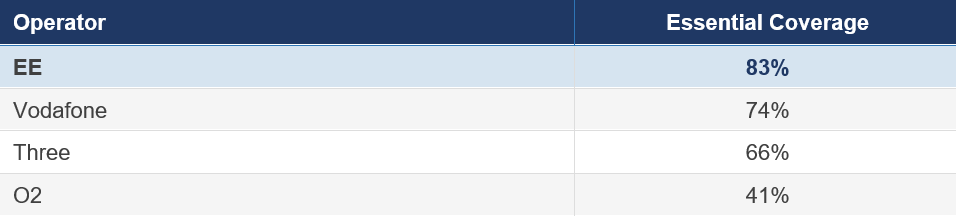
- Performance drops sharply during peak times at busy locations; O2 falls to just 41% in Dulwich Village weekend tests, while EE holds up strongly
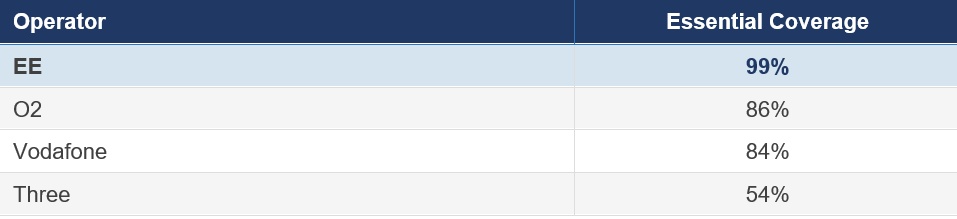
- Variations also seen at Borough Market: EE 99%, O2 86%, Vodafone 84%, Three 54%
- Southwark Council is using the findings to press mobile operators for targeted investment and has launched a free online coverage checker for residents
A new independent mobile coverage survey in the busy London Borough of Southwark has highlighted significant differences in network performance, with EE leading the pack while O2 trails behind.
The Streetwave survey, conducted in partnership with Southwark Council, measured real-world signal performance across the borough’s road network and at busy high-footfall locations during peak periods.
Testing took place between 9 and 22 December 2025 using live signal data from all four UK national operators.
Streetwave carried out the testing using its measurement units to collect simultaneous data from EE, Three, Vodafone, and O2. The borough-wide scores reflect performance across surveyed roads, while peak-time tests focused on real-world congestion scenarios.
One of the key metrics considered is Essential Coverage, which is defined as at least 1 Mbps download, 0.5 Mbps upload, and latency below 100ms. This is sufficient for basic tasks like emails, voice calls over data, and web browsing.
For essential coverage, results across the borough showed:
- EE: 98%
- Three: 94%
- Vodafone: 94%
- O2: 89%
EE clearly dominated the overall survey, while O2 recorded the lowest borough-wide performance.
The survey also looked at the difference between general coverage and capacity under load. While borough-wide figures were relatively strong, performance dropped sharply at busy locations during peak times.
Notably, O2’s performance collapsed to just 41%, meaning fewer than half of users could expect a reliable connection during busy periods.
The results for Dulwich Village during peak weekend shopping shows the following:
- EE: 83%
- Vodafone: 74%
- Three: 66%
- O2: 41%
At Borough Market, results were stronger overall, but still showed variation:
- EE: 99%
- O2: 86%
- Vodafone: 84%
- Three: 54%
This shows how local infrastructure and network investment can significantly affect user experience even within the same borough.
Southwark Council is using the independent findings to engage directly with mobile infrastructure providers and push for targeted investment where gaps exist.
Residents and businesses can check which network performs best at their specific address via a free online coverage checker published by the council here.