The UK is cutting interest rates too quickly: top economist
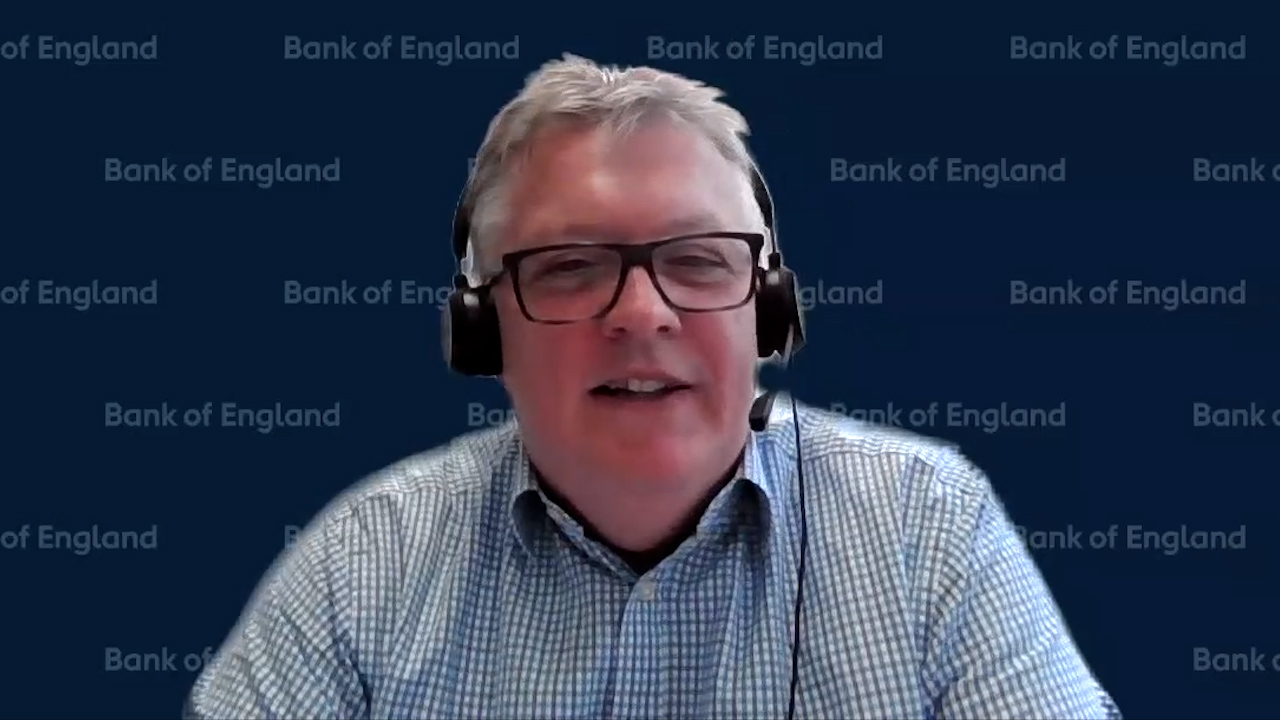

Bank of England Chief Economist Huw Pill has warned that the UK is cutting interest rates too quickly, given the country’s inflationary outlook.
Speaking at a Barclays event on Tuesday 20 May, Pill explained why he voted to leave the Bank Rate unchanged at the May Monetary Policy Committee (MPC) meeting.
Pill was one of the MPC members to leave rates unchanged. The majority of the MPC backed a quarter-point reduction in bank rate to 4.25%, with two members favouring a bigger cut.
Huw argues that, while the underlying disinflation process remains intact, the quarterly pace of 25bp Bank Rate cuts seen since last summer is too rapid given the inflation outlook, in line with his preference for a ‘cautious and gradual’ pace for the withdrawal of policy restriction over the past year.
“As I have argued consistently since last spring, I am concerned about the potential inflationary impact of structural changes in price and wage setting behaviour, following the experience of prolonged, well above-target inflation in recent years,” he said.
“Greater ‘real income resistance’ among entrepreneurs and wage earners may have sustained momentum in nominal dynamics even as resource pressures and the labour market have eased.”
This caution is based on Huw’s concern that structural changes in price and wage-setting behaviour have increased the intrinsic persistence of the UK inflation process.
He demonstrated these concerns and their implications for monetary policy using a simple model of the UK macroeconomy that incorporates – in contrast to the standard Bank of England models used to construct the baseline forecast and scenarios presented in the MPC’s latest Monetary Policy Report – a role for ‘real income resistance’ in price and wage determination. Scenarios based on this model helped develop and explain his MPC vote.
Inflation comes in higher than expected
On Wednesday 21 May, the Office for National Statistics announced that the UK inflation rate rose to 3.5% in April, following a rise in household bills last month.
On a monthly basis, CPI rose by 1.2% in April 2025, compared with a rise of 0.3% in April 2024, the statistics body said. The Consumer Prices Index including owner occupiers’ housing costs (CPIH) rose by 4.1% in the 12 months to April 2025, up from 3.4% in the 12 months to March.
It added that the biggest upward contributions to the increase came from housing and household services, transport, and recreation and culture. By comparison, the largest, partially offsetting, downward contribution came from clothing and footwear.
The increase means that the pace of inflation is at its highest since February 2024.