Scotland’s islands are still stuck without full fibre
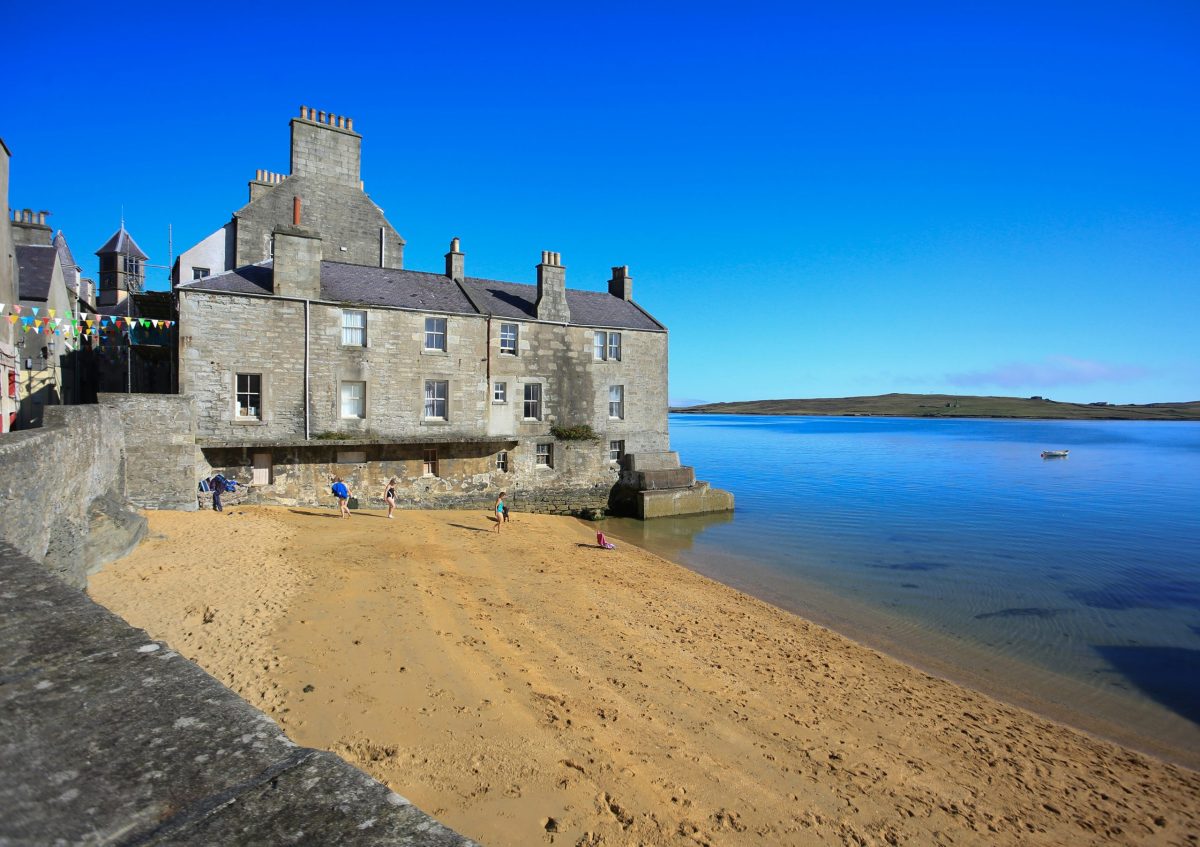

New data from analytics firm Point Topic shows that Shetland remains one of the worst-covered areas for full fibre in the UK.
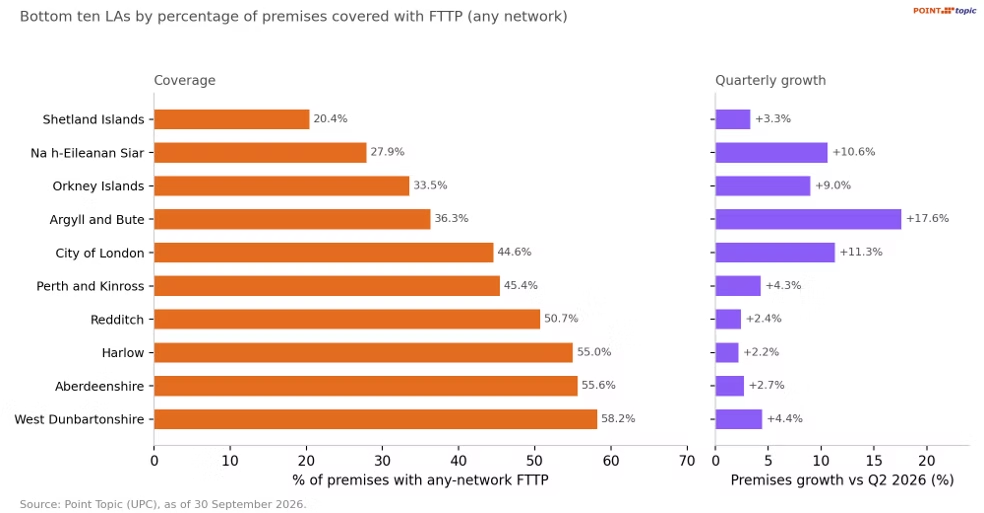
The analytics firm found that Shetland’s coverage sat at 20.3% at the end of Q3 2026, a small improvement of 3.3%. Na h-Eileanan Siar (the Western Isles) reached 27.9% coverage after its full fibre premises grew 10.6%.
Argyll and Bute recorded the fastest growth among the ten worst-covered local authorities, with full fibre premises up 17.6% to take coverage to 36.3%.
Orkney Islands grew its full fibre footprint by 9%, adding 2.8 percentage points of coverage. The City of London, the other notable name in the bottom ten, grew its full fibre premises coverage by 11.3% to reach 44.6%.
The bottom ten local authorities stayed the same as in the previous quarter, in the same order. All ten remain below 60% coverage, against a UK average of 85.5%.
Point Topic noted that small low-coverage authorities grow fastest in percentage terms largely because they start from such a low base.
The picture across UK nations continues to be uneven.
Northern Ireland leads on any-network FTTP coverage at 97.4% (little change from 97.1% in Q2 2026), ahead of Wales (89.1%, up from 87.6%) and England (85.6%, up from 84.7%), with Scotland lowest at 78.8% (up from 77.2%), weighed down by its island and rural authorities.
Scotland and Wales posted the largest gains of the four nations, at about 1.5 percentage points each.
Westmorland and Furness added the most any-network FTTP premises of any LA in Q3 2026 (7,474, taking coverage to 89.6%), followed by North Yorkshire (7,062, to 86.8%) and Redcar and Cleveland (6,747, to 68.9%).