Royal Navy launches first-ever autonomous squadron for drone boats
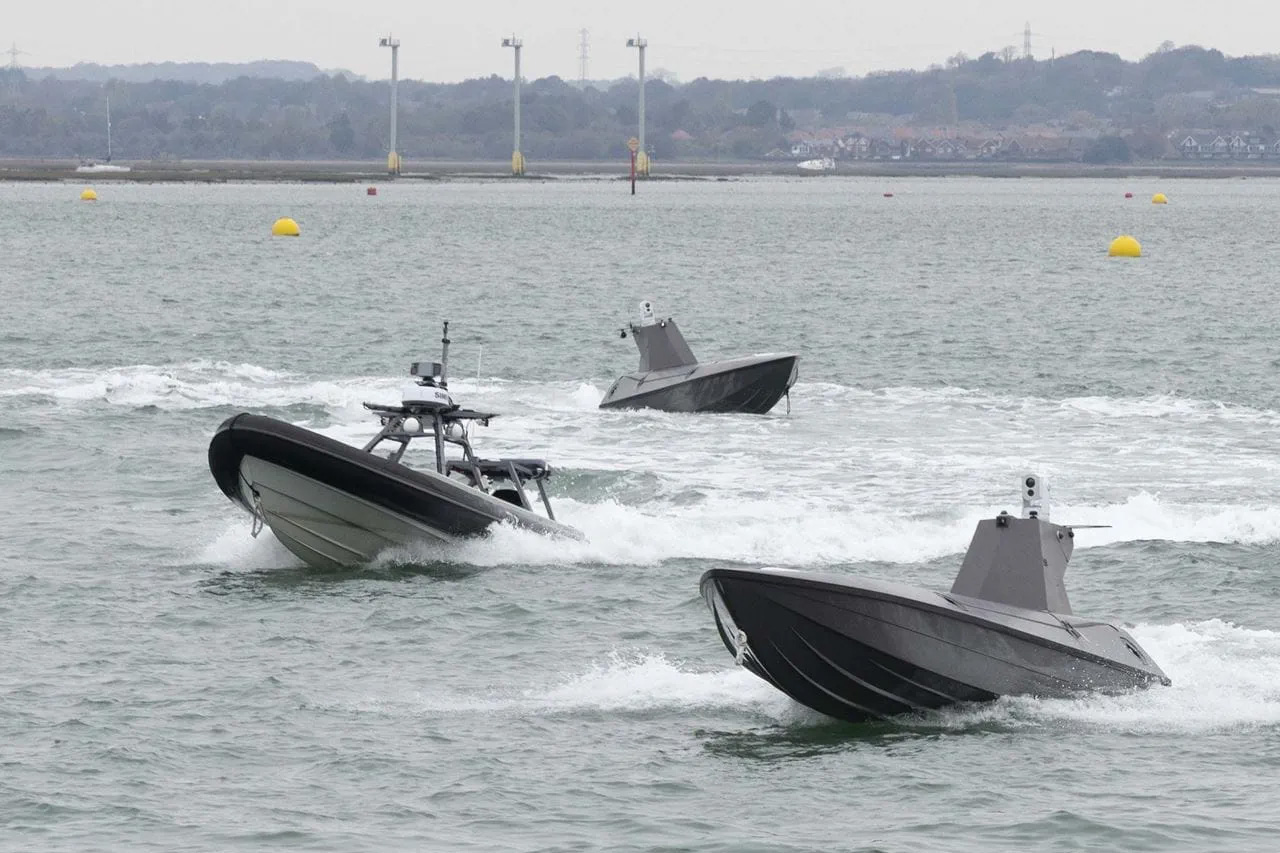

The Royal Navy has officially commissioned the 1st Autonomous Squadron, which will operate uncrewed drone boats on frontline naval operations.
During the commissioning ceremony for the new squadron, the Royal Navy demonstrated its new uncrewed surface vessels, autonomous naval drones that were maneuvered around Portsmouth Harbour under remote control from the shore.
The uncrewed vessels included the Kraken autonomous craft, which is among the latest vessels developed as part of the Royal Navy’s migration towards a hybrid crewed and uncrewed navy, where traditional naval operations are integrated with drone technology.
The Kraken is an uncrewed surface naval vessel that is capable of operating autonomously or under remote control.
It can reach an impressive top speed of 55 knots and travel for a maximum range of 650 nautical miles while remaining at sea for up to 30 days.
Like other autonomous craft being developed by the Royal Navy, the Kraken has a modular design that makes it highly adaptable, allowing it to be rapidly refit for a range of different missions.
The Royal Navy’s migration to a hybrid navy is backed by £1.5 billion in funding over four years.
The commissioning of the 1st Autonomous Squadron comes headed of a meeting between military and political leaders in Oslo which will focus on the security of Northern Europe.
“The threat environment we are facing is fundamentally different from that of recent decades. A major determinant of military power now is who can innovate fastest,” said Defence Secretary Wes Streeting.
“That’s why we are using the biggest sustained increase in defence spending since the Cold War to put the latest autonomous technology in the hands of our sailors, to help them protect our shores and those of our NATO Allies.”
“The more ready we are to fight and win, the less likely we are to have to. This investment strengthens our warfighting readiness and therefore our deterrence,” he said.


