Britain’s newest railway has no passengers because of a fight over the doors

In 2017, the National Infrastructure Commission (NIC) set out an ambitious plan for the growing ARC corridor between Oxford and Cambridge.
It proposed up to a million new homes and 1.1 million new jobs by 2050, a new east-west railway, a new expressway linking Oxford, Milton Keynes and Cambridge, and new towns along the route.
The NIC estimated this would add £163 billion to the area’s annual output by 2050 (in 2011 prices). The government backed it immediately. In the 2017 Autumn Budget, then Chancellor Philip Hammond committed to ‘building up to one million homes by 2050’.
In 2020, the Budget went further, promising a statutory spatial framework for the Arc that provides a single plan for homes, transport and the environment. A public consultation ran in 2021, and a draft framework was due in autumn 2022.
Now almost a decade later not much has shifted as apathy, bureaucracy, and broken promises in the area have barely shifted the needle on much needed infrastructure, a new report by researchers at King’s college London shows.
The failure of the east-west railway
Arguably one of the biggest walk backs has been around the planned east-west rail line, the researchers noted.
East West Rail was first promised as an electric railway in 2012, with its western section, from Oxford to Bedford, due to open by 2017.
In 2018, the government was still aiming to open the Bedford-Cambridge section by the mid-2020s. Today the full route is not expected until the mid-to-late 2030s.
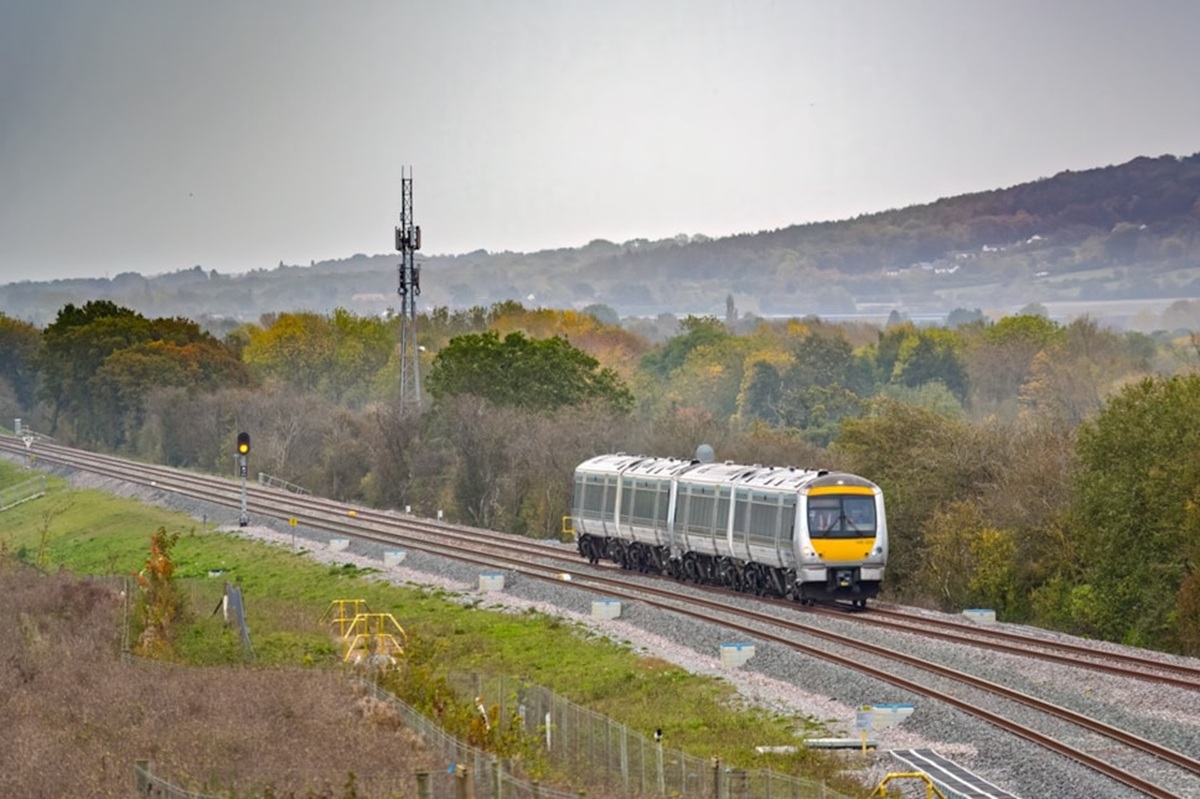
“The first stretch, Oxford to Bletchley, was completed in 2024 but still has no passenger trains running on it because of a dispute over who will operate the doors. Part of the delay came from slow decisions: the route east of Bedford was not chosen until 2020, and planning consent for it will not be sought until 2027,” the researchers said.
“Electrification was removed from the plans in 2017, and in 2021 the Government confirmed that the line would run on diesel trains instead. The 2026 plans restore it only on the Bletchley-Bedford stretch, with hybrid electric and battery trains for the rest.”
Simon Weller, Assistant General Secretary at train drivers’ union ASLEF, said his union had no objection to services starting. Weller added that a large group of drivers were waiting on the route and struggling to keep up their route knowledge.
The government previously committed to working with Network Rail and Chiltern Railways to start passenger services in December. Services remain pencilled in for December 2026, but the government has not confirmed a start date.
Trains will run between Oxford and Milton Keynes, calling at Oxford Parkway, Islip, Bicester Village, Winslow and Bletchley. Winslow is the only new station on the stretch between Oxford and Milton Keynes.
The rest of the line will take far longer to arrive. Four trains an hour are due to run between Oxford and Stewartby by the early 2030s, reaching Bedford by the mid-2030s.
The section from Bedford to Cambridge has to be built from scratch, and East West Rail will only seek planning consent for it in 2027. The researchers noted that this stretch is not expected to open until the mid-to-late 2030s.
A journey between Oxford and Cambridge by public transport currently takes up to three and a half hours. The researchers noted that East West Rail alone would roughly double the number of workers Oxford, Milton Keynes and Cambridge can each draw on.