Britain launches Titania military spy satellite into space
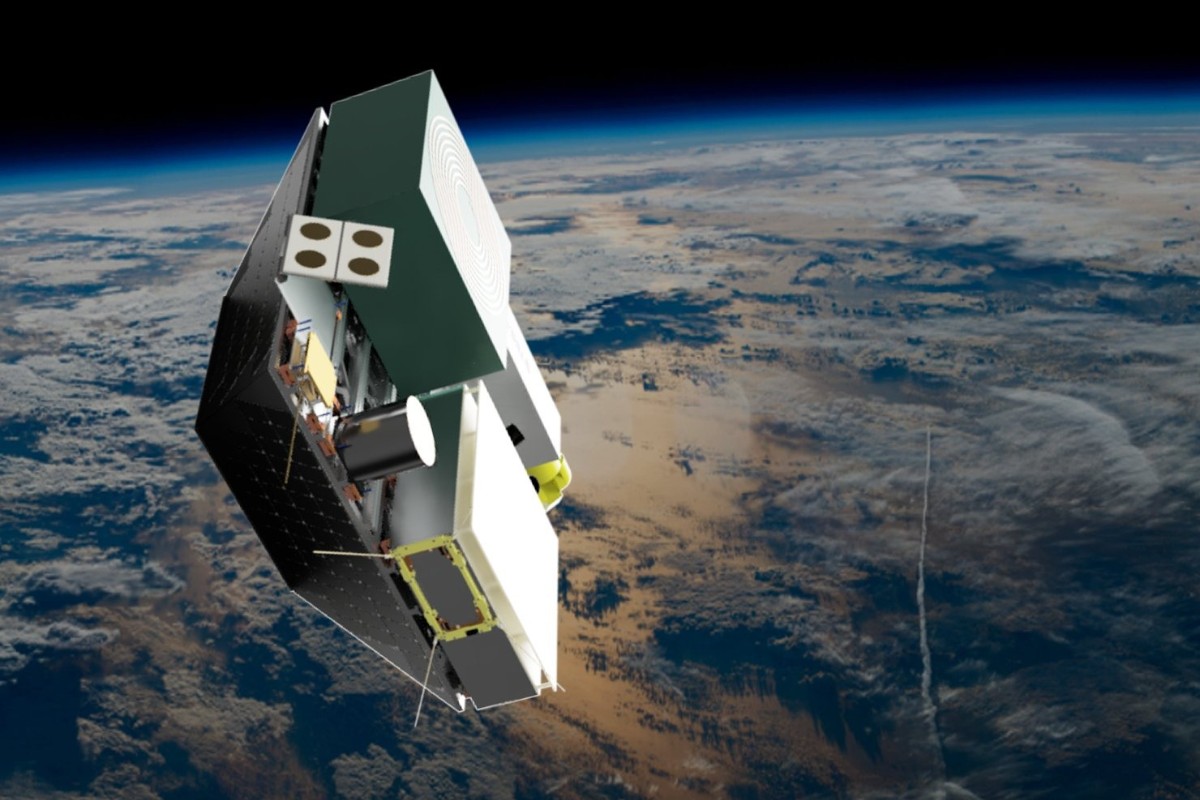

The United Kingdom has launched a new surveillance satellite into space which is designed to observe military activity on Earth.
Called Titania, the military satellite is described by the government as ‘about the size of a washing machine’ and weighs 100kg, orbiting the Earth every 90 minutes at 27,000km/h.
It was designed and built in Hampshire by the Defence Science and Technology Laboratory and BAE Systems as part of a £9.5-million contract.
This is the second UK military surveillance satellite launched into space as part of the Ministry of Defence’s ISTARI programme, with the Tyche satellite being successfully deployed to orbit last month.
ISTARI is an MOD programme to launch satellites and supporting ground systems that will expand the UK’s space-based intelligence and surveillance capabilities to support the operation of British troops around the world.
Two more satellites, Juno and Oberon, will be deployed in future as part of the programme, manufactured by SSTL and Airbus Defence and Space, respectively.
The MOD has also set up a ground-based space observation programme called Project Inaros, which will trial an advanced network of sensors that will monitor space from three sites around the world.
Under this project, three ground-based neuromorphic sensors will be deployed in the UK, Australia, and British facilities in Cyprus.
Through mechanisms that detect changes in light, the sensors could be used to detect unusual or threatening activity near UK satellites, helping UK Space Command to monitor and respond to threats to its satellites.
“Space underpins everything from weather forecasts and financial transactions to sat-navs and mobile phone connections, and it is critical for our national security and military operations,” said Secretary of Space for Defence Wes Streeting.
“Having Titania now in orbit and Project Inaros stepping up how we watch over our satellites means we can see threats sooner, making the UK safer.”
“Titania and Inaros are British-built and British-designed, backed by more than £3 billion of investment in space capabilities. That means highly skilled jobs across the UK, a stronger industrial base, and a more secure United Kingdom,” he said.