Royal Navy tests autonomous underwater gliders for hunting submarines

Key Points
- The Royal Navy tested autonomous underwater gliders as part of anti-submarine wargames with NATO allies.
- During an annual exercise hosted by the Portugese Navy, the UK Royal Navy tested the use of large sentinel gliders for hunting submarines in the Atlantic.
- These underwater gliders are capable of providing real-time data to surface vessels or monitoring stations while remaining deployed for months at a time.
- This operation comes as the Royal Navy is shifting to a hybrid force, building out a complement of uncrewed craft to complement its traditional fleet.
The Royal Navy has been testing the use of autonomous underwater gliders to detect underwater threats as part of an anti-submarine warfare exercise with NATO allies.
During the annual autonomous wargame Exercise REPMUS, hosted by the Portugese Navy, the UK’s Royal Navy tested a range of cutting-edge technologies aimed at improving its anti-submarine capabilities.
These technologies, while not yet formally adopted by the Royal Navy, will inform its future operations in defending the Atlantic as part of NATO.
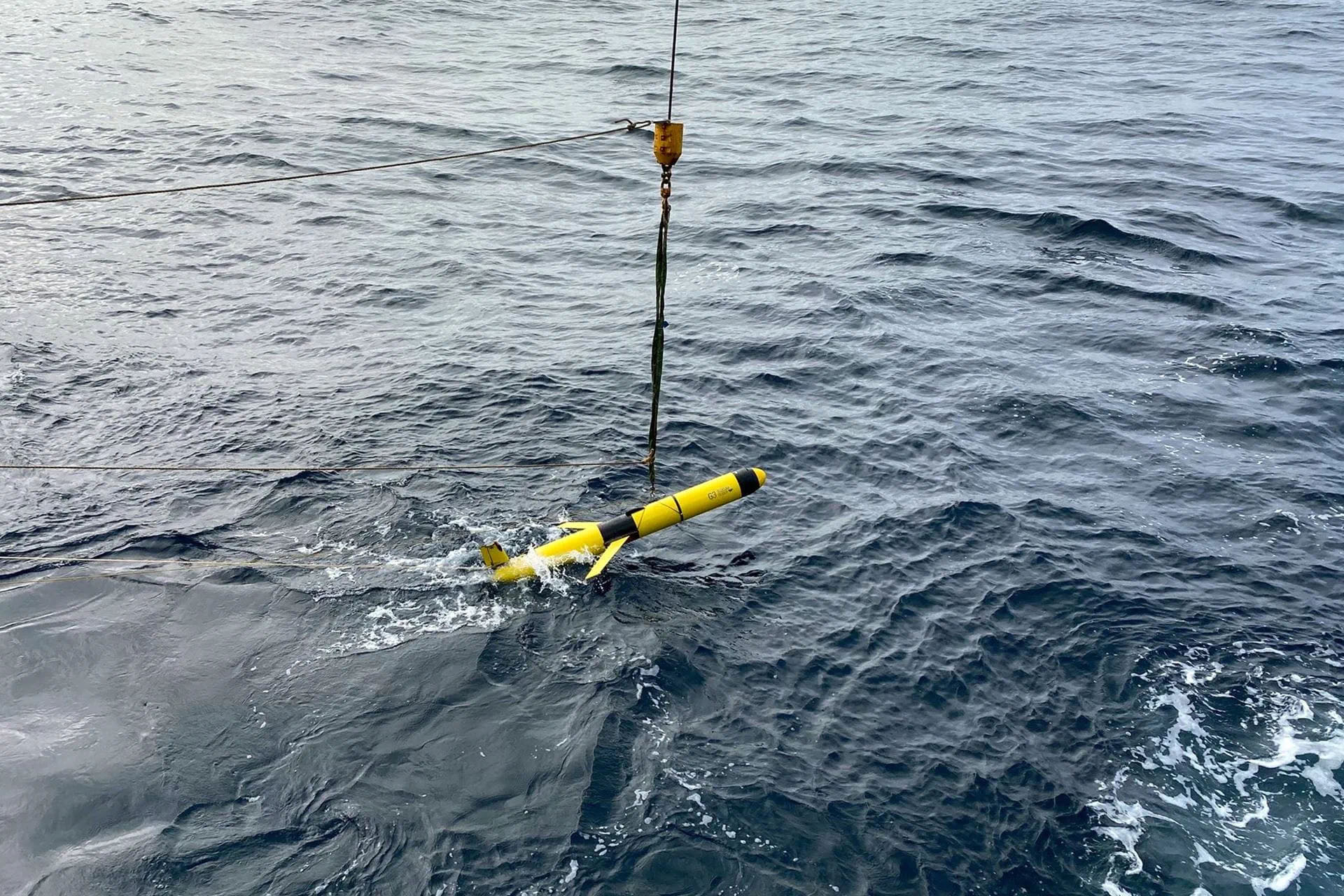
Operations included the deployment of several types of underwater gliders – autonomous craft that can stay underwater for months at a time without recharging.
Gliders deployed during the exercise ranged from smaller craft that provide real-time oceanography data to larger ‘sentinel’ gliders that use long acoustic vertical arrays to detect and track potential threats, such as submarines.
The Royal Navy also participated in exercises where squads of uncrewed surface craft were coordinated to gather acoustic data and track submarines in real time.
It said that its focus on anti-submarine warfare reflects current threats from adversaries and the need to experiment with uncrewed systems to enhance our abilities to deal with such threats alongside the UK’s allies.
The exercise was supported by five support ships from Germany, France, the Netherlands and NATO’s Centre for Maritime Research and Experimentation.
These wargames come at a crucial time for the Royal Navy, which is embracing lessons learned from observing the conflict in Ukraine and is shifting to a hybrid force of crewed and uncrewed craft to better combat modern threats on and under the seas.