New British jet engine already in mass production after just 7 months

Key Points
- MOD and UK start-up Alloyed have co-developed a family of British-built turbojet engines
- A 300N-class engine is already in serial production after completing flight testing
- A larger 1100N-class engine went from concept to flight-ready in under seven months
- The programme has created more than 60 UK jobs, with 45 more expected within a year
- More than 40 UK suppliers, mostly SMEs, make up the engine supply chain
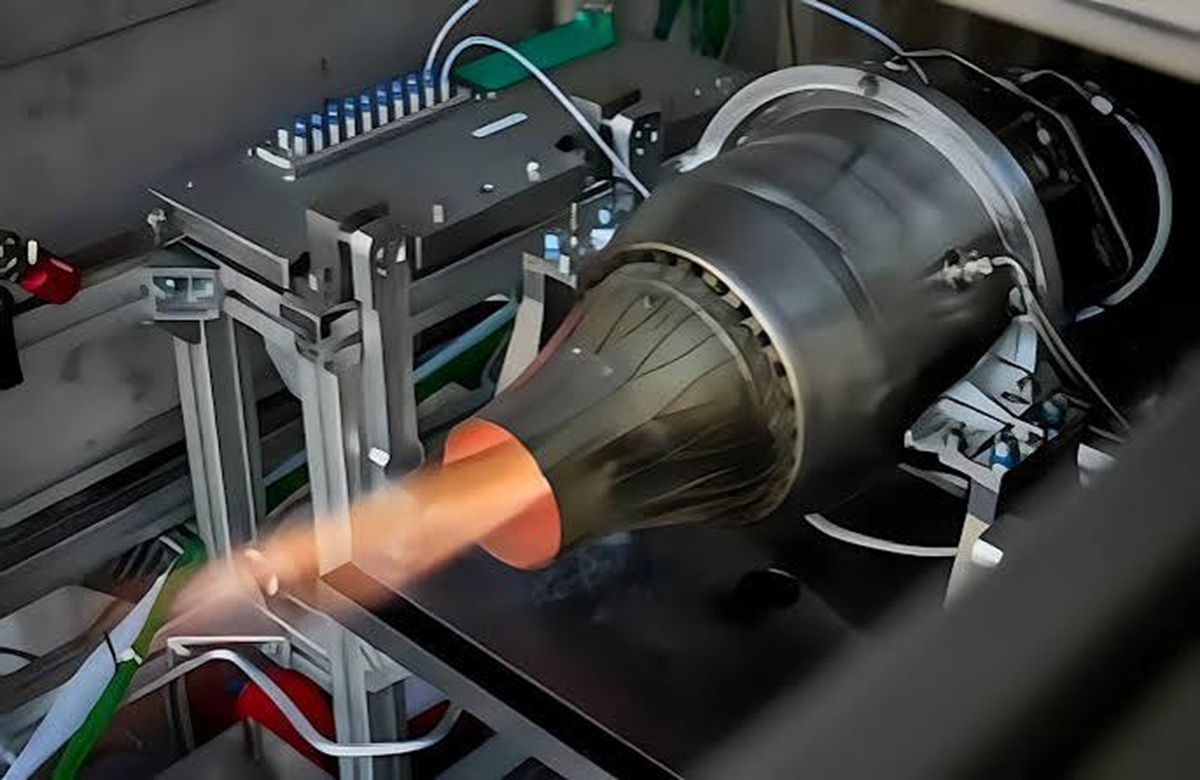
The Ministry of Defence and Oxford start-up Alloyed have put a new British-built turbojet engine into serial production, with a second, larger engine taken from concept to flight-ready in under seven months.
The MOD announced the programme in a press release on 15 September, describing it as a family of digitally manufactured turbojet engines designed, built and tested in Britain.
The engines span the 30N to 2000N thrust range and will power aircraft from small drones up to larger platforms. Two have already moved into production.
A 300N-class engine has completed flight testing and is now in serial production in the UK. The larger 1100N-class engine went from initial concept to flight-ready status in less than seven months.
MOD’s Strategic Capabilities Office leads the programme, which pairs MOD investment with matched funding from Alloyed. The department said this co-investment model speeds up development and supports the UK’s defence industrial base.
“Taking a jet engine from concept to flight-ready in just a matter of months shows how defence and industry can work together to deliver capabilities at the speed required by today’s world,” said Luke Pollard, Minister for Defence Readiness and Industry.
The programme has created more than 60 engineering and advanced manufacturing jobs in Britain so far, with a further 45 roles expected over the next 12 months as production expands.
More than 40 UK suppliers, mainly small and medium-sized enterprises, sit in the supply chain.
Alongside the engines, the programme has set up a UK-based digital design and modelling approach.
The MOD said this allows new propulsion systems and engine variants to be designed, assessed and brought into production in months rather than years.
The engines use a modular architecture, which the department said lets future improvements be introduced without extensive redesign.
“Working alongside the Ministry of Defence has enabled Alloyed to bring to bear its world-leading metals technologies to mature and demonstrate advanced propulsion systems at remarkable pace while building a lasting capability in the UK,” said Michael Holmes, Chief Executive Officer of Alloyed.
The MOD said the work delivers on a commitment in the Strategic Defence Review to strengthen the UK’s defence industry and support future exports, and that the engines could supply allies looking for sovereign propulsion.
The announcement follows a separate MOD competition, Project Callisto, which Janes reported launched on 6 July 2026 to develop affordable engines for one-way drones.
That £750,000 initial phase covers design and ground testing of four prototype engines across two thrust classes, 750N and 1.8kN to 2kN, with a contract award scheduled for 16 October 2026.