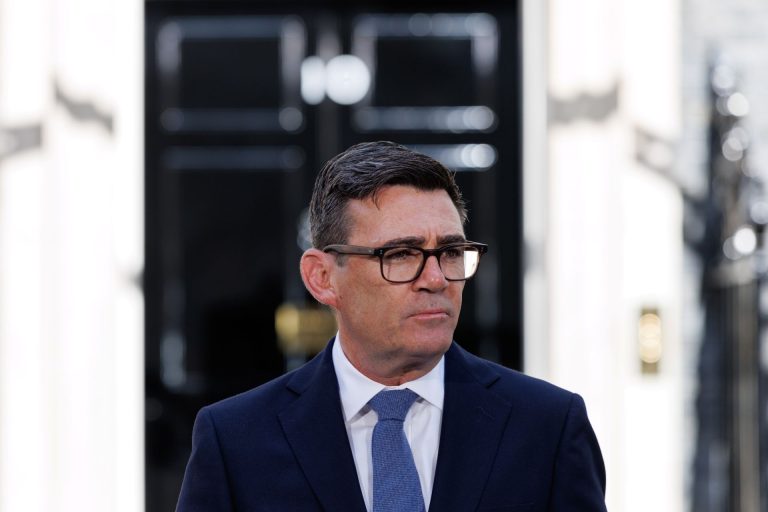
Burnham set to approve major new North Sea gas field: report

Key Points
- Andy Burnham is leaning towards approving the Jackdaw gas field in the North Sea, according to The Telegraph.
- No formal decision has been made, and ministers may delay the announcement until the heatwave passes.
- Labour figures have told the industry to expect a rejection of the comparable Rosebank field.
- Both projects sit with Adura, the Shell and Equinor joint venture.
- Energy Secretary Miatta Fahnbulleh takes the final decision on both fields.
Prime Minister Andy Burnham is minded to approve the Jackdaw gas field in the North Sea, The Telegraph reported on Monday (17 August).
Labour insiders said Burnham is leaning towards approval, though the government has yet to reach a formal decision.
One option under consideration is to hold the announcement back until the heatwave ends, as signing off a new gas field during the hot spell would be politically difficult.
Labour figures separately warned the industry to prepare for the government rejecting Rosebank, a field of similar scale to Jackdaw. Adura, a joint venture between London-based oil major Shell and Stavanger-based Equinor, is the company behind both projects.
Energy Secretary Miatta Fahnbulleh holds the final say on both fields. Fahnbulleh has opposed new oil and gas drilling in the past, but said in July she would take a pragmatic approach to the North Sea.
The announcement comes after Centrica confirmed the end of its North Sea gas production, with its Rough production consent expiring in April 2027 and its remaining producing assets sold to Serica Energy.
The company disclosed in its 2026 interim results that its current production consent with the North Sea Transition Authority for the Rough field expires in April 2027 and that it does not currently intend to seek an extension.
Separately, the announced sales of the majority of Spirit Energy’s assets signal the end of the group’s North Sea gas production.
The crisis in the Middle East that started earlier this year has had a sharp effect on global oil prices, but Britain’s businesses are reacting differently to the previous energy crisis in 2022.
Before the disruption to shipping through the Strait of Hormuz, oil prices were at around $72 per barrel. At the war’s pre-ceasefire peak, oil prices had soared to $120 per barrel.
Data from the Institute for Fiscal Studies (IFS) found that while many have drawn comparisons with this year’s energy crisis and the crisis caused by the Russia-Ukraine war in 2022, there are key differences in how businesses in the United Kingdom are responding this time around.
The IFS has compared businesses that use energy intensively with similar businesses that do not, and found that in the first two months of this year’s crisis, cost increases related to the energy shock have been concentrated in a narrow set of industries than in 2022.
Additionally, those companies exposed to the energy crisis have been more likely to raise their prices and pass on the cost to consumers, with less of them showing signs of financial distress.