73% of Brits would take £50,000 over a coin flip for £1 million


Key Points
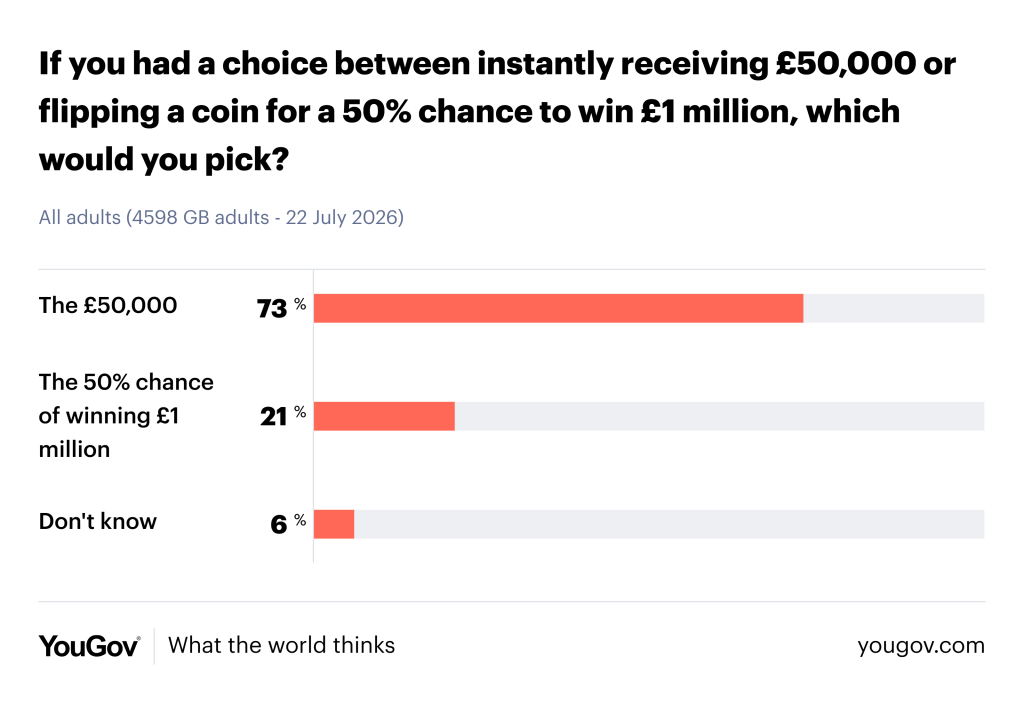
- 73% of 4,598 GB adults told YouGov they would take a guaranteed £50,000 over a 50% chance at £1 million; 21% chose the gamble and 6% don't know
- The coin flip's expected value is £500,000 — ten times the guaranteed sum
- The result illustrates the certainty effect and diminishing marginal utility described in Kahneman and Tversky's prospect theory
- A viral reply proposed selling the 50% claim for £450,000, mirroring how lottery buyout and litigation funding markets price uncertain windfalls
- YouGov fielded the question on 22 July 2026; the X post passed 25,000 likes within a day
A YouGov survey of 4,598 British adults found that 73% would take a guaranteed £50,000 over a coin toss offering a 50% chance to win £1 million.
Just 21% of respondents said they would take the gamble, while 6% said they don’t know. YouGov fielded the question on 22 July 2026 as part of its daily polling series, and the result spread quickly after the pollster posted it on X, where it drew more than 25,000 likes in under a day.
The scale of the preference is striking because the numbers point the other way. The coin flip carries an expected value of £500,000, half of £1 million, which makes the gamble worth ten times the guaranteed payout on paper.
A purely rational actor with no other constraints would take the flip every time.
But humans aren’t rational
Behavioural economists have documented this pattern for decades.
Daniel Kahneman and Amos Tversky built prospect theory around it in 1979: people systematically overweight certain outcomes relative to probable ones, a bias known as the certainty effect.
The prospect of walking away with nothing, a 50% outcome in this scenario, weighs heavier than the prospect of a seven-figure win.
Then there is the question of marginal utility. For most British households, a £50,000 changes far more than the step from £500,000 to £1 million.
It can be used to clear debt, fund a house deposit, or cover more than a year of median earnings.
The jump from comfortable to very comfortable simply matters less than the jump from nothing to something, so the guaranteed option delivers more real-world value per pound than the arithmetic suggests.
This is arguably the same instinct that keeps large volumes of UK household wealth in cash accounts rather than equities.
Sell the bet
The most-shared response to the poll identified a potential and clever workaround: sell the bet.
One reply, which drew thousands of likes, said the writer “would sell my 50% chance of winning £1 million to a private equity firm for £450,000 capturing most of the flip’s £500,000 expected value with none of the risk.
The response was largely made in jest but is a real function of markets. Institutions with deeper pockets than individuals can absorb a single coin flip because they price thousands of them, so a transferable 50% claim on £1 million would trade close to its £500,000 expected value, minus a discount for the buyer’s margin.
Lottery annuity buyouts and litigation funding work on the same principle, where individuals sell uncertain or delayed windfalls to firms that can diversify the risk away.