A financial expert explains how to turn £1,000 into £20,000


Key Points
- Reinvesting dividends can turn £1,000 into £19,545 over 20 years - nearly three times the £7,360 from share price growth alone.
- In the example, a 5% yielding share with 10.5% annual growth sees the initial 1,000 shares grow to 2,653 through reinvestment.
- Dividends and compounding accounted for 85% of S&P 500 total returns from 1960–2025 and 62% in this case.
- The effect accelerates dramatically: the last five years added over £10,000, versus just £1,000 in the first five.
- Use a DRIP for automatic reinvestment and diversify; past performance is not guaranteed.
A new analysis by trading platform AJ Bell shows that reinvesting dividends could turn £1,000 into £19,545 over 20 years, nearly three times what the same money would earn from share price growth alone.
Martin Gamble, Shares and Markets Writer at the investment platform, cited a Hartford Funds study finding that 85% of the cumulative total return of the S&P 500 between 1960 and 2025 came from reinvested dividends and the power of compounding, not share price gains.
The worked example uses a share priced at 100p paying a 5p annual dividend, giving a 5% yield. Earnings and dividends grow at 10.5% a year, and an initial £1,000 buys 1,000 shares at the outset.
By year 20 the share count has grown to 2,653 and the pot is worth £19,545, with the year 20 dividend payment alone close in value to the original £1,000. Strip out reinvestment and rely on share price growth, and the same £1,000 reaches just £7,360. Dividends account for 62% of the total return.
“Business growth compounds the value of each share (share prices follow profits over time) while dividend reinvestment compounds the number of shares owned,” said Gamble.
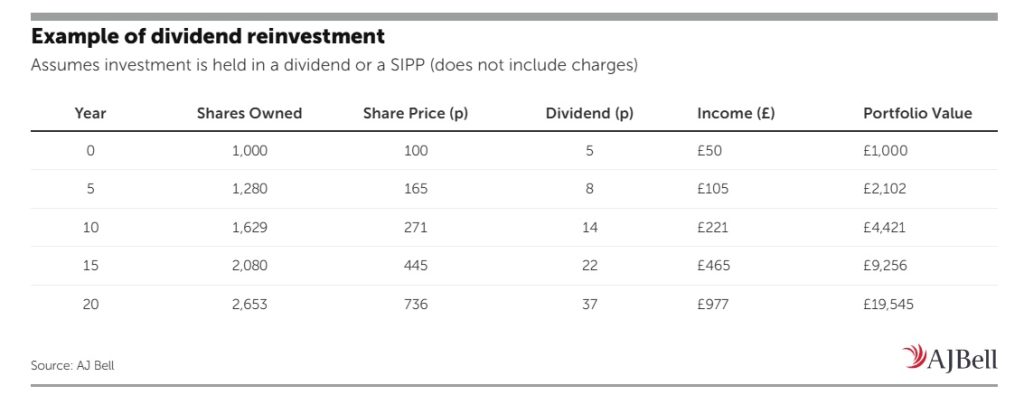
The compounding accelerates the longer the money sits. Growth in the first five years of the example adds just over £1,000 to the pot, while the same growth rate in the last five years adds more than £10,000.
“It is like a snowball rolling down a hill, the more it rolls, the greater amount of snow it collects,” he said. “A bigger snowball gathers more snow than a smaller one.”
Putting the dividends into a savings account instead of buying more shares produces a pot worth £11,509, around £8,000 less than reinvesting them in the market.
Most online investment platforms offer an automated dividend reinvestment service known as a DRIP, which removes the practical problem of trying to invest small dividend payments by hand. Dealing costs can otherwise swallow the reinvestment on smaller sums.
Gamble cautioned that the figures are illustrative and that nothing in investing is guaranteed. He added that investors should hold a balanced portfolio of companies rather than rely on a single name to reduce the impact of any one investment going wrong.
“Bank deposits are safer than investing in the stock market, but the interest rate paid can often struggle to keep pace with the cost of living,” he said.