Burberry opened 200 ‘scarf bars’ inside its stores this year – and it actually worked

Key Points
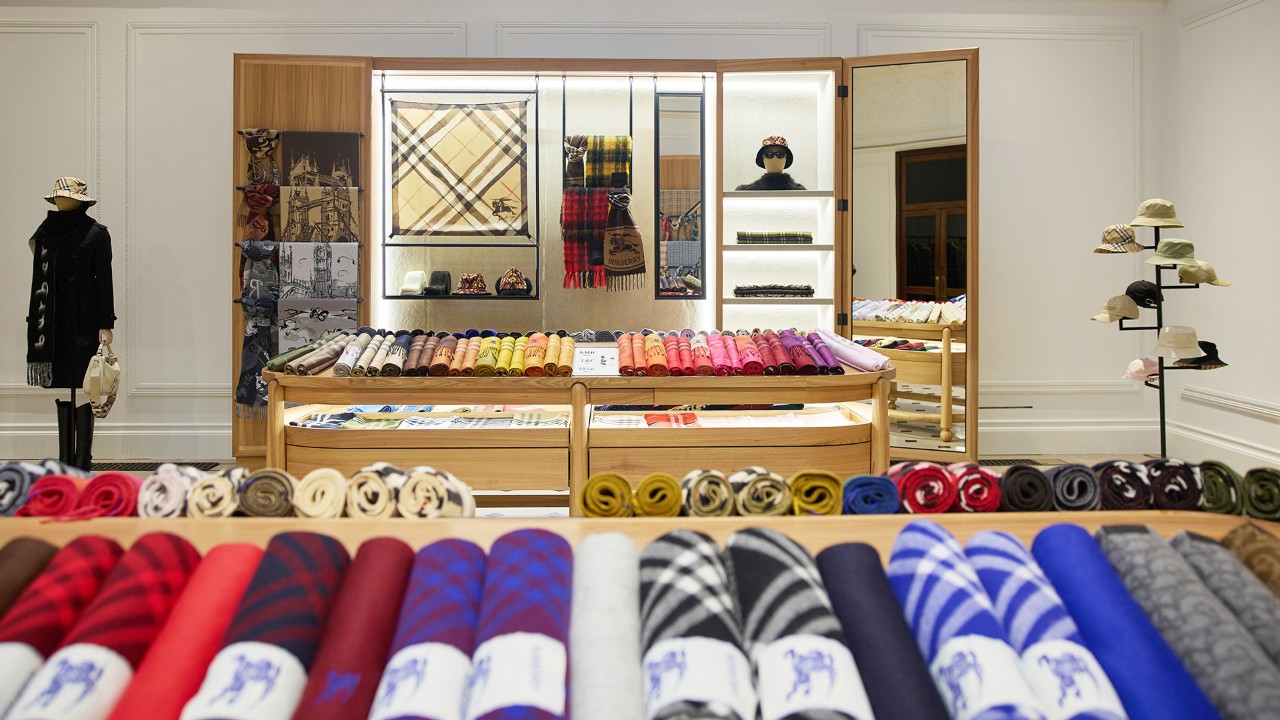
- Burberry installed 200 dedicated scarf display fixtures across its global store estate in FY26, with polo galleries and trench destinations rolling out in FY27
- Scarf sales rose double-digit in H2 and outerwear outperformed across every region
- Adjusted operating profit jumped from £26m to £160m, with gross margin reaching 67.9% (up 530bps at constant currency)
- Greater China comparable sales up 10% in Q4 on local spend; EMEIA fell 2% on weaker tourism and Middle East conflict
- Second consecutive year with no dividend despite return to profit and free cash flow of £141m, up 120%
Burberry opened 200 scarf bars across its stores in the year to March, scarf sales rose double-digit in the second half, and Chief Executive Joshua Schulman turned a £26 million adjusted operating profit into £160 million.
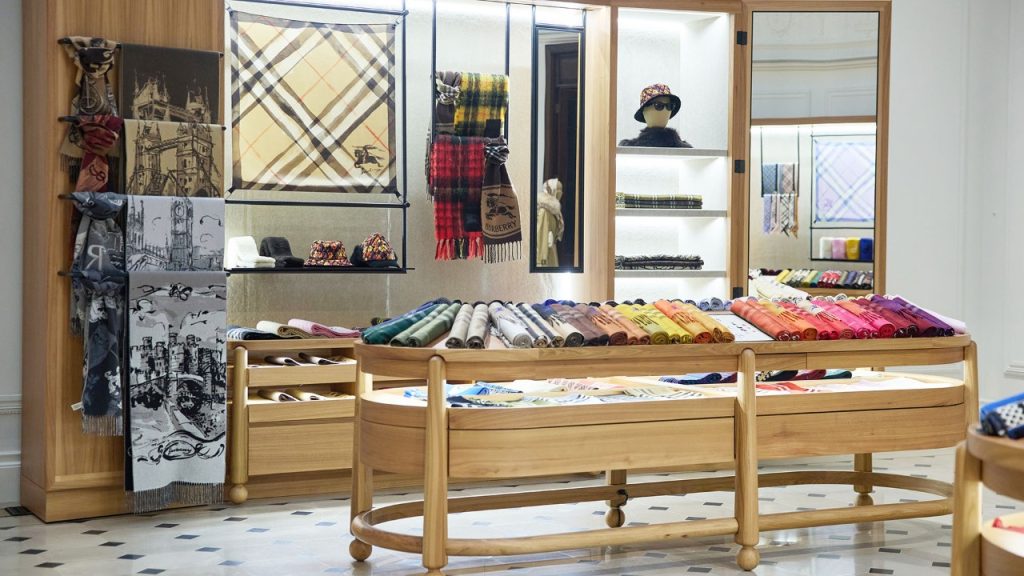
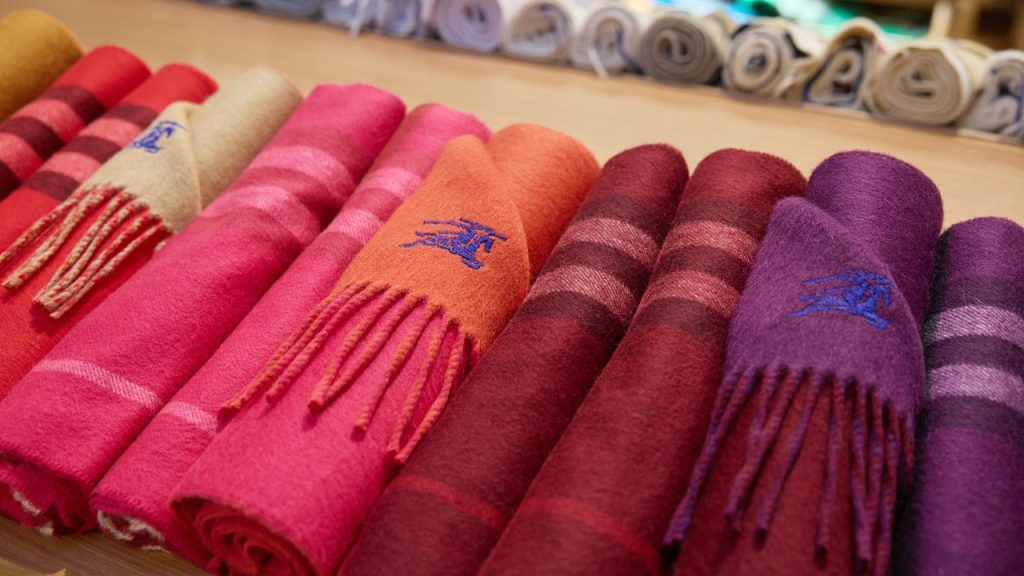
A scarf bar is exactly what it sounds like. A dedicated in-store fixture, usually front of shop, given over entirely to scarves. Burberry installed 200 of them across its global store network in the 52 weeks to 28 March 2026, and put serious marketing weight behind the idea that scarves are what Burberry does best.
The bet was simple. Put the scarves front and centre, tell customers this is the house signature, train staff to merchandise scarves across the outfit, and the basket size goes up. It worked.
Scarves were up double-digit through the second half, outerwear outperformed in every region, and the company is now rolling out polo galleries and trench destinations across its stores in the new financial year.
The same playbook, applied to other heritage categories that customers have always associated with the brand.

One fixture, a lot of cashmere, a 6x profit swing
Strip out everything else for a second. Burberry’s adjusted operating profit went from £26 million last year to £160 million this year. That is a 6x jump. Adjusted operating margin moved from 1.0% to 6.6%. Gross margin landed at 67.9%, up 530 basis points at constant currency, helped by tighter inventory discipline and the fact that the company is now selling more full-price product through stores that actually feel like they have a point of view.
The scarf bars are not the entire story. There is an £80 million cost-out programme that landed this year, a deliberate decision to keep marketing spend high while cutting elsewhere, and a recovery in China I’ll come to in a moment.
But the merchandising rethink is the bit that catches the eye because it is so cheap and so obvious. If you sell luxury goods, sell the thing customers know you for, and sell it loudly.
China is back, EMEIA is wobbling
The headline regional number is Greater China at +10% comparable sales in Q4, up from a 5% decline in Q1. Local spend is driving it, and the rebound has put Asia broadly back on the map for Burberry after a brutal 18 months. South Korea was up 13% in Q4, holding the pace from Q3, supported by Chinese tourist traffic returning.
It is not all neat. EMEIA went backwards 2% in Q4, with Burberry pointing to weaker tourist activity and the impact of the Middle East conflict. Japan was down 6% as Chinese tourists stopped showing up in the same numbers. The Americas, though, came good: +10% in Q4 on local spend, the biggest sequential improvement of any region in the business.
The dividend is still off the table
Here is where the swagger dims. For the second year running, Burberry has decided not to pay a dividend. No interim, no final.
Last year that was understandable, because the company was haemorrhaging. This year, with a return to profit, free cash flow of £141m (up 120%), borrowings cut by £227m and the leverage ratio improving from 2.3x to 1.6x, it is harder to wave away.
Schulman is being cautious about the macro outlook and explicitly told investors he is “mindful” of the geopolitical environment. Shareholders will hope cautious does not become a habit.
What comes next
The bones of FY27 guidance look like this. Space broadly stable. Wholesale up mid-single digits in H1. Cost savings rising to £100m annualised. Capex around £120m. The Burberry Forward transformation programme, which has cost £80m cumulatively in restructuring charges, is expected to wrap in the year ahead.
There is also a chair handover coming. Gerry Murphy, who joined the board in May 2018 and chaired through the worst of it, retires at the November interim results. William Jackson succeeds him after a formal handover.
Burberry is the only luxury house headquartered in Britain that competes at the global top table. When it works, it is a national export story. When it doesn’t, it is a national embarrassment.
After two years of staring at red ink and watching its share price drift, the company appears to have found its footing by doing the most unfashionable thing imaginable. Selling more scarves.