UK job postings drop 8% since Iran conflict began


Key Points
- UK job postings have dropped 8% since the Iran conflict began in late February 2026, and sit 29% below pre-pandemic levels.
- The fall is steeper in the UK than in the euro area (down 7%) or the US (down 2%), reflecting greater European exposure to the energy price shock.
- Energy-exposed sectors such as construction and manufacturing are seeing the largest hiring declines; professional and consumer-facing roles are more resilient.
- The Bank of England held rates at 3.75% in April but flagged possible future rises if energy market disruption continues.
- Workers in energy-adjacent sectors should act quickly, while those in education, finance, and management retain stronger near-term options.
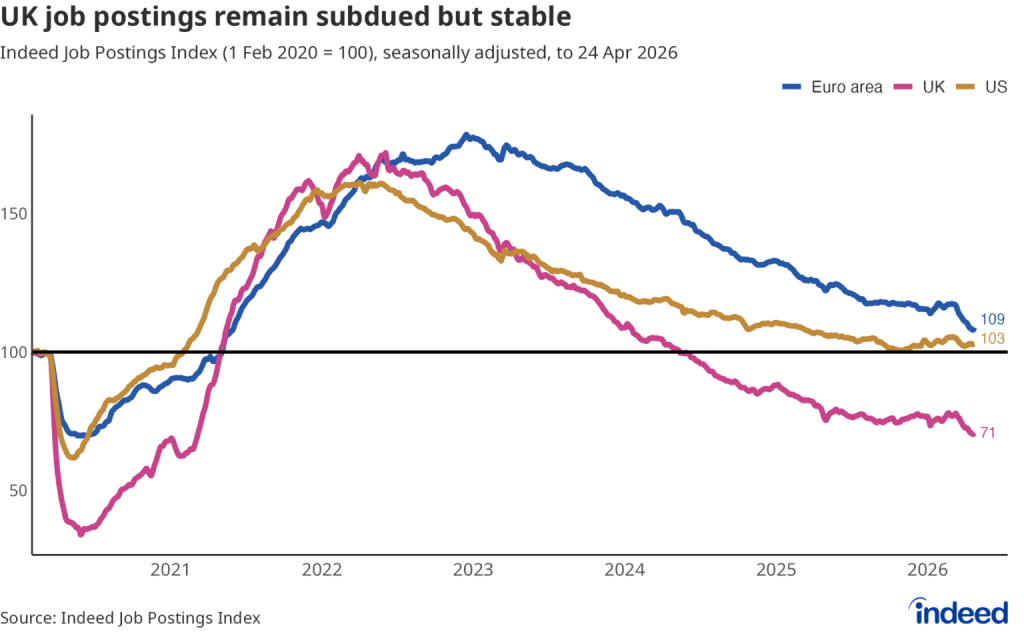
UK hiring demand has fallen sharply since the outbreak of the Iran conflict, with job postings down 8% since late February and now sitting 29% below their pre-pandemic baseline, according to Indeed’s Hiring Lab.
The data is drawn from seasonally adjusted job posting data across the UK, euro area and US. The UK’s decline is the steepest among major advanced economies: euro area postings are down 7% over the same period, while US postings have fallen just 2%.
The gap reflects the estimated greater exposure of European economies to the energy price shock relative to the US.
The UK’s position is especially stark when viewed against the longer baseline. While the euro area and US both sit at or above their pre-pandemic posting levels, the UK remains well below, compounding an already fragile recovery in hiring demand.
Sectors taking the hit
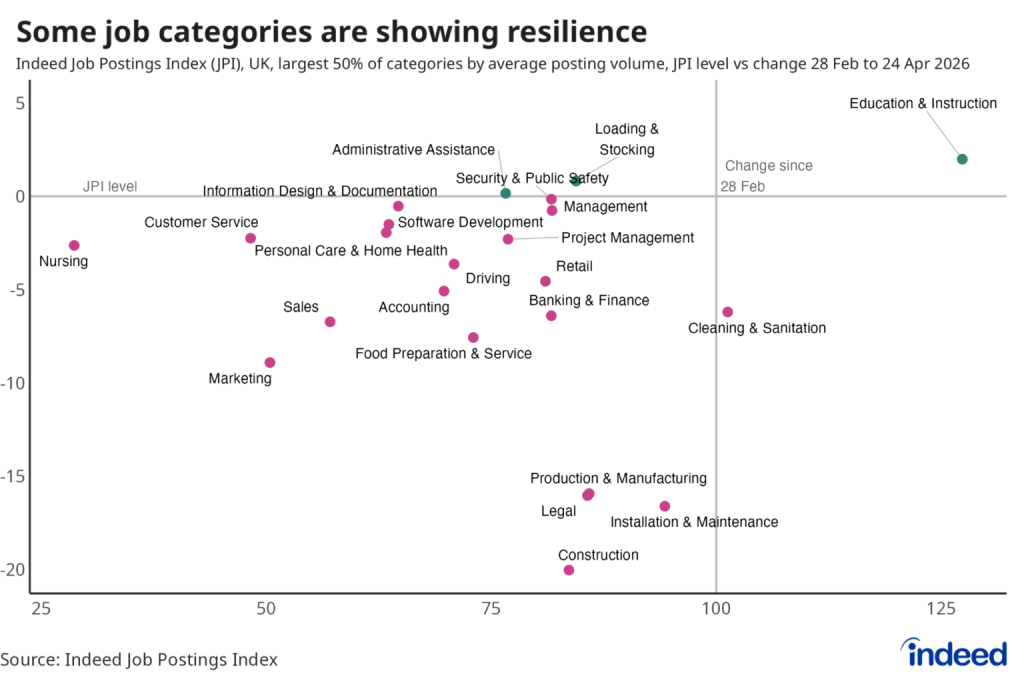
The drag is concentrated in energy-exposed sectors. Construction, installation and maintenance and production and manufacturing have seen the largest declines since the conflict began, consistent with their sensitivity to rising input costs.
Those are also sectors that feed directly into the UK’s infrastructure and housing supply pipelines, meaning a sustained fall in hiring could have knock-on consequences well beyond individual workers.
Consumer-facing sectors are holding up better for now. Retail and food preparation and service have seen only modest declines, and most professional occupations, including accounting, banking and finance, and management, have shown similar resilience.
Education and instruction stand out as a genuine bright spot, with hiring momentum continuing to build in recent weeks.
What the data clearly shows is that the job market is becoming more competitive.
Roles in energy-dependent industries face the sharpest conditions, while professional and services roles are weathering the slowdown more effectively.
Workers in construction or manufacturing who are considering a move should act sooner rather than later, before any further softening narrows their options.
Those in finance, education, or management are in a stronger position but should not mistake sector resilience for immunity.
The Bank of England’s problem
The softening jobs market puts the Bank of England in a difficult position.
The Monetary Policy Committee held its policy rate steady at 3.75% in April, but flagged the possibility of future increases depending on how long the energy market disruption persists.
Rising inflation from the energy shock pushes toward tightening, while weakening hiring demand and the threat to growth argues for caution.
A prolonged conflict raises the risk of more substantial rate rises, which would further squeeze household finances at a time when the labour market is already losing momentum.