London’s best mobile network 2026: Vodafone vs EE vs Three vs O2


Key Points
- Vodafone won NET CHECK's 2026 London mobile network benchmark with 957.73 out of 1,000 points, its third consecutive year at the top.
- EE finished second on 951.04, O2 third on 910.14 and Three last on 904.01 in the April 2026 study.
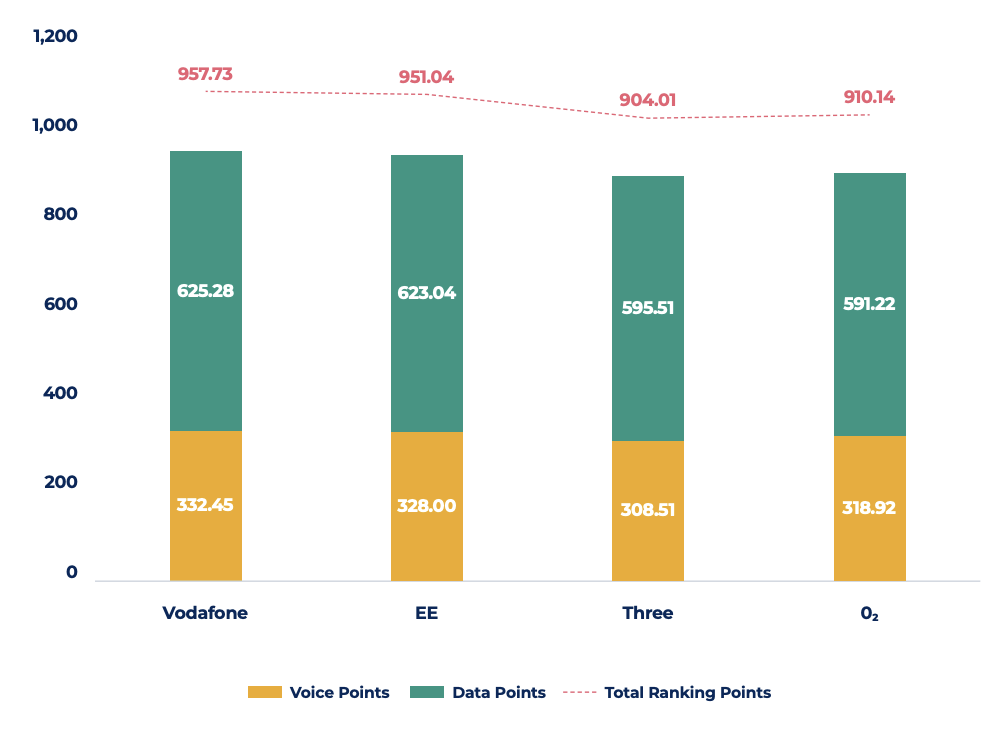
- NET CHECK ran drive tests across all 32 London boroughs plus the City of London between 7 and 13 April 2026, covering 1,109 kilometres on 24 routes with Samsung S25+ handsets.
- Three posted the biggest year-on-year improvement, rising from 757.82 in 2025 to 904.01 in 2026.
- Vodafone and Three operate as a single company following their June 2025 merger but NET CHECK ranked them first and last as separate brands.
NET CHECK has published its report on the best mobile networks in London for 2026, and the winner is clear.
Vodafone has won London’s best mobile network title for the third year running, with EE close behind and Three last.
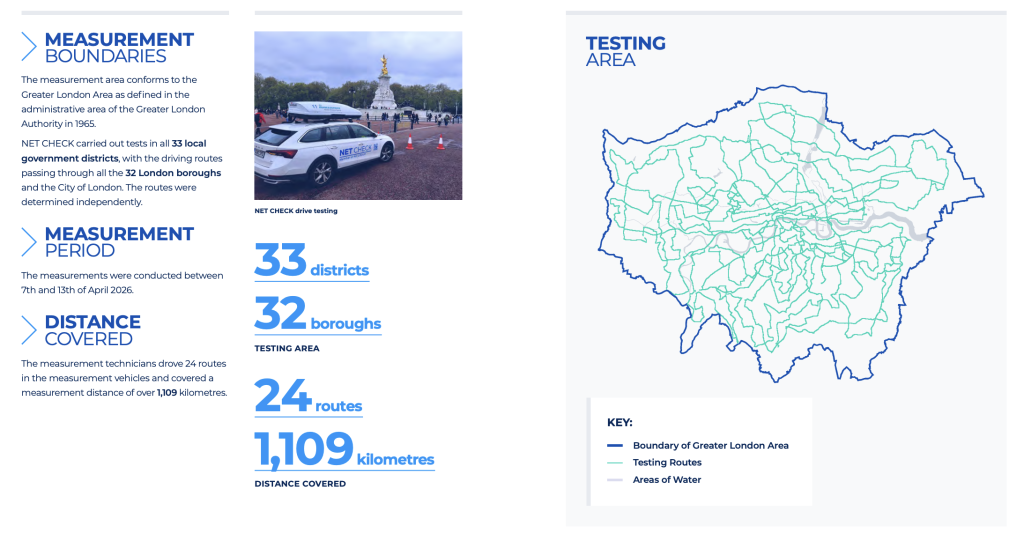
Vodafone scored 957.73 out of 1,000 ranking points in the NET CHECK 2026 London benchmark, up from 932.83 in 2025.
EE took second place on 951.04, followed by O2 on 910.14 and Three on 904.01. Every operator improved its score year on year, with Three posting the biggest jump from 757.82 in 2025.
NET CHECK technicians ran the tests between 7 and 13 April 2026 across all 32 London boroughs and the City of London. Two passenger cars covered 24 routes and 1,109 kilometres using Samsung S25+ handsets fitted in roof boxes.
Operators score a maximum of 350 points for voice services and 650 for data services, with the data category covering downloads, uploads, web browsing, video streaming, and interactivity tests.
Voice and data scores
Vodafone took 332.45 of 350 voice points and 625.28 of 650 data points, winning both categories outright.
EE scored 328.00 on voice and 623.04 on data, sitting within striking distance of Vodafone on the data side.
O2 placed third overall thanks to its 318.92 voice score, roughly 10 points ahead of Three on voice.
Three pipped O2 in the data category with 595.51 against 591.22, but the deficit on voice left it last overall.
| Operator | Total points | Voice points | Data points | Notes |
|---|---|---|---|---|
| Vodafone | 957.73 | 332.45 | 625.28 | Top in both categories; up from 932.83 in 2025 |
| EE | 951.04 | 328.00 | 623.04 | Fastest 90th percentile download at 604.83Mbps |
| O2 | 910.14 | 318.92 | 591.22 | Third on voice; trailed on data download speeds |
| Three | 904.01 | 308.51 | 595.51 | Biggest year-on-year improvement from 757.82 |
What the speed and quality data show
For Londoners, the headline finding is that all four networks now clear 900 points, indicating consistent performance across the capital.
Vodafone hit a 99.7% completed call ratio on classic calls and a POLQA voice quality score of 4.68 MOS, the highest in the test.
EE recorded the fastest median download speed at the 90th percentile at 604.83Mbps, ahead of Three on 585.84Mbps and Vodafone on 486.54Mbps.
O2 trailed on download speeds at 357.59Mbps but matched the leaders on call completion.
The interactivity tests, which simulate online gaming and video meetings, exposed sharper differences. Three logged a packet error ratio of 6.37%, more than five times Vodafone’s 2.41% and EE’s 1.27%, suggesting a rougher experience for gamers and remote workers.
O2 had the slowest median round-trip time at 33.76 milliseconds, with EE fastest at 27.49 milliseconds.
VodafoneThree merger context
The Vodafone and Three brands ranked first and last despite operating as a single company since June 2025.
The VodafoneThree merger carries an £11 billion network investment programme, with the merged operator already upgrading more than 10,000 masts to serve 28.6 million combined customers.
NET CHECK tested the brands as separate networks, though ISPreview noted that scoring them as one operator might better reflect post-merger performance.
Vodafone said Londoners make around 14.5 million calls and use 1.9 petabytes of data on its network on an average weekday, with data consumption up 12% compared with 2025. The operator said London users make 19 calls a day on average, four more than the national average.