UK economic optimism falls to a historic low

British public sentiment about the economy has plunged to its lowest level in nearly five decades, according to new polling from Ipsos, amid rising worries about inflation and a backdrop of global instability.
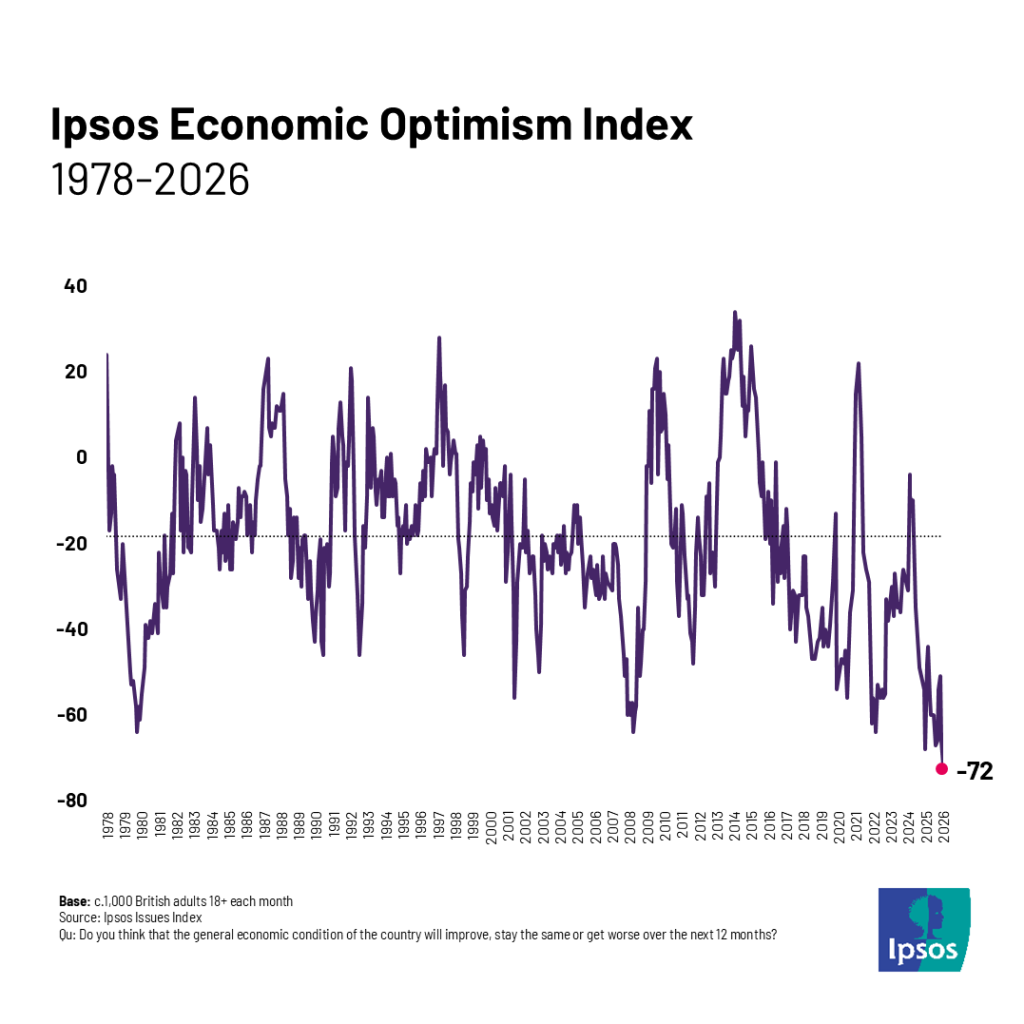
The Ipsos Economic Optimism Index, which measures the difference between the percentage of people who expect the economy to improve and those who expect it to worsen over the next 12 months, dropped to a record low of -72 in April 2026.
This marks a four-point decline from the previous historic low of -68 recorded in April 2025 and is worse than readings during major past crises, including the 1980 recession (-64), the 2008 global financial crisis (-64), and the 2022 cost-of-living crisis (-64).
Conducted between 8-14 April among 1,003 British adults aged 18 and over, the survey found that a staggering 78% of respondents now expect the economy to get worse in the coming year, up three percentage points from the previous month.
Just 6% anticipate improvement (down three points), while 12% expect it to stay the same.
This deep pessimism comes as the economy faces fresh headwinds from the ongoing conflict in the Middle East, particularly the war involving Iran, which has driven up global energy prices and contributed to a recent spike in UK inflation to 3.3% in March.
The Bank of England has held interest rates at 3.75% and signalled caution about further rate moves, while the IMF has downgraded its 2026 UK growth forecast to just 0.8%, the sharpest cut among major advanced economies, citing the conflict’s impact.
Inflation worries climb as a top public concern
Concern about inflation and rising prices jumped seven percentage points to 30% in the Ipsos Issues Index, reaching its highest level since June 2024.
It now ranks as the third most frequently mentioned issue facing Britain, behind the economy itself (33%) and immigration (32%, down five points).
Younger adults and women appear particularly sensitive to price pressures, with 35% of 18-34 year olds and 33% of women citing inflation as a top worry. Mortgage holders also expressed heightened concern about the broader economy, at 42%.
Gideon Skinner, Senior Director of UK Politics at Ipsos, noted that while global events play a role in cost-of-living pressures, the public still holds the government accountable.
“This is particularly clear when it comes to attitudes towards the economy, where in the aftermath of the Iran conflict, pessimism about the economy has reached record levels. Labour needs to convince the public that they can deliver a more optimistic outlook for the economy if they want to turn their political fortunes around,” he said.
The pessimism cuts across nearly all demographic groups, with only minor variations. Under Prime Minister Keir Starmer, now 21 months into his term, this represents the lowest economic optimism rating on record for a prime minister at this stage of their premiership, with five of the top 10 worst historical readings occurring during his government.
Immigration still a concern
The economy and immigration are now tied as the most important issues facing the country.
Immigration concern has fallen to its lowest level in a year but remains elevated among certain groups, such as Reform UK supporters (70%), those aged 55 and over (40%), and social grades C2DE (38%). Defence ranks fourth at 25%, while the NHS sits at 21%.
These findings arrive as the UK grapples with subdued growth prospects. Recent official data showed a stronger-than-expected 0.5% GDP rise in February, but forecasters warn that energy shocks from the Middle East could push the economy toward the brink of a technical recession in the middle of 2026, with flat or negative quarters possible and unemployment rising.
The Bank of England now faces a challenging balancing act as inflation is running well above its 2% target and could head toward 4% in the coming months due to higher fuel and energy costs, delaying hopes for rate cuts and potentially weighing further on household spending and business investment.