The UK has just confirmed that the ‘special relationship’ with America is dead
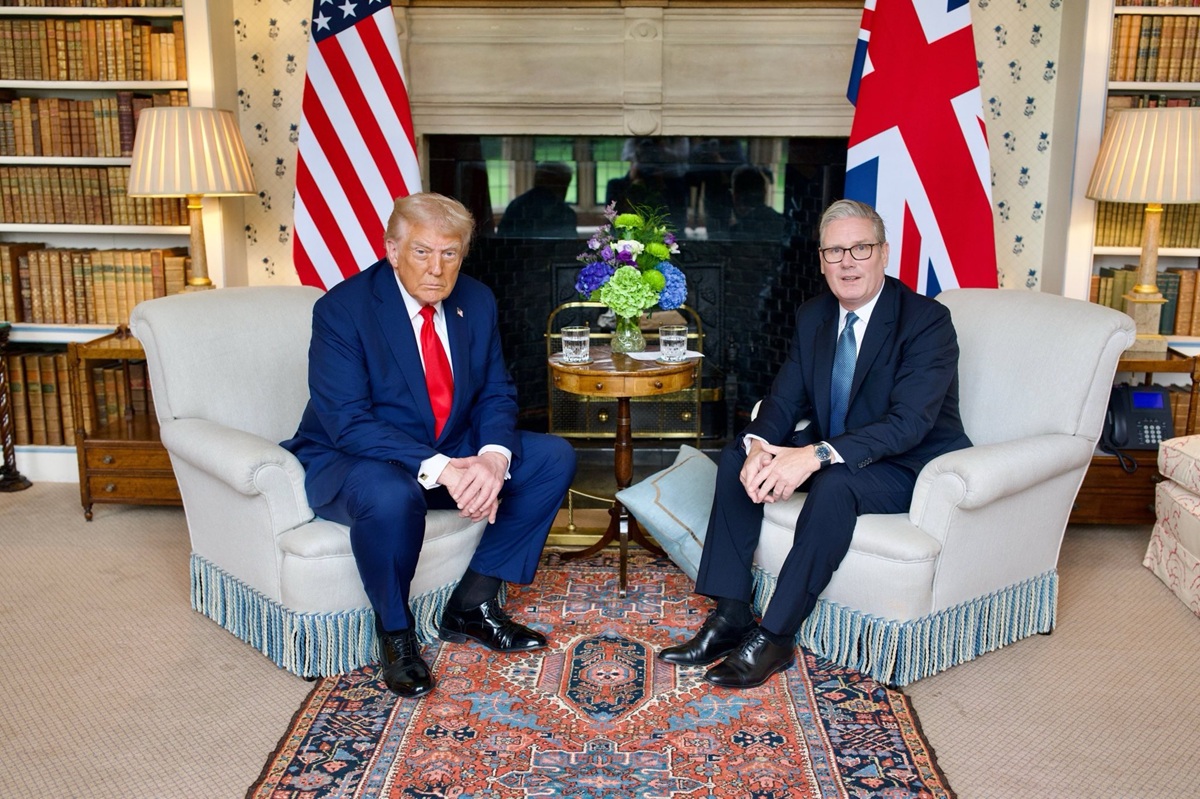

A powerful House of Lords committee has delivered a blunt verdict on one of the most enduring pillars of British foreign policy – the era of sentimental attachment to the US-UK “special relationship” is over.
In a report published Wednesday (22 April) titled Adjusting to new realities: rebalancing the UK-US partnership, the International Relations and Defence Committee urges the UK government to drop the romantic rhetoric and adopt a hard-headed, interest-based approach to Washington.
The cross-party group of peers argues that while the United States remains a vital partner in diplomacy, intelligence, military affairs, and economics, the relationship has fundamentally shifted.
Future cooperation will be far more transactional, driven by diverging strategic priorities rather than shared history or automatic alignment.
Long-term trends, not just Trump
The committee is careful to note that this isn’t solely about the second Trump administration, which has highlighted existing frictions. Instead, it identifies five structural trends in US policy that will persist regardless of who occupies the White House:
- The rise of China as a peer geopolitical competitor.
- Growing American insistence that Europe shoulder more of its own defence burden.
- Resentment toward globalisation and its effects on US workers.
- A turn toward economic nationalism, including tariffs, export controls, and supply-chain reshoring.
- Deep domestic polarisation that produces sharp policy swings between administrations.
These forces, the report says, make US commitments less predictable and more self-interested. The UK can no longer afford “sentimentality” about a uniquely privileged partnership.
“We must move beyond the sentimental notion of a ‘special relationship’. That does not mean turning away from the United States, what must change is how the UK approaches the relationship.
“The United States is becoming more transactional and interest-based. The UK must reduce its over-reliance on the US and take the lead in cultivating other partnerships.”
Dependency risks and capability gaps
The report is particularly stark on defence. Close collaboration with the US has, over time, fostered a “dependency culture” in the UK that has eroded British capabilities and even damaged credibility in Washington.
The committee calls for a clear, costed plan to raise defence spending toward 5% of GDP, well above current NATO targets, alongside publication of a long-overdue Defence Investment Plan and faster implementation of the Strategic Defence Review.
In foreign policy, the peers highlight a widening gulf over the “rules-based international order” and international law.
With confidence in consistent US global engagement fading, the UK should deepen ties with the EU and other like-minded partners while keeping the door open for American re-engagement, but without relying on it.
Economically, US protectionism is testing transatlantic trade links. The committee recommends a more balanced UK trade strategy focused on Europe and beyond, while still pursuing collaboration in high-growth areas such as AI and frontier technologies.
What ‘rebalancing’ actually means
The central recommendation is pragmatic rather than isolationist – collaborate where interests align, hedge where they don’t. That means building greater UK strategic autonomy and resilience so that British national interests can be protected even when US support is uncertain or withheld.
The report also touches on NATO’s “Europeanisation,” the risks of politicised US intelligence sharing, cuts to international development aid, and opportunities for deeper academic and cultural ties.
Declarations that the special relationship is dying are hardly new, similar warnings surfaced during previous Trump terms and even under earlier administrations.
Yet this House of Lords assessment carries weight because it comes from a committee focused on long-term trends rather than partisan point-scoring, and it arrives amid ongoing transatlantic tensions over trade, defence spending, and global hotspots.
For decades, the “special relationship”, a phrase popularised by Winston Churchill, has been central to British strategic identity, offering influence in Washington in exchange for close alignment.
The committee’s message is that this bargain is no longer delivering the same returns, and clinging to nostalgia could leave the UK exposed.