How much money it now costs to rent a room in London

London’s flatshare market has cooled slightly in early 2026, but renting a room in the capital remains eye-wateringly expensive for most people.
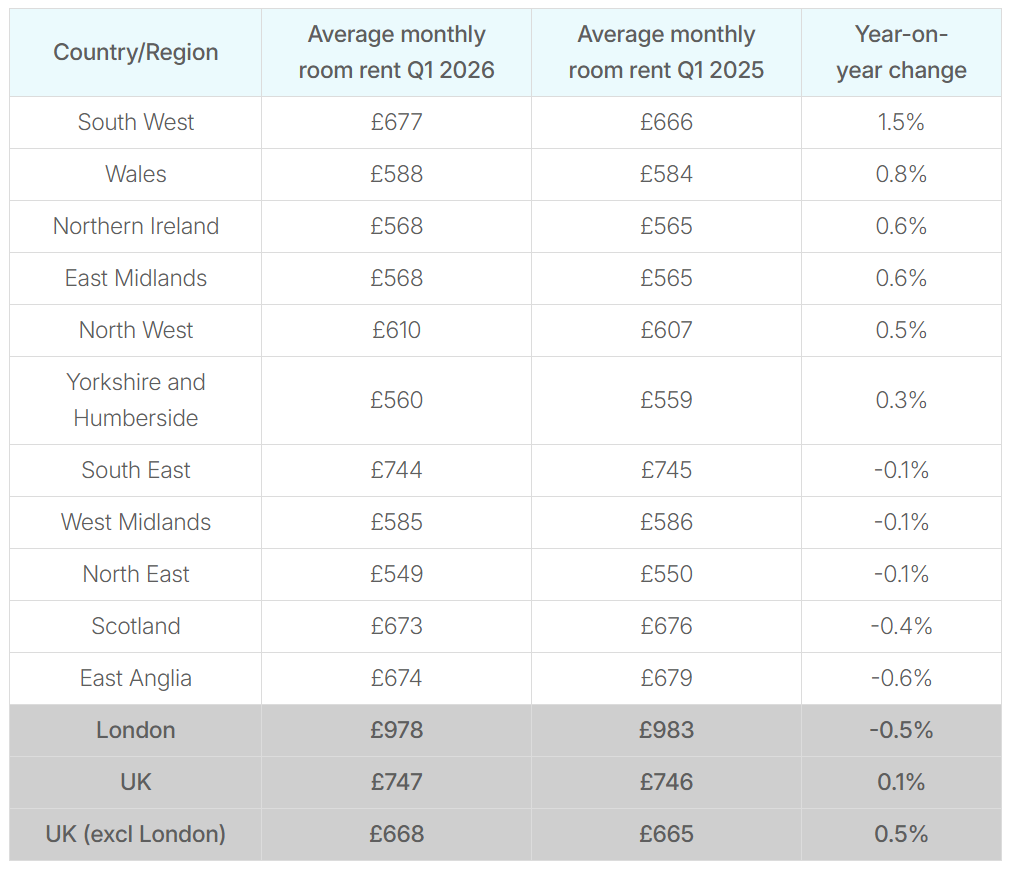
New data from SpareRoom’s Q1 2026 Rental Index shows the average cost of renting a room in a shared London home now stands at £978 per month. That’s a marginal 0.5% drop year-on-year, marking the latest in a series of small declines after sharp post-pandemic increases.
For context, the average room rent in London peaked at around £1,015 in Q4 2023. While it has eased modestly since then, it is still significantly higher than pre-pandemic levels, when the average sat closer to £773 in early 2020.
Rents largely flat nationally
Across the UK as a whole, room rents were almost unchanged in the year to Q1 2026. The national average now sits at £747 per month, up just 0.1% year-on-year. Outside London, the average is lower still at £668, a 0.5% increase.
SpareRoom reported a 12% year-on-year drop in demand for rooms in London, while room supply rose by 4.8%. Many potential renters appear to have been priced out of the capital entirely or are opting for more affordable suburban or regional options.
Rents differ dramatically depending on location:
- Central and West London (W, WC, SW) remain the most expensive, with some areas exceeding £1,200–£1,300 per month.
- West Central (WC) averaged £1,257 in Q1 2026, down 3% year-on-year.
- More affordable pockets are increasingly rare. According to SpareRoom, only five London postcodes still offer average room rents below £800 per month, and all are in the E (East) or N (North) postcode areas.
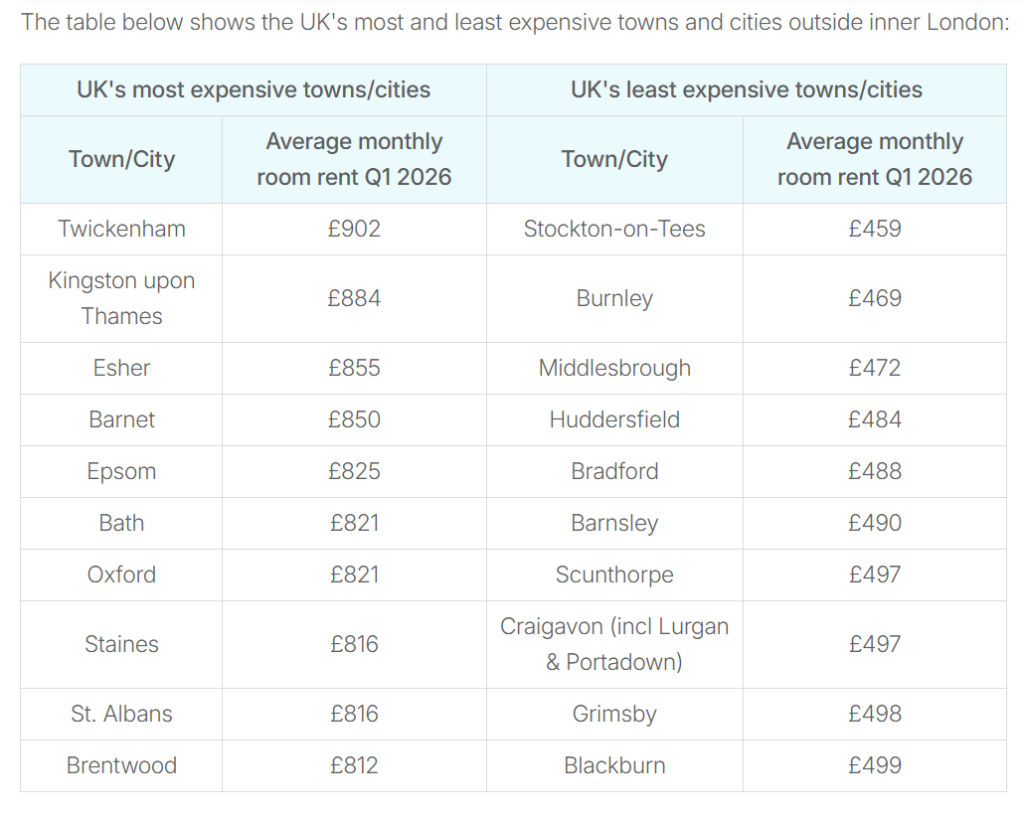
Suburban zones on the outskirts, such as parts of Epsom, Twickenham, and Kingston upon Thames, have seen relatively stronger demand from flatsharers seeking better value, even as inner London softens slightly.
Why the market is cooling
Analysts point to affordability pressures as a key factor. After years of rapid rent growth driven by high demand and limited supply following the pandemic, many younger professionals and international movers appear to have hit a ceiling. Some are leaving London for cheaper cities, while others are doubling up further or accepting longer commutes.
At the same time, the overall UK flatshare supply has shown signs of slowing in some areas, which could put upward pressure on rents again if demand rebounds.
SpareRoom director Matt Hutchinson has previously noted that the capital’s room rental market is “vulnerable underneath” despite the calmer headline figures. Rents in London are still roughly 47% higher than the UK average outside the capital.
What this means for renters and landlords
Expect to budget at least £900–£1,100+ for a decent room in most of London, with prime central spots commanding significantly more. Those on tighter budgets may need to look further out or consider compromises on size, furnishings, or bills inclusion.
For landlords and housemates advertising rooms the slight dip suggests pricing discipline is important in 2026. Overpricing in a market with softer demand could lead to longer void periods.