UK consumer confidence crashes to a 4-year low as Brits cut back on everything except holidays


UK consumers are feeling the pinch, with overall consumer confidence plunging to its lowest level since 2023 amid squeezed household budgets, slowing wage growth, and fresh worries over rising energy prices triggered by geopolitical tensions.
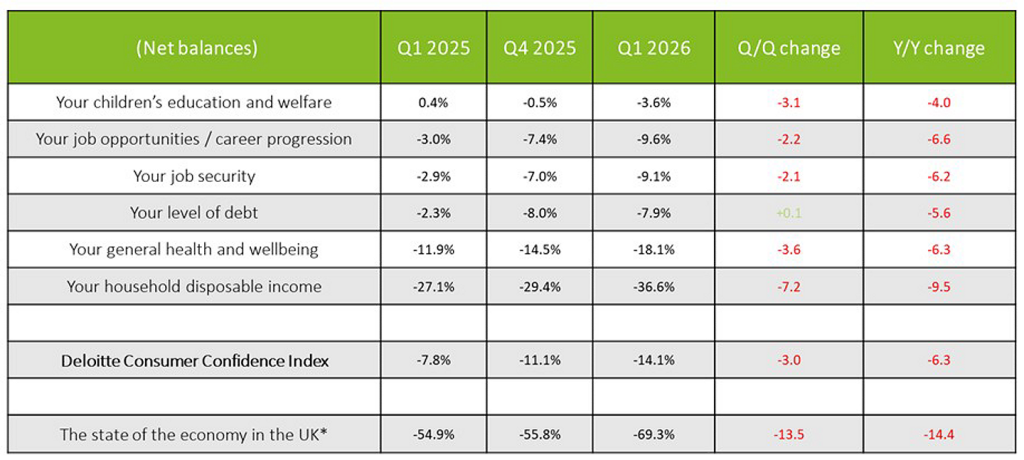
Deloitte’s latest Consumer Tracker shows the UK consumer confidence index fell three percentage points in the first quarter of 2026, from -11.1% to -14.1%. That marks the sharpest quarterly drop since early 2022 and leaves confidence 6.3 points lower than a year ago.
Five of the six measures that make up the index deteriorated, with the biggest hit coming in sentiment toward household disposable income, which slid 7.2 points quarter-on-quarter and 9.5 points year-on-year – its steepest decline in four years. Perceptions of job security also weakened, falling 2.1 points from the previous quarter.
Separate from the main index, consumers’ views on the state of the UK economy cratered by a staggering 13.5 percentage points, returning to levels last seen in late 2022.
Céline Fenech, consumer insight lead at Deloitte UK, pointed to a combination of pressures. “The impact of recent geopolitical events on the price of energy will likely feel like another setback for consumers. Many were already facing a squeeze on their household budgets at the start of the year with the slowing of wage growth and a cooling jobs market,” she said.
“With the prospect of another increase in the price of essentials, consumer confidence continues to be tested and is trending downwards to levels last seen four years ago. For consumer sentiment and spending to improve, households will want to see a more certain outlook for the economy.”
Brits are tightening their belts – but not on getaways
The gloom is showing up clearly in spending patterns. Discretionary spending (non-essentials) dropped 6.7 percentage points quarter-on-quarter to its lowest level since Q1 2023, with a similar year-on-year decline that rules out simple post-Christmas seasonality.
Consumers slashed outlays across the board:
- Clothing and footwear: down 11 points quarter-on-quarter and 10 points year-on-year
- Alcoholic beverages and tobacco: down 15 points from Q4 2025
- Major household appliances and electrical equipment: also seeing notable year-on-year falls
Nearly a third of consumers now say they are only spending on essentials. Among those who spent less, half cited buying fewer items to save money, while 45% reported being more frugal overall and 37% said they were cutting luxuries and treats.
“While there is typically a drop off in spending in January after the busy festive shopping period, the fall seen in Q1 is more representative of a conscious cutting back on non-essentials by consumers. At the same time, essential spending remains high, with consumers allocating most of their budget to everyday items that are particularly vulnerable to inflation,” said Oliver Vernon-Harcourt, Head of Retail at Deloitte UK.
“Big ticket purchases remain on the back burner, with fewer people planning to buy a car, a house or even a major appliance or piece of furniture compared to a year ago.
“These are all signs that consumers continue to wait for improved economic conditions before making major purchases. This means the long-awaited rebound in consumer spending might take more time.”