The UK is betting £64 million that this small Welsh town will turn into its next energy hub

For decades, the industrial town of Port Talbot on the edge of the Celtic Sea has been synonymous with steel. The sprawling Tata Steelworks dominated the skyline, employing thousands and powering the local economy.
But the closure of its coal-fired blast furnaces in 2024 marked the end of an era, triggering roughly 2,800 direct job losses in a community of just 35,000 people – with ripple effects threatening thousands more in the supply chain.
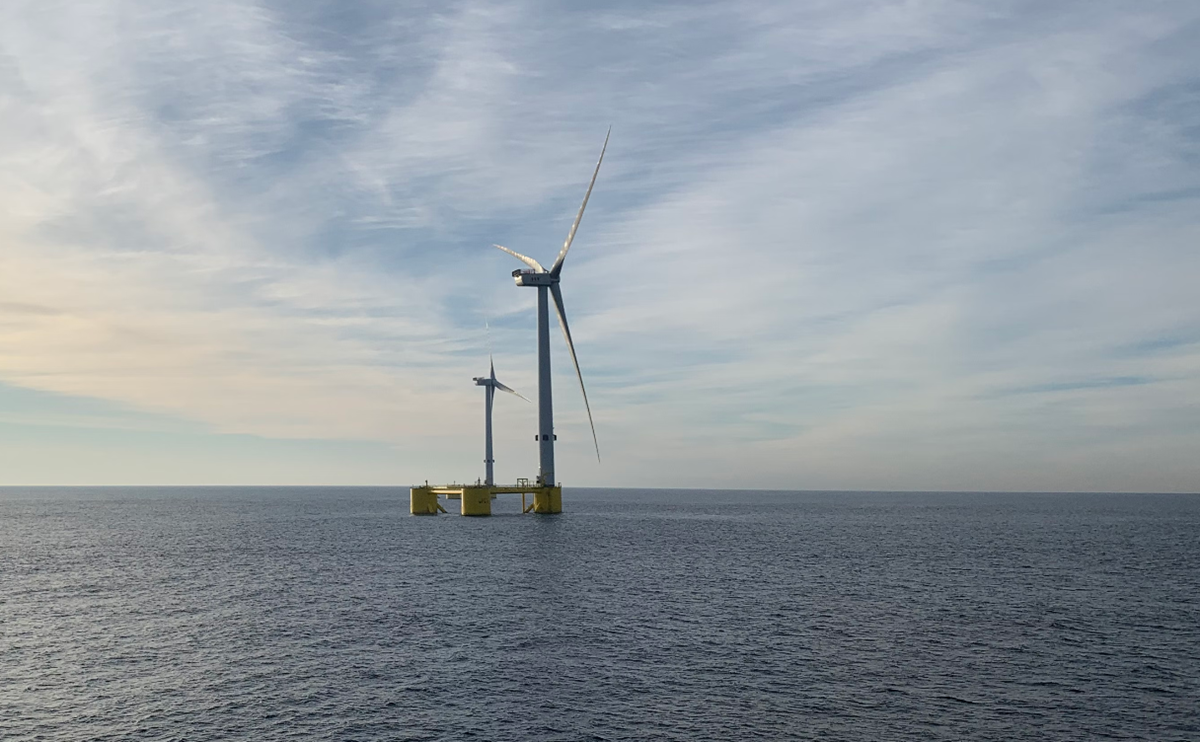
Now, the UK government is placing a high-stakes bet on Port Talbot’s next chapter by transforming it into a major hub for floating offshore wind energy.
On Thursday (26 March), the government announced up to £64 million in grant funding to Associated British Ports (ABP) to advance design and engineering work for a new port facility dedicated to supporting floating offshore wind projects in the Celtic Sea.
The investment aims to position Port Talbot as one of the first UK ports optimised for this emerging technology, which uses massive floating platforms to harness stronger winds in deeper waters where traditional fixed-bottom turbines can’t operate.
The move comes as part of the government’s “clean power mission” and builds on The Crown Estate’s recent seabed leasing round, which unlocked initial rights for up to 4.5 gigawatts (GW) of floating offshore wind capacity in the Celtic Sea – enough to power around 6.5 million homes.
The region boasts some of Europe’s best conditions for the technology, with consistent high winds and suitable depths.
From floating offshore wind in Port Talbot to a new generation of small modular reactors at Wylfa – this government is putting Wales at the heart of our clean energy superpower mission,” said Energy Secretary Ed Miliband.
“With its deep waters and strong winds we are supporting Wales to storm ahead in floating offshore wind – a pioneering industry that will support thousands of good jobs, drive growth across the country and unlock the next generation of clean, homegrown power.”
From steel to green energy
The government has already committed significant support to ease the steel transition, including £500 million toward a new Electric Arc Furnace (EAF) at the Tata site – a lower-carbon method of steelmaking using scrap metal that is expected to reduce emissions dramatically while sustaining some production.
Additional funding through the Port Talbot Transition Board has gone toward retraining workers and supporting local businesses.
“This is a significant moment for Port Talbot and a major step forward for the growing clean energy industry in Wales. This investment will further cement Port Talbot as a hub of the industries of the future,” said Wales Secretary Jo Stevens.
“The UK government has backed steelworkers and the community in Port Talbot with £100 million in direct support, and £500 million for the construction of a new Electric Arc Furnace ensuring that the town will manufacture clean steel into the future.”
ABP CEO Henrik L. Pedersen described the funding as a “critical step” that could unlock further private investment and establish the port as a cornerstone of the Celtic Sea industry.
ABP has long eyed an ambitious overhaul of Port Talbot, with earlier plans suggesting potential investment exceeding £500 million to create facilities for manufacturing, assembly, and integration of floating wind components.
Analysts and industry estimates suggest the initial 4.5 GW in the Celtic Sea could support over 5,000 jobs across construction, supply chain, and operations, while delivering around £1.4 billion in economic value to the UK. Broader ambitions for floating wind could scale far higher in the coming decades.