From Hackney to Westminster on foot: Inside Amazon’s new delivery plans for the UK
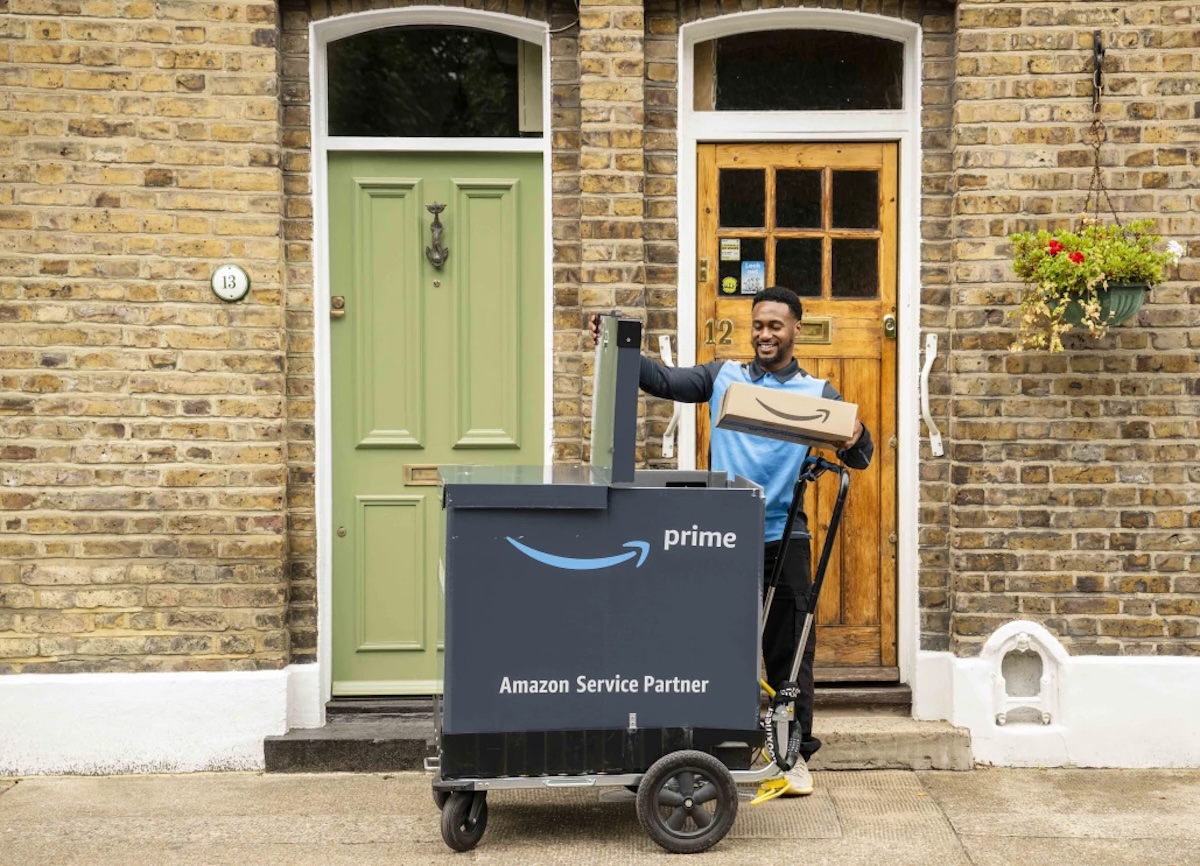

Amazon is rolling out an innovative, low-emission approach to last-mile deliveries in one of the world’s most congested cities: London.
The company highlighted how on-foot deliveries using pushcarts – alongside electric cargo bikes and smarter packaging – are helping slash transport emissions while keeping packages moving quickly and reliably.
The pushcart program has gained traction in high-density, pedestrian-heavy neighborhoods. Delivery associates now commonly navigate from areas like Hackney in east London to Westminster in the heart of the city on foot, pulling wheeled carts loaded with packages.
These carts are restocked on the go from strategically positioned vans, allowing teams to cover narrow streets, pedestrian zones, and areas with limited parking or vehicle restrictions far more efficiently than traditional vans.
In 2025 alone, on-foot delivery workers in London handled more than one million packages this way, proving the model’s viability at scale. The initiative builds on earlier pilots in boroughs including Hackney, Westminster, and Islington, and has since expanded to Camden, where local authorities have partnered with Amazon to trial operations from private sites that serve as mini distribution points.

Three new pillars
This pedestrian-first strategy forms one of three core tactics Amazon is deploying to decarbonise urban deliveries in the UK capital, as outlined in its latest sustainability update.
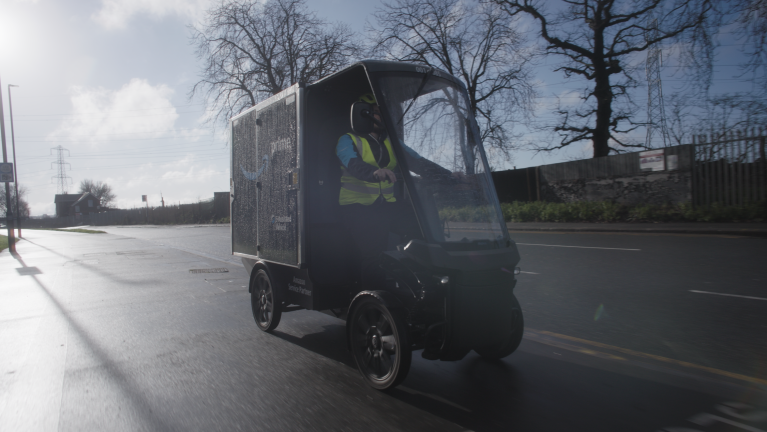
The second pillar involves expanding electric cargo bikes. Since 2022, Amazon’s Delivery Service Partners have pedaled more than 900,000 miles across the UK on e-bikes, replacing van trips and enabling access to tight urban spaces.
Last year, millions of packages were delivered via e-bikes and on-foot methods from 12 dedicated hubs in cities including London, Manchester, Norwich, Belfast, and Glasgow.
The third focuses on packaging optimisation. Using machine learning to right-size boxes, shift to paper bags and cardboard envelopes, and encourage products to ship in their original manufacturer packaging (via the “Ships in Product Packaging” program), Amazon reduces material use and allows vehicles to carry more per trip – cutting the total number of journeys needed.

Over 50% of orders in Europe now ship with reduced or original packaging, and since 2015, these efforts have avoided more than 4 million metric tons of packaging globally, equivalent to over 1,900 times the weight of the London Eye.
New delivery options
These changes align with broader UK investments in electrification, including the rollout of hundreds of new Mercedes-Benz eSprinter vans in early 2026 and the UK’s largest-ever order of electric heavy goods vehicles (eHGVs), which began deliveries in late 2025.
More than 70% of London’s Congestion Charge zone is now served by zero-exhaust options such as electric vans, e-cargo bikes, and walking deliveries operated by Amazon’s partners.
The moves come as urban online shopping continues to surge, intensifying pressure on city streets.
By leaning into human-powered and electric micromobility solutions, Amazon said it aims to reduce noise, traffic congestion, and tailpipe emissions in neighborhoods while maintaining the fast delivery speeds customers expect.
The company frames these as practical, scalable steps toward its long-term goal of net-zero carbon operations by 2040, with ongoing commitments to expand zero-emission methods across more UK cities.
For Londoners, the sight of pushcarts weaving through busy streets may soon become as familiar as the red postbox, only greener.