We just saw 200 musicians take over London’s Southbank Centre – Classical Mixtape 2026 was pure chaos (in the best way) – Photos and highlights inside
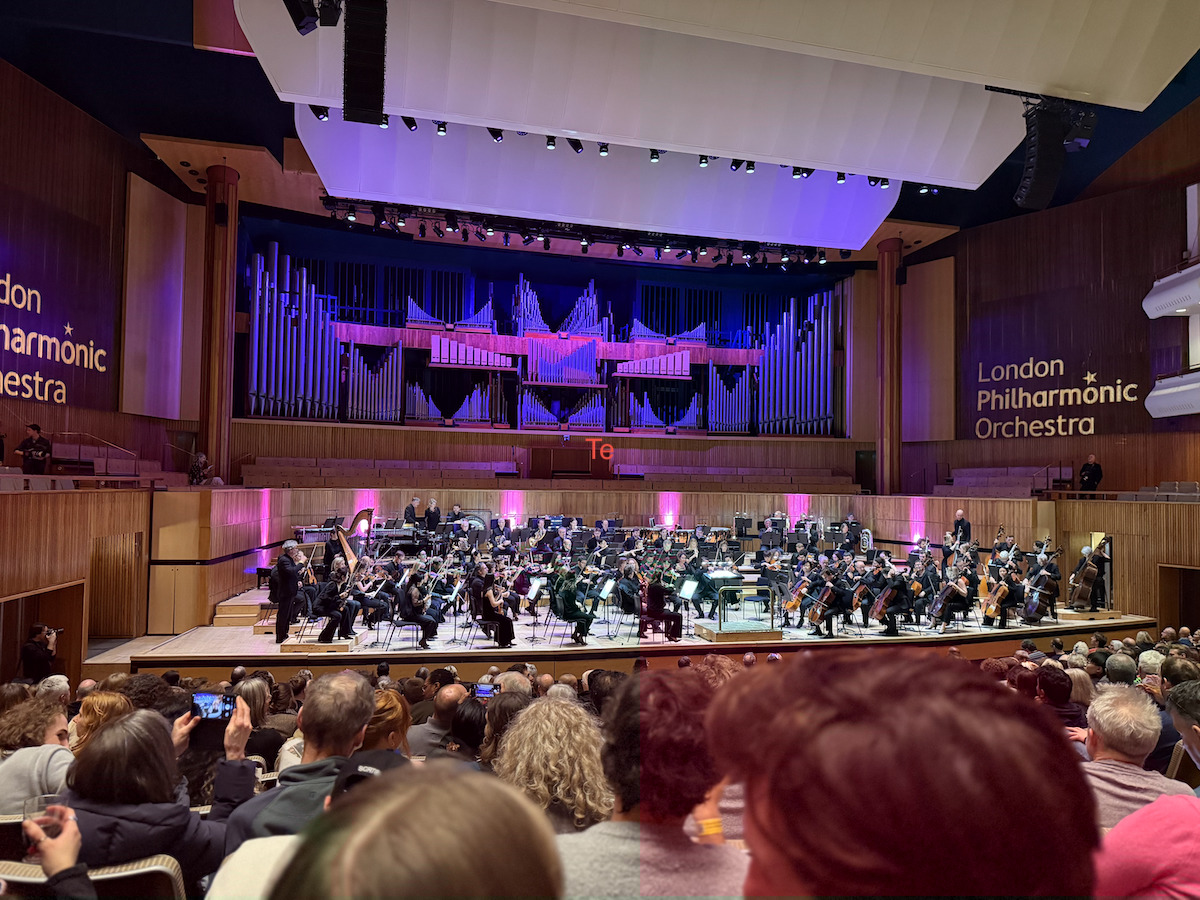

Tonight, Southbank Centre became one giant, living classical playlist. Classical Mixtape: A Live Takeover brought together more than 200 musicians from six orchestras – Aurora Orchestra, Chineke! Orchestra, London Philharmonia Orchestra, London Sinfonietta, Orchestra of the Age of Enlightenment, and Philharmonia Orchestra – across multiple stages in the Royal Festival Hall, Queen Elizabeth Hall, Purcell Room, Clore Ballroom, and Undercroft.
No fixed programme. No assigned seats. No hushed rules. Just 20-minute sets looping simultaneously across the building, letting you roam freely and build your own live mixtape.
One minute you’re in the Royal Festival Hall hearing the London Philharmonia Orchestra thunder through Beethoven’s Fifth Symphony, the next you’re in the Clore Ballroom wrapped in Chineke! Orchestra’s spatial sound, then down in the Undercroft, caught in London Sinfonietta’s loops. It was infectious, exhilarating, and – yes – pure chaos in the best possible way.
We roamed the whole site for hours. Here’s what the night actually felt like, plus the photos and videos to prove it.
How the night actually played out
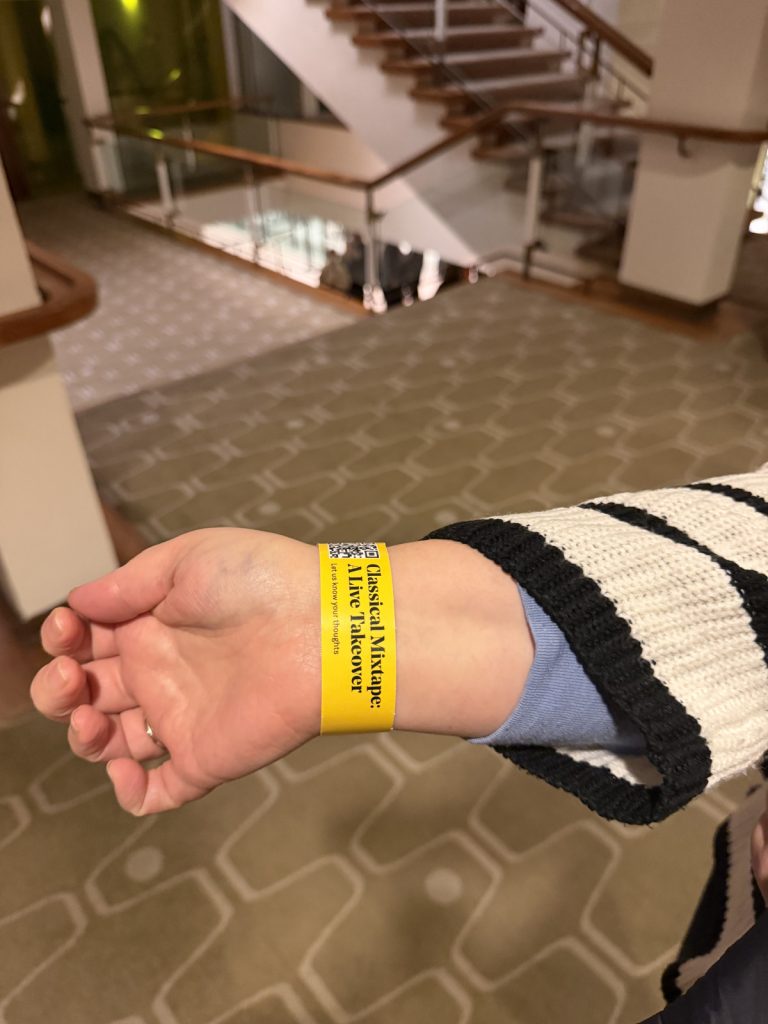
The night started with wrist bands, which allowed us to roam in and around the different concert halls.
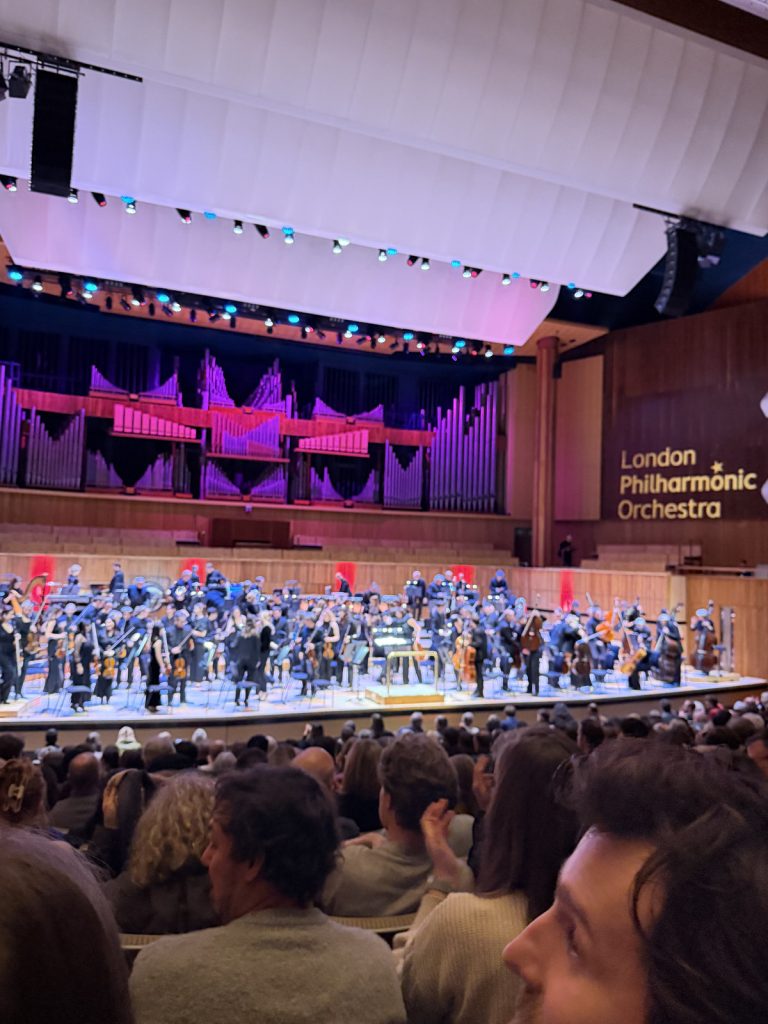
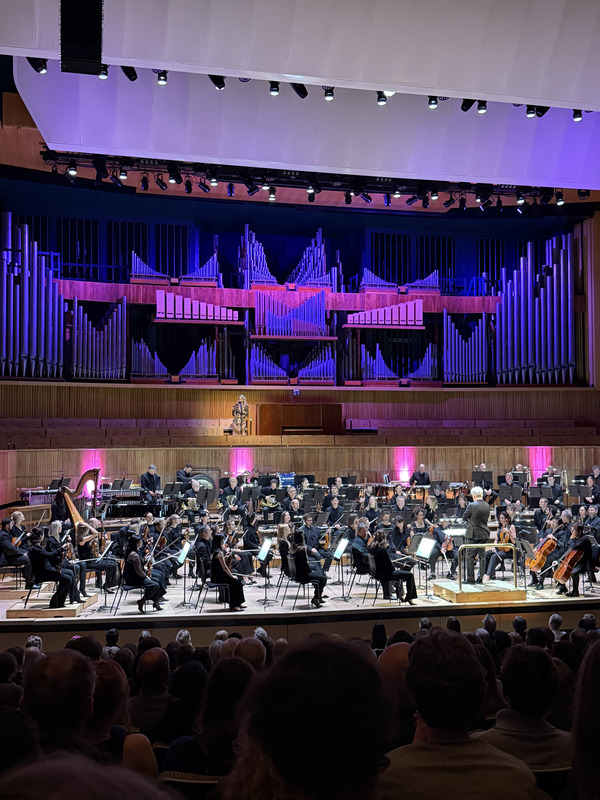
The evening began in the Royal Festival Hall with the London Philharmonia Orchestra delivering Beethoven’s Fifth Symphony. That “da-da-da-dum” hit like a starting gun, and the room erupted – the perfect opener that made it clear this wasn’t going to be a sit-down night.
This was followed by a crowd-pleasing rendition of Howard Shore’s The Lord of the Rings: The Fellowship of the Ring score (the Philharmonia was the original recording orchestra for the film).
From there, you could drift anywhere:
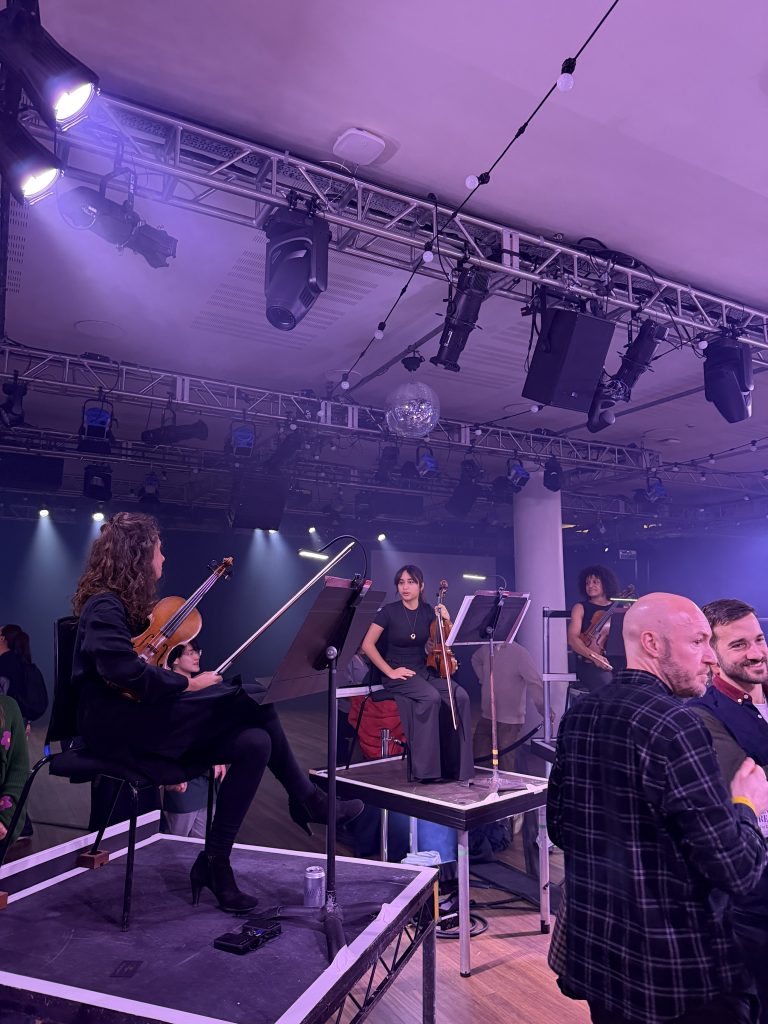
- Chineke! Orchestra in the Clore Ballroom – spatially arranged so the sound surrounded you from every direction.
- London Sinfonietta in the underground Undercroft – minimalist patterns bouncing off concrete walls in a raw, industrial space.
- Orchestra of the Age of Enlightenment delivering a high-energy, historically-informed brass-heavy set that had people grinning and moving.
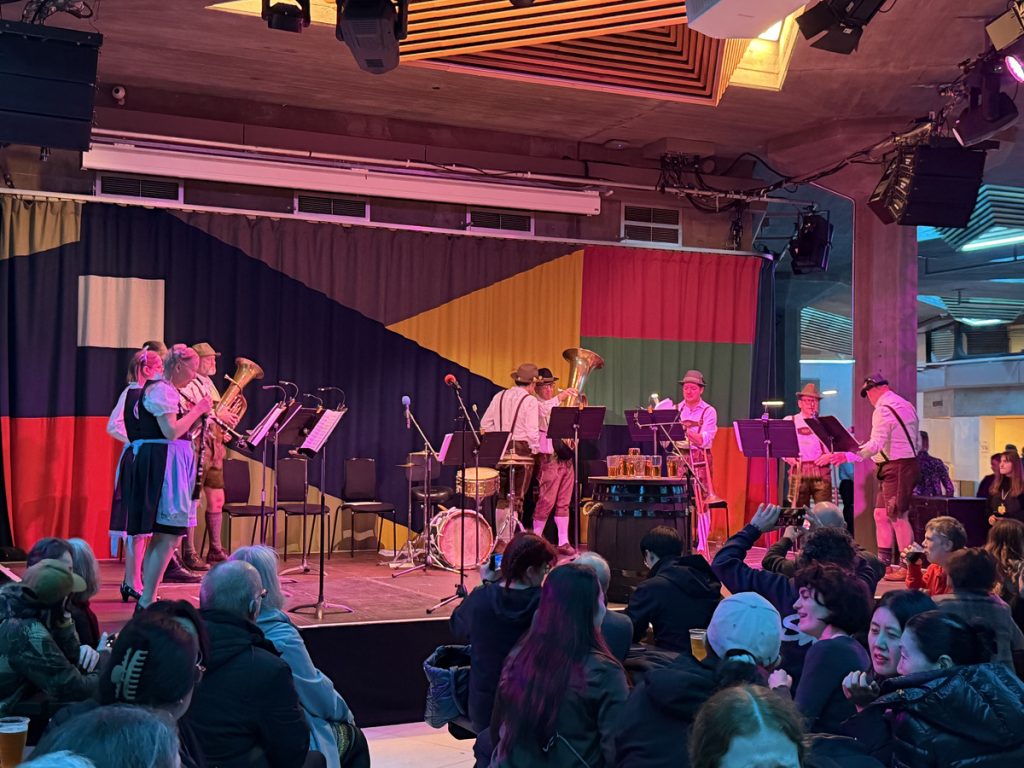
- Aurora Orchestra taking listeners on a “mountainous adventure” with evocative, cinematic playing.
- The London Philharmonia Orchestra building to the grand finale in the Royal Festival Hall – including John Williams’ Star Wars Suite and Holst’s The Planets, conducted by Principal Guest Conductor Marin Alsop.
The looping format meant you could revisit pieces, discover new ones or simply chase the energy. Presented by Vogue Williams with zero pretension, it felt deliberately made for people who love music but hate being told how to listen.
The marquee show was in the Royal Concert Hall with the London Philharmonia Orchestra.
We could freely wander between the different venues, listen in on favourites, or just grab a drink.
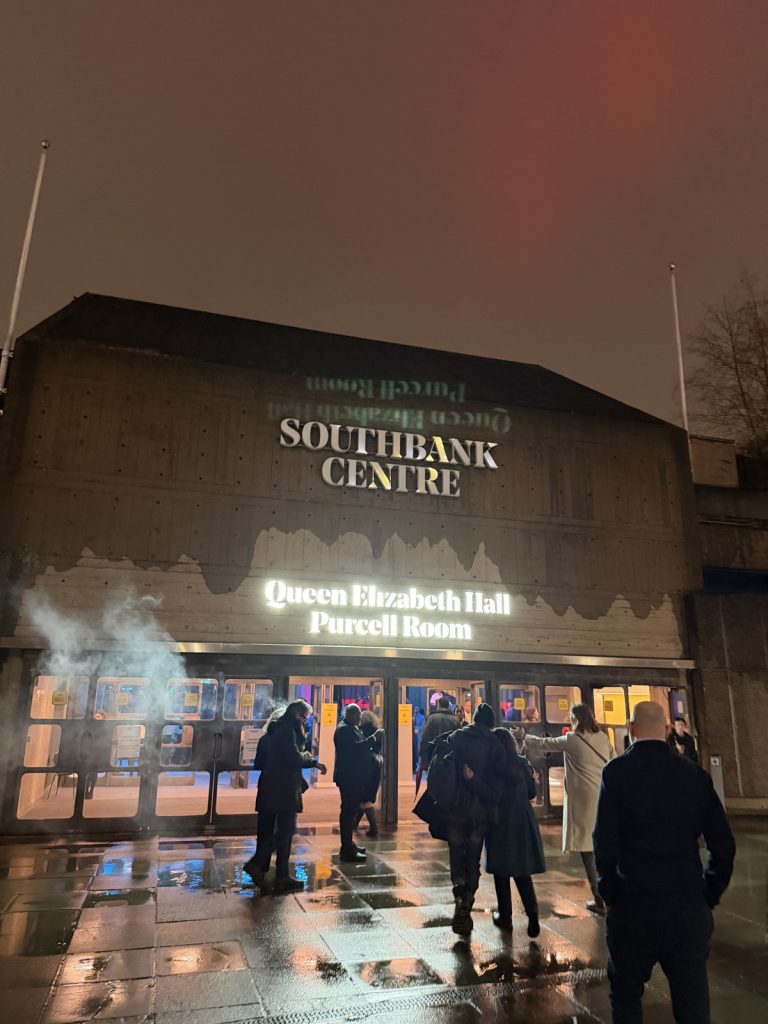
A particular highlight was the Aurora Orchestra, which was set up around a German beer hall and played pieces from the Sound of Music.
Other pieces, like the Chineke! Orchestra allowed you to be fully surrounded by the musicians.
The finale that sealed it
Everyone eventually converged back in the Royal Festival Hall for the massed closer: the Philharmonia Orchestra under Marin Alsop powering through Star Wars and Holst’s The Planets. The room lost its mind – cheers mid-piece, phones in the air, goosebumps everywhere.
It was the kind of communal high that reminded you that live music can still feel electric. Afterwards, the foyers stayed alive as people headed to an DJ-led afterparty. The crowd was noticeably younger and more diverse than a typical classical night.
This could be the future of classical concerts
Classical Mixtape wasn’t flawless – some rooms got too crowded, sound bleed was real, navigation took a minute to get used to, and queuing for a drink took ages. But it didn’t need to be perfect.
It proved something bigger: classical music can drop the formality, embrace movement and choice, and still feel profound. This format – multiple looping sets, free roaming, no assigned seats, younger pricing – could become the blueprint for keeping the genre alive for new generations.
It turns passive listening into active discovery, makes the concert hall feel like a living space rather than a museum, and shows orchestras can collaborate without losing identity.
Southbank Centre has set a high bar. If this model spreads – more venues ditching the rigid 90-minute sit-down for immersive, choose-your-own-adventure nights – classical music might finally stop feeling like homework and start feeling like the best night out.