‘Europe’s Silicon Valley’ – The UK’s ambitious plan for the Oxford-Cambridge Corridor

The UK government recently published its 10-year infrastructure plan, which lays out its ambitious vision for the Oxford-Cambridge Growth Corridor north of London.
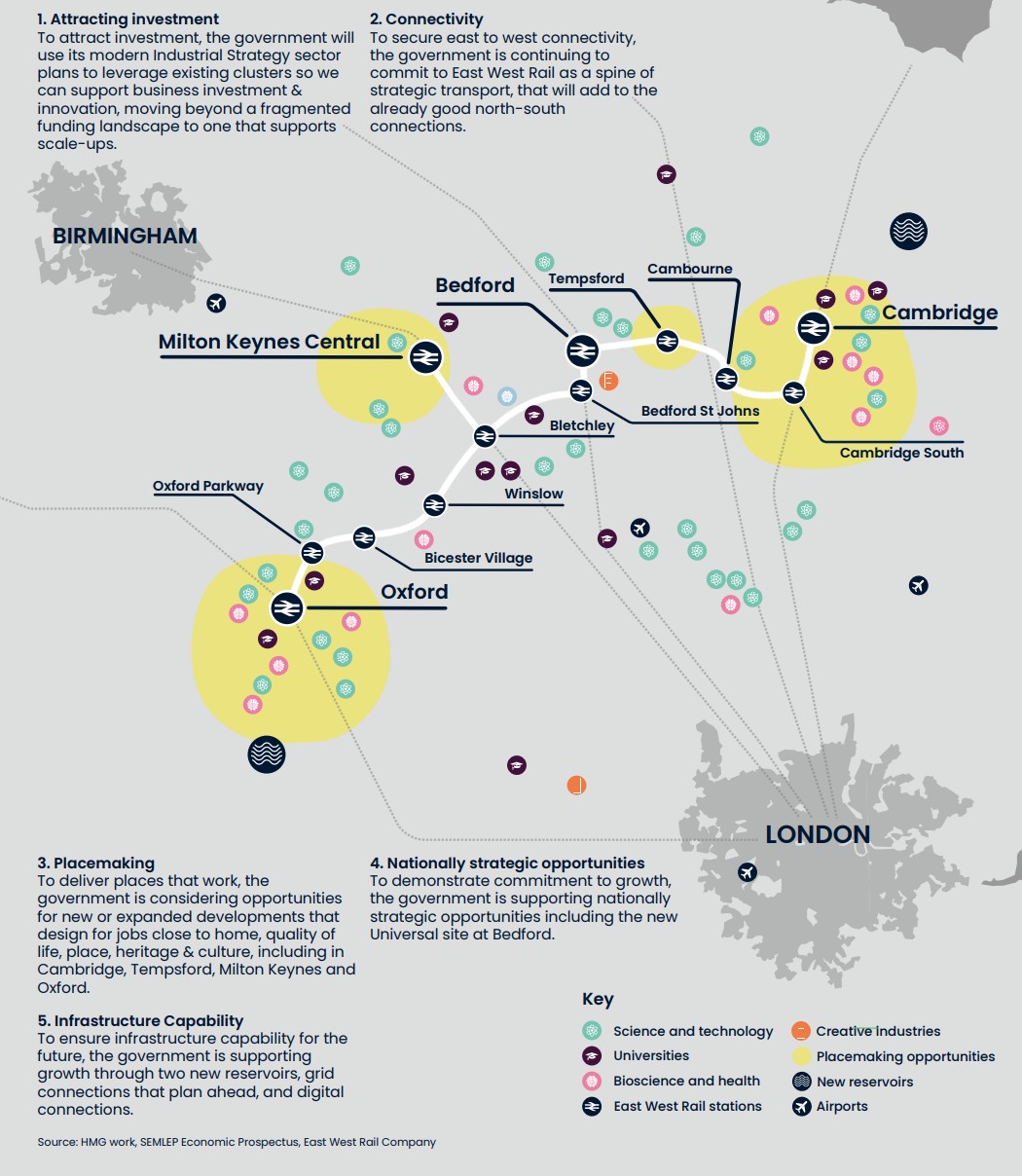
The region encompasses a swathe of land north-west of London, stretching from Oxford to Cambridge and including Milton Keynes. It is home to several research and development hubs in emerging industries and high-value sectors, but its growth has been hindered by a lack of infrastructure.
A lack of housing pervades the area, along with water scarcity, limited public transport and traffic congestion on roads connecting these cities. After London, Cambridge is the most expensive city for purchasing a house in the UK relative to local income.
The government believes these factors have prevented the growth and establishment of new businesses in the area, with firms unable to hire the workers they need to operate thanks to a lack of homes and high rents. Businesses are also seeking 2.2 million square feet of lab space between Oxford, Cambridge and London.
Plans to unlock the growth of this region consist of delivering the following:
- Two new reservoirs to serve the region by 2040, helping to enable the building of more homes in the area.
- £2.5 billion in government spending to deliver East West Rail connecting the major cities in the region, further improving travel times and helping to unlock new homes.
- New schools, health facilities, and other necessary social infrastructure.
These interventions will enhance quality of life and boost the Oxford to Cambridge economy, with East West Rail alone set to add £6.7 billion a year by 2050, the government said.
A multi-billion-pound investment has already been secured for a major new Universal theme park and resort in Bedford, which is in the middle of the growth corridor. The government predicts this will bring an estimated £50-billion boost for the economy, create thousands of jobs, and attract millions of visitors when it opens in 2031.
It added that its role in securing this investment demonstrates its commitment to driving growth in the area and how it can create new opportunities by working in partnership with businesses.
The potential to become ‘Europe’s Silicon Valley’
Chancellor Rachel Reeves previously compared her vision of the Oxford-Cambridge corridor to the world’s most famous innovation hub.
“Just 66 miles apart, these cities are home to two of the best universities in the world, two of the most intensive innovation clusters in the world, and the area is a hub for globally renowned science and technology firms in life sciences, manufacturing, and AI,” Reeves said in a speech earlier this year.
“It has the potential to be Europe’s Silicon Valley. The home of British innovation.”
The infrastructure initiatives outlined in the government’s 10-year plan address many of the concerns she laid out over the affordability and accessibility of these cities.
East West rail will, for example, finally allow direct commuting from places like Oxford, Bedford, and Milton Keynes to Cambridge by rail, alleviating housing pressure and helping to improve the supply of labour in the area.
“By building strong connections across the region, the government can close gaps, boost confidence, and create vibrant places where people want to live and work,” the government said in its infrastructure plan.
“Delivering modern infrastructure quickly — alongside developing local skills and securing investment — will help the government unlock new opportunities and support long-term growth.”
Below is a map of the Oxford-Cambridge Growth Corridor that details transport links and the government’s planned action points.