UK on track for temperatures of more than 40°C: Met Office


A new study by the Met Office shows how UK heatwaves could become longer and hotter due to escalating climate trends.
The Met Office is responsible for monitoring and modelling the UK’s climate, collecting weather and climate records, assessing how the UK’s climate may evolve in the future, and providing advice to manage climate-related risks.
These resources are designed to help policymakers, researchers, and the public understand and prepare for the impacts of climate change.
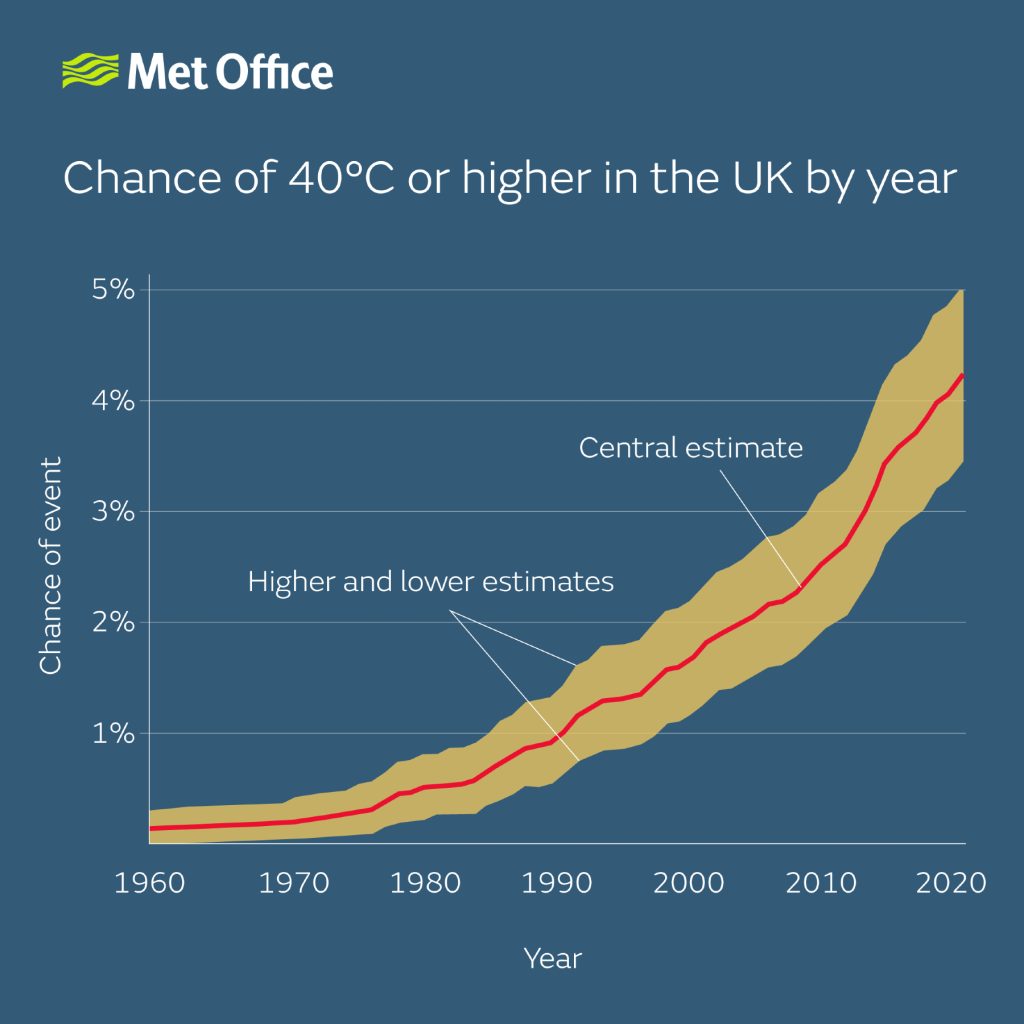
The new study shows that the chance of exceeding 40°C in the UK is accelerating at pace and underscores the need for people and organisations to prepare for even higher heat extremes in the near future.
In July 2022, the UK experienced its first recorded temperature above 40°C, when Coningsby in Lincolnshire reached 40.3°C. This unprecedented temperature formed part of Europe’s warmest summer on record. There were significant impacts, including wildfires, disruptions to transport and power systems, and increased mortality.
The approach taken in the study, called UNSEEN, uses a global climate model to create a large set of plausible climate outcomes in the current climate. This allows an assessment of current risk and how extremes have changed over the last few decades.
“The chance of exceeding 40°C has been rapidly increasing, and it is now over 20 times more likely than it was in the 1960s,” said Dr Gillian Kay, Senior Scientist at the Met Office.
“Because our climate continues to warm, we can expect the chance to keep rising. We estimate a 50-50 chance of seeing a 40°C day again in the next 12 years. We also found that temperatures several degrees higher than we saw in July 2022 are possible in today’s climate.”
The study also examines how heat waves change over time. “The well-known hot summer of 1976 had more than a fortnight above 28°C, which is a key heatwave threshold in southeast England,” said Dr Nick Dunstone, Met Office Science Fellow and co-author of the study.
“Our study finds that in today’s climate, such conditions could persist for a month or more. These findings highlight the need to prepare and plan for the impacts of rising temperatures now, so we can better protect public health, infrastructure, and the environment from the growing threat of extreme heat.”