‘White headlights’ are driving people off UK roads at night

Key Points
- A fifth of glare-affected UK drivers plan to drive less at night this winter.
- 14% of dazzled drivers said they had narrowly avoided a collision.
- People cutting back on night driving report seeing friends and family less.
- Drivers blame white LED headlights and taller vehicles for most glare.
- The government has committed to further research into headlight glare.
A fifth of UK drivers affected by headlight glare plan to drive less now the clocks have gone back, new RAC research has found.
The motoring organisation surveyed 1,208 regular UK drivers in October 2026, and 3% of those affected by glare said they plan to stop driving at night altogether.
Among people who have already given up night driving or cut back on it, 28% said they now see friends less often and 20% see family less. A fifth (21%) reported feeling much more isolated, while 6% have cancelled medical appointments and the same proportion have postponed them.
“As someone living with a chronic illness, I find headlight glare so difficult that I’m less inclined to drive at night. When the clocks go back, it narrows the window in which I feel able to leave the house,” said Larne Dorman, a driver from Worcestershire.
Overall, 83% of drivers said they were concerned about the impact of glare as darkness falls in the late afternoon. Three-quarters (76%) of those affected believe the problem is getting progressively worse.
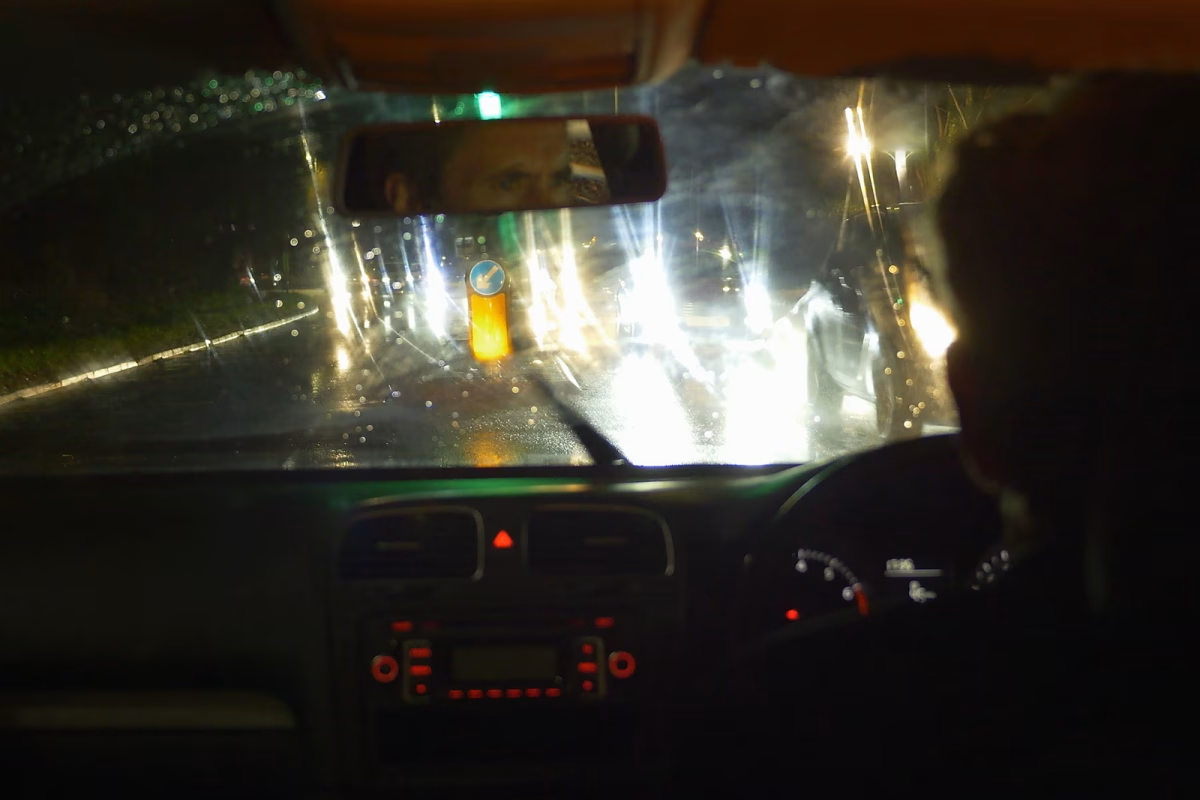
Half of dazzled drivers (50%) said overly bright headlights make it harder to spot hazards on the road, while 49% struggle to see road signs and markings. Nearly half (47%) find it difficult to judge the position of oncoming vehicles, and 43% can’t easily judge their speed and distance.
A third (35%) said they get temporarily blinded, and 63% struggle to see the flashing indicators of some oncoming vehicles. One in seven (14%) dazzled drivers said they had narrowly avoided a collision.
“Our latest figures uncover an uncomfortable irony: the very headlights that illuminate the road for drivers and keep them safe could be doing the polar opposite for others by temporarily blinding them. This is leading to people feeling less confident and safe behind the wheel, and in some cases is stopping them driving in the dark altogether,” said Rod Dennis, Senior Policy Officer at the RAC.
The problem extends beyond drivers, with 57% of respondents experiencing dazzle as pedestrians or wheelchair users and 20% while cycling after dark. Among parents and carers, 77% said they worry about their children’s safety during the darker months because of dazzling headlights.
“These concerns are leading to many people choosing to only drive during daylight hours, which can impact their independence and ability to maintain their social connections as we head into the winter months,” said Paramdeep Bilkhu, Clinical Advisor at The College of Optometrists.
White headlights and taller vehicles blamed
Drivers said white headlights, most commonly LEDs fitted to newer vehicles, cause far more glare than the yellow light of older halogen units.
Larger vehicles that sit higher on the road drew the most criticism, with 52% of affected drivers blaming them compared to 20% for hatchbacks, saloons and estates. A further 38% said the problem isn’t limited to any one type of vehicle.
The government commissioned an independent study into headlight glare after pressure from the RAC and others, and its findings, published in late 2025, confirmed that some brighter modern headlights are more likely to cause glare. The government committed to further research in its Road Safety Strategy in January, and the RAC said this work will get underway later this year.
Most drivers (73%) want that research to examine both existing and future vehicles, while only 14% think it should focus solely on cars not yet on sale.
“We don’t feel vehicle lighting regulations sufficiently consider the effects of very bright lights on other road users. We badly need to establish the correct amount of light needed to give drivers the best view of the road ahead without dazzling those in oncoming vehicles,” said Dennis.
The RAC and The College of Optometrists advised dazzled drivers to look briefly towards the kerb until their vision clears, and to slow down or stop somewhere safe and legal if needed. Drivers with automatic dimming headlights should also know how to dip them manually, as these systems don’t always detect approaching cars, cyclists or pedestrians quickly enough.