Scientists plan to age whisky in space

Key Points
- Engineers from Scottish and Japenese universities plan to launch 10ml of whisky into space to see the effect of the vacuum on the ageing of the liquid.
- The materials will be launched on a CubeSat, a microsatellite, in 2028, and the whisky will be 'tasted' by a highly accurate artificial tongue to monitor the effects.
- Researchers hope that the data gained from the experiment could inform new ways of synthesising chemicals in space, opening up new opportunities for biomanufacturing and the production of ethanol in orbit.
Researchers from universities in Scotland and Japan plan to age whisky in space aboard a small satellite orbiting the Earth.
The plan is to send whisky-making materials into orbit via a CubeSat, along with an ‘artificial tongue’ that will allow the engineers to sample the changes in the whisky’s terpenes as it orbits the Earth.
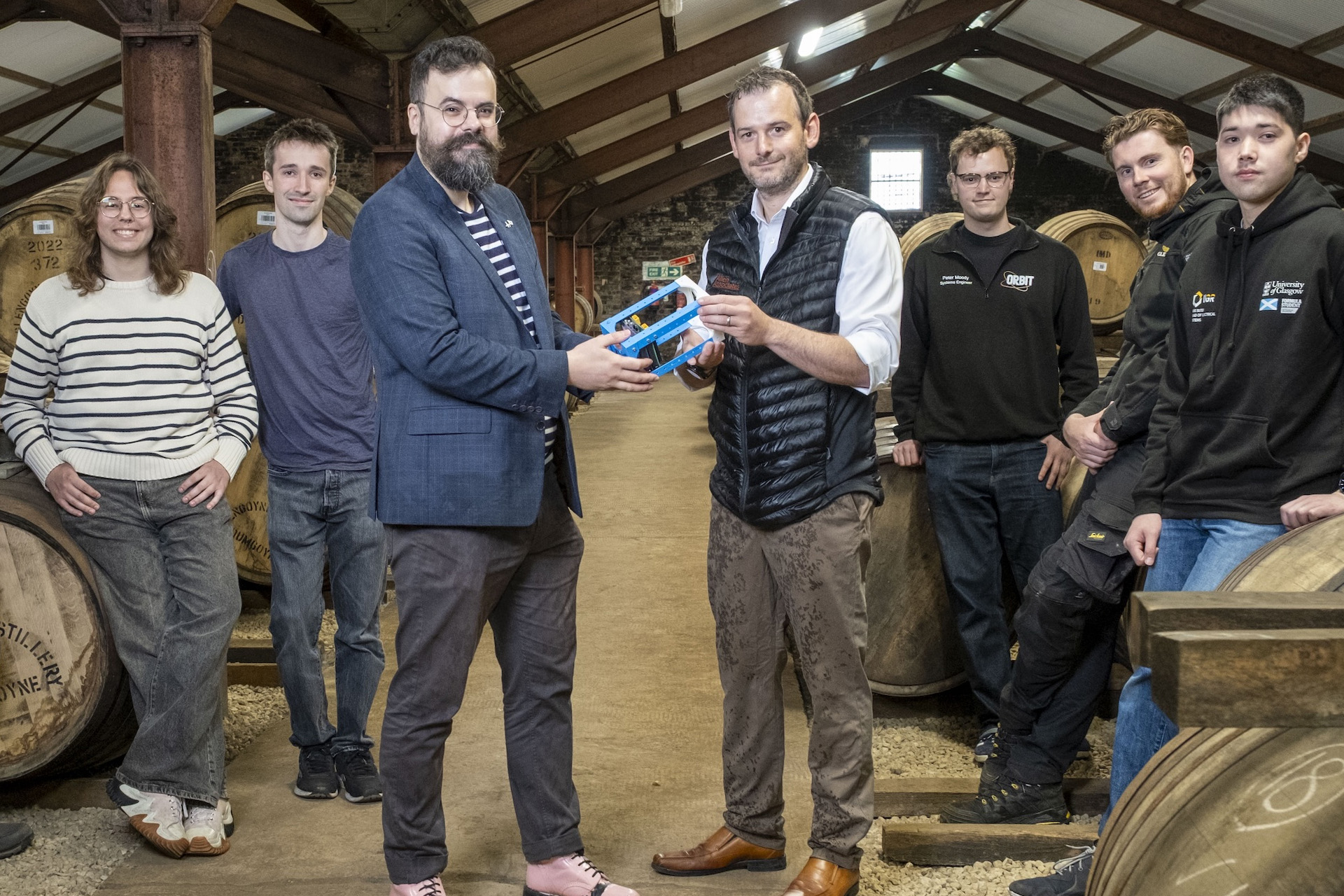
The project is the product of mechanical engineering students from the University of Glasgow and their colleagues from the Kyushu Institute of Technology in Japan.
Slated for the 2028, the launch of the CubeSat with 10ml of whisky will provide valuable data on how ethanol production interacts with the harsh environment of space.
It is hoped that the information gained from this project will be able to demonstrate the extraction of ethanol in orbit, which could help to eventually create opportunities for orbital factories that could synthesise molecules impossible to manufacture on Earth.
“Whisky gives us a very recognisable, very well-understood model for studying and monitoring biological and chemical processes in microgravity,” said University of Glasgow PhD Research Fellow Dr Gilles Bailet.
“This project will provide valuable new insights into how fermentation and chemical evolution can be monitored and controlled in space, as well as how ethanol can be made in orbit.”
“Our ultimate aim is that our project could help to scale up chemistry and biomanufacturing in space, where there is a great deal of potential to produce high-value pharmaceuticals and next-generation cancer therapeutics.”
The team will detect changes in the whisky sample as it orbits the Earth by using a nanophotonic tongue previously developed by Dr Alasdair Clark, which was found to be able to taste the differences between whiskies with greater than 99% accuracy, and even tell the difference between the same whisky aged for 12, 15, and 18 years.