New AI device could spare NHS patients millions of hospital blood tests

Key Points
- King's College London spinout Algocyte has launched the PROXIMA Mobile Health Station
- The finger-prick device uses sensors and AI to deliver blood results without a laboratory
- It targets patients needing regular monitoring, such as those on chemotherapy or clozapine
- The device holds the UKCA mark and launched at the Royal Society of Medicine on 29 June
- Algocyte is gathering further evidence before wider rollout and predictive use
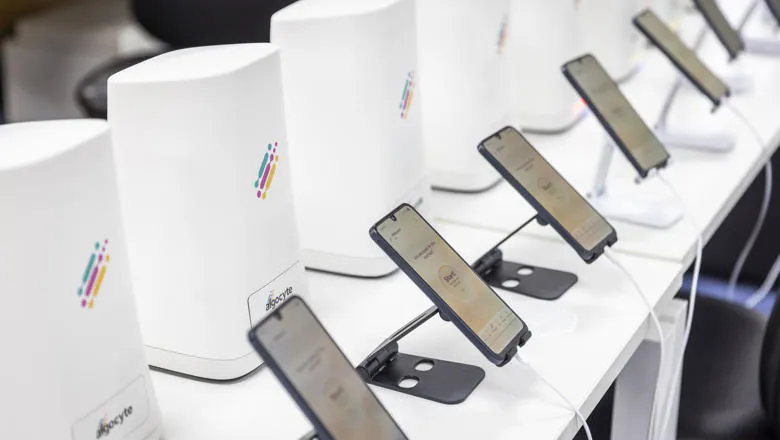
A King’s College London spinout has launched a Bluetooth blood testing device that uses AI to give patients results on the spot instead of sending samples to a laboratory.
King’s College London said Algocyte’s PROXIMA Mobile Health Station could benefit patients who need regular monitoring, such as those undergoing chemotherapy, who currently rely on frequent hospital or GP visits for blood tests.
Patients collect a small blood sample through a finger prick and place it into the device.
Sensors then measure the properties of the sample, and AI algorithms analyse the readings to generate results that doctors and patients can share digitally straight away.
The university said most blood tests only provide a snapshot of a person’s health at a single moment in time. The Algocyte device instead builds a picture of an individual’s health over time, which it said helps identify small changes that a one-off test would miss.
The NHS carries out millions of blood tests every year to diagnose disease, monitor treatments and assess overall health. King’s said the technology could free up some of those resources by moving routine monitoring out of hospitals and GP surgeries.
The device holds the UKCA regulatory mark, which means it complies with the relevant UK health, safety and environmental protection standards. Algocyte launched it at an event at the Royal Society of Medicine in London on 29 June, after it secured the mark.
The company is now putting the device through further testing and evaluation in commercial deployment. It said it is continuing to gather scientific evidence and complete further regulatory steps before making the technology available more widely, including for predictive use.
“This technology could have a real-world impact on the many patients receiving treatments that would benefit from regular blood monitoring, such as chemotherapy or the use of medicines like clozapine, which require close monitoring of blood cell levels due to potential side effects or complications,” said Hector Zenil, Founder and CEO of Algocyte and Associate Professor in Healthcare Engineering at King’s College London.
Zenil said the device shows how academia and industry can work together, with universities advancing research into health, disease and the application of AI to cell and molecular biology while companies translate those advances into scalable technologies.