Watch: British Army tests swarm of 8 drones that think as one

Key Points
- British Army completed eight weeks of trials with an eight-drone swarm commanded as a single group
- Dstl built the demonstrator with Army HQ and industry under AUKUS Pillar 2
- BlueBear (Saab) and the Applied Intuition-led Disruptor Group supplied rival swarms
- Technology could extend to ground vehicles and surface vessels
- More trials planned for 2026 to 2027 to shape procurement decisions
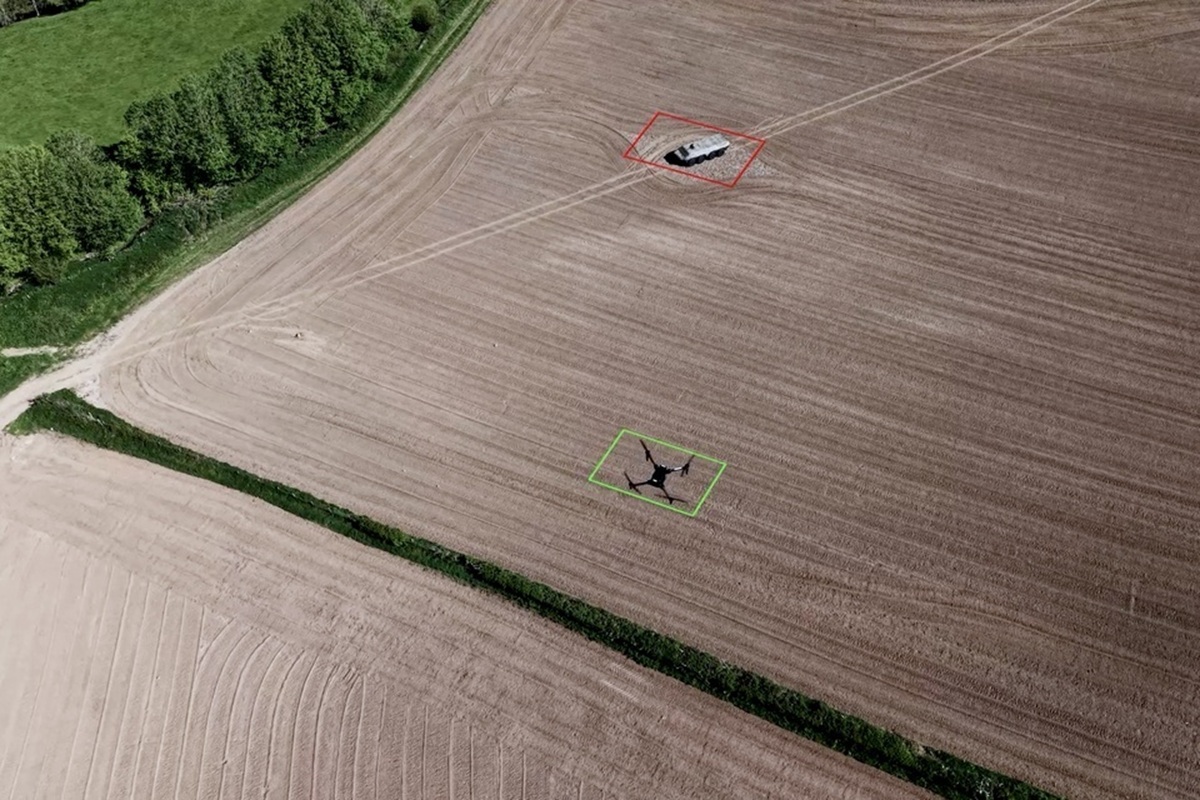
The British Army has completed eight weeks of field experiments with a swarm of eight drones controlled as a single collaborative group, the Defence Science and Technology Laboratory (Dstl) has announced.
Dstl delivered the system, known as the Software Defined Swarms Concept Demonstrator, in partnership with Army Headquarters and industry, and the work builds on joint activity under Pillar 2 of the AUKUS agreement between the UK, US and Australia.
The demonstrations were the UK’s first high technology readiness, collective control swarming drone trials, meaning an operator commands the group as one unit rather than flying each aircraft individually.
Two industry teams built rival versions of the swarm for the Army to test in realistic operational environments. BlueBear, a Saab company, delivered one option, and the Disruptor Group, a consortium of UK companies led by Applied Intuition, delivered the other.
The trials allowed the Army to judge whether each swarm could complete representative battlefield tasks, with a particular focus on forward deployed roles such as intelligence, surveillance and reconnaissance.
Dstl said the project combined more than a decade of its research in AI, autonomy and swarming technology into a practical capability. The resulting Swarm Capability Test Bed is now in the hands of British Army operators and is the focus of live flying by the Army’s Experimentation and Trials Group.
The Army has further experiments, trials and field tests planned for 2026 to 2027, which Dstl said will help shape future military capability and procurement decisions.
Beyond aircraft
While the demonstrator used uncrewed aerial systems, Dstl said the underlying technology could also apply to uncrewed ground vehicles and uncrewed surface vessels.
The system uses open architectures so that it can adapt to new technologies and threats throughout its service life. Dstl said flexibility and speed of adaptation were crucial to maintaining operational effectiveness, pointing to lessons from the conflict in Ukraine.
“The partnership with Dstl to develop swarming technology has been hugely energising for all involved. Dstl has enabled, with industry, the Army to conduct extensive in field trials since May,” said Brigadier Kieran Sheldon, Head of Military Capability Plans at the Army’s Directorate Capability and Force Design.
“The technology for true swarms, groups of robots that are commanded as collaborative groups, has significant potential and due to the work of Dstl and the industry teams, the Army is more informed and empowered to seize it,” he added.
“This offers the opportunity to really accelerate the Army’s adoption of uncrewed, autonomous and swarming systems to increase fighting power through lower cost attritable and consumable systems that provide coordinated effect,” Sheldon said.