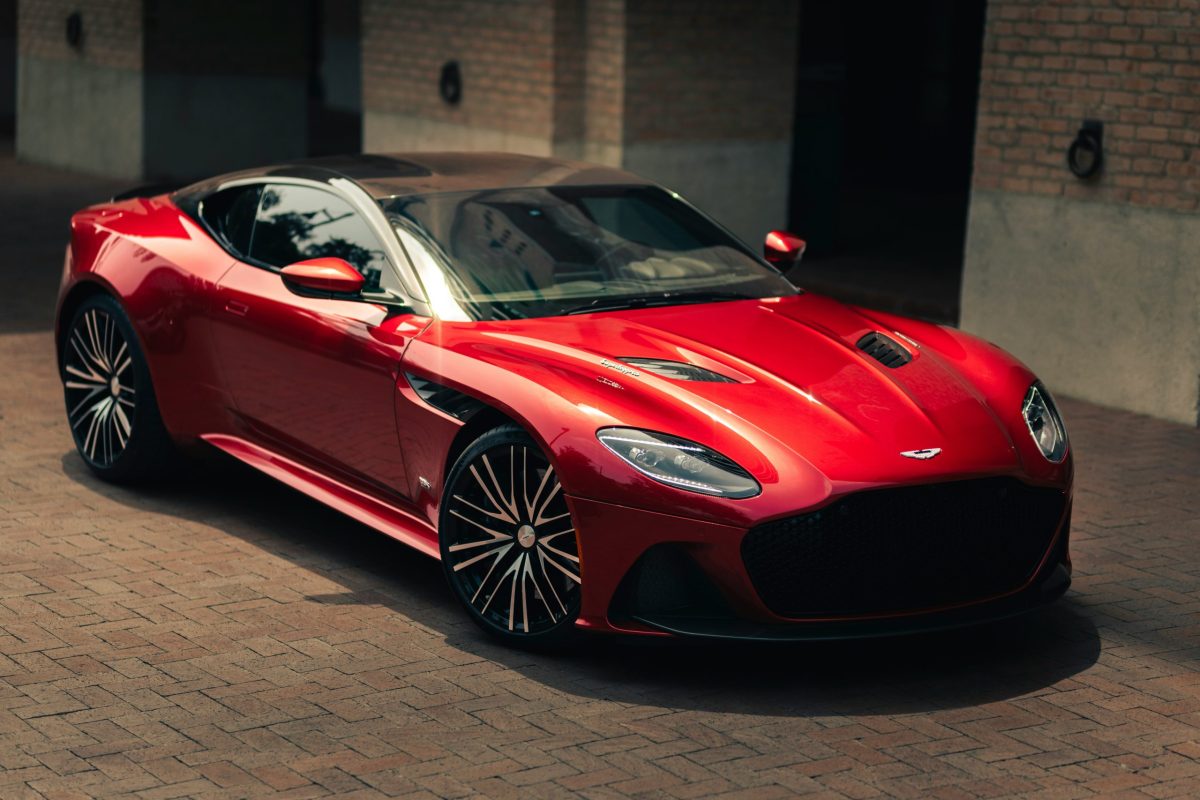
Aston Martin is now timing its US shipments around Trump’s tariffs

Key Points
- Aston Martin managed the timing of its US imports towards the end of each quarter in H1 2026 to stay within a 25,000-vehicle quarterly tariff quota.
- UK-built vehicles enter the US at a 10% tariff up to 100,000 units a year, and 27.5% above that threshold, allocated first come, first served.
- The company said the mechanism limits its ability to forecast quarterly from 2026 onwards.
- Americas wholesale volumes rose 29% to 837 units in the half, with regional revenue of £242.3 million.
- Group revenue rose 38% to £628.6 million while pre-tax losses widened to £154.2m.
Aston Martin managed the timing of its US imports towards the end of each quarter through the first half of 2026 to stay inside a 25,000-vehicle tariff quota, and told investors the move limits its ability to forecast quarterly from this year onwards.
The disclosure sits in the outlook section of the carmaker’s interim results for the six months to 30 June 2026, published on Wednesday (29 July).
Under the quota the US introduced for UK manufacturers in 2025, up to 100,000 UK-built vehicles enter the country at a 10% tariff in a calendar year, with anything above that threshold charged at 27.5%.
The mechanism allocates the lower rate on a first come, first served basis, capped at 25,000 UK-made vehicles each quarter from Q1 2026.
Aston Martin said the arrangement adds a further degree of complexity for UK automotive manufacturers and that it will try to optimise production schedules to reduce the risk attached to the quota while prioritising working capital management.
How the queue works
The company shares the quarterly allocation with every other UK vehicle exporter, which means the 25,000 units fill up through the quarter and the date a car clears customs decides its tariff rate.
Aston Martin ships from Gaydon in Warwickshire and St Athan in south Wales, and the Americas is its largest region by both volume and revenue.
Wholesale volumes in the Americas reached 837 units in the first half, up 29% on the 647 units of the prior year period, with Q2 volumes up 47% at 483 units. Regional revenue rose to £242.3 million from £149.2 million.
Aston Martin said it continues to engage with the US and UK governments to secure greater clarity and certainty on the specific automotive tariff.
In its principal risks, the company describes itself as susceptible to volatility associated with US import tariffs on vehicles built outside North America, and states that increased tariffs can dampen demand for certain models, disrupt established distribution flows and raise its cost base in a strategically critical market. Its stated contingency plans cover supply chain adjustments and pricing strategies.
Improved results
Total wholesale volumes reached 2,331 vehicles in the half, 21% ahead of the 1,922 units of a year earlier, with Q2 volumes up 43%. Revenue rose 38% to £628.6 million and gross margin improved to 33.8% from 27.9%, helped by more than 220 deliveries of the Valhalla plug-in hybrid. Pre-tax losses widened to £154.2 million from £140.8 million, and net debt reached £1.54 billion.
Chief Executive Adrian Hallmark said the group expects a stronger second half as transformation benefits flow through and Specials deliveries continue.
Aston Martin left its full-year operational guidance unchanged, other than a revision to net cash interest to around £160 million from around £150 million following the £550 million debt financing it closed on 22 July.
It expects full-year wholesale volumes similar to the 5,448 units of 2025, gross margin in the high 30s%, and a material improvement in free cash outflow against last year’s £410 million.
In February the company confirmed it would cut up to 20% of its workforce, around 600 roles from a headcount of about 3,000.
It also trimmed its five-year capital investment programme to around £1.7 billion from around £2 billion, and expects capital investment of about £300 million this year against £341 million in 2025.