London is running out of graves

Key Points
- London is running out of burial spaces, and the Mayor's new plan has encouraged boroughs to re-use old graves instead of digging new ones.
- Burial space has been a problem in London for years, and research has indicated the need for a city-wide policy to address the challenge.
- The draft plan proposes a policy that encourages re-use of graves beginning with those more than 100 years old.
- The City of London Cemetery already practices grave re-use, burying new bodies in existing graves that are more than 75 years old.
Death is a difficult subject to contend with at the best of times, but in London where space is at a premium, councils are faced with an unenviable problem – they are running out of burial space.
Mayor of London Sadiq Khan recently published his draft London Plan, which lays out his priorities of building new and affordable housing in the capital while also clearing space for AI data centres to boost economic growth.
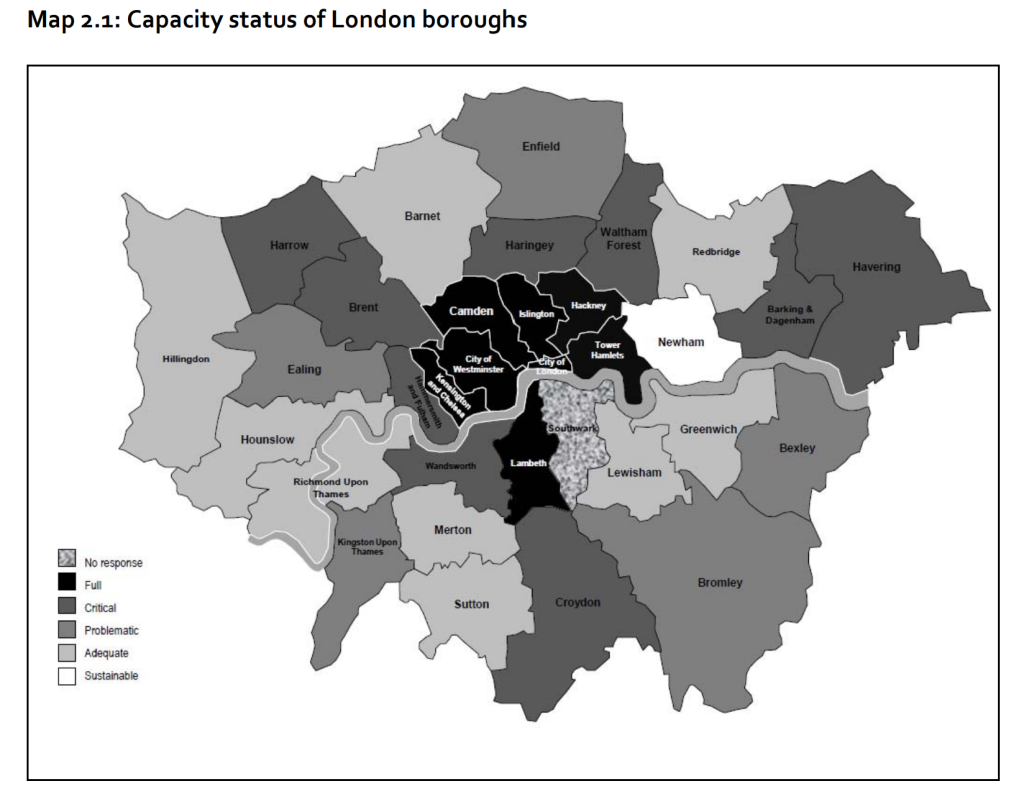
Alongside these broader goals, the draft plan also attempts to deal with a problem that London has been anticipating for decades: many councils are running out of burial spaces.
The plan includes a policy of planning pro-actively for the expansion of burial space in the capital, as well as re-using burial space to ease demand for new graves.
It cites research published in 2011 that showed how London councils, especially those in inner London, were running out of burial space and demonstrated that the city required a strategy to free up capacity.
Re-using burial space in London cemeteries
The policy proposed in the draft plan states that the development of new burial spaces or the expansion of existing spaces should be supported by local authorities. It also states that boroughs should consider using burial spaces in neighbouring regions where possible.
The plan proposes integrating burial spaces with plans for local green infrastructure projects, as well as considering grave re-use within existing burial sites, beginning with graves that are at least 100 years old.
“In identifying opportunities for additional provision, grave re-use should be considered, starting with graves known to be more than 100 years old,” the plan states.
“Design for re-use may include providing for double or even triple depth burials where ground conditions allow.”
Grave re-use may seem a significant step for cemeteries in the capital, but it is already practised by the City of London Cemetery & Crematorium, Europe’s largest municipal burial ground, which as a result maintains it will never run out of space.
In the City of London Cemetery, graves that are chosen for re-use must be more than 75 years old, and families are contacted for consent prior to this taking place.
The practice is straightforward, and involves simply placing a new body into an existing grave. If any remains are found, they are placed deeper within the grave, and the memorial is turned around to make space for a new inscription.
The alternative to re-using graves or working with neighbouring boroughs to even out burial capacity is to build new cemeteries on Green Belt land.
The London Plan does make accommodation for this where appropriate, stating that its policy “recognises that burial spaces can form part of London’s green infrastructure and historic environment and that this presents opportunities not just constraints.”