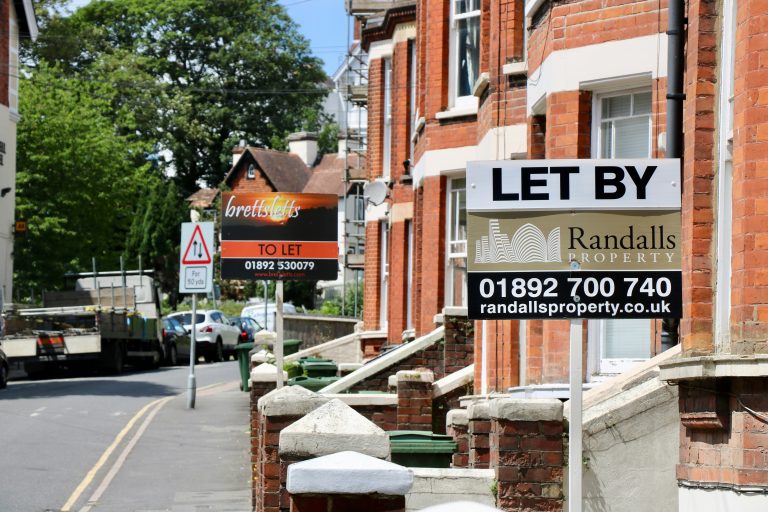
London rents rise after legislation to protect tenants takes effect


Key Points
- Following the Renters' Rights Act taking effect, rental prices in London have increased.
- Almost half of all landlords cite the new legislation as their primary concern, and more are considering selling, putting strain on the market.
- While a small portion of tenants expect their rents to increase, the majority of landlords expect they will hike rents.
- Rental growth is higher in outer London than central London, but both regions are seeing slow and steady increases.
Landlords faced with rising costs and mortgage rates, as well as new protections introduced in the Renters’ Rights’ Act, have raised prices to offset costs and risks.
This is according to new data from estate agents Savills, which showed that rental values across prime London markets grew over the past three months, signalling a return to growing rental prices in areas with high demand.
During the second quarter of this year, rent values in outer prime London increased by 1.2%, while prime central London saw a 0.4%, which Savills said shows that rents are slowly but steadily increasing again.
Almost half of agents in London said the Renters’ Rights Act was a primary concern for landlords, specifically the abolition of Section 21 notices. Outside of London, this rose to 71%.
Prior to the Renters’ Rights Act taking effect in May, landlords were able to issue a Section 21 notice to tenants to evict them without giving a reason.
The Act, which was introduced by Labour to give more security and protection to tenants renting in England, now requires landlords to have a reason to evict tenants, which can include moving in themselves or selling the property.
Following the introduction of the new legislation, there is also a great discrepancy between landlords’ and tenants’ expectations for rent increases.
While 82% of agents in landlords said the landlords they represent expect rents to increase, only 30% said tenants expect the same.
Savills also noted that rental price growth in the capital has been strongest among those properties within the scope of the Renters’ Rights Act (the legislation only provides statutory protections to residential tenants who pay less than £100,000 per year in rent). Properties below this threshold saw their rent increase by 0.7% in prime central London, while those above only saw rent increase by 0.1%.
In outer prime London, rents for properties under the threshold rose by 2.7% over the past year, while higher-value properties only saw an increase of 1.7%.
“Landlords are continuing to adapt to a changing regulatory environment following the introduction of the Renters’ Rights Act, while also contending with higher mortgage costs and an increased tax burden,” said Savills research analyst Jessica Tomlinson.
“As a result, many are reassessing rental values across their portfolios to help offset rising operating costs.”
“At the same time, the implementation of the RRA has further prompted some landlords to test the sales market, further reducing the amount of stock available. All this combined has supported growth in rents, despite economic headwinds. However increases are strongest in markets most impacted by the RRA,” she said.