UK lithium battery fires now break out every five hours

Key Points
- UK fire services dealt with 4.8 lithium-ion battery fires a day in 2025, up 147% from two a day in 2022
- E-bikes drove the surge with 520 fires last year, with retrofitted models more prone to ignition than factory-built bikes
- London Fire Brigade recorded 522 incidents in 2025, 30% of the UK total, and handled 44% of all UK e-bike fires
- EV fires rose 133% to 279 but the UK EV fleet grew faster at 206%, so per-vehicle fire rate fell
- Homes accounted for 46% of all lithium-ion fires, with phones, tablets and power packs causing 45% of incidents
UK fire brigades now tackle a lithium-ion battery fire every five hours, according to new research from QBE Insurance.
QBE’s analysis of Freedom of Information data from 42 UK fire services shows crews dealt with 4.8 lithium-ion fires a day on average in 2025, up 147% from two a day in 2022.
London Fire Brigade recorded 522 of these incidents last year, accounting for 30% of the national total. The insurer submitted its FOI request to all 49 UK fire services in February 2026 and received responses through April.
E-bikes and electric vehicles
E-bikes drove much of the rise. Services logged 520 e-bike fires in 2025, more than triple the 2022 figure and roughly 30% of all lithium-ion incidents.
London Fire Brigade handled 230 of these, representing 44% of the UK e-bike total. Where services tracked the distinction, converted or retrofitted models appeared more often than factory-built bikes.
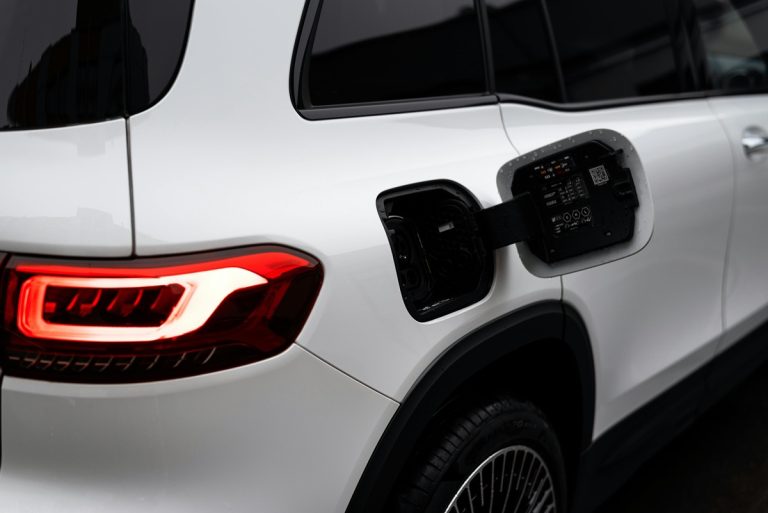
Electric vehicle fires climbed 133% over the same period, from 120 to 279. The UK EV fleet grew faster, expanding 206% from 664,148 cars in 2022 to 1,971,764 in 2026, according to Zapmap.
The fire rate per vehicle, therefore, fell even as the absolute count rose.
Homes accounted for 46% of lithium-ion battery fires last year, outdoor locations 31%, and commercial premises 23%. Mobile phones, tablets, power packs, and similar handheld kits caused 45% of incidents.
A typical UK household holds 15 to 25 battery-powered devices, sometimes more, covering everything from smartphones and laptops to power tools and solar storage.
Thermal runaway
Thermal runaway sits behind almost every lithium-ion fire.
The chemical reaction sees battery cells overheat irreversibly, usually after impact damage, overcharging, or overheating, and produces fires that spread faster and burn longer than ordinary combustion.
Adrian Simmonds, Risk Manager at QBE, said thermal runaway fires can need up to 10 times more water to contain than conventional fires.
Simmonds urged consumers to charge devices away from escape routes, avoid overnight charging, and buy only certified products from reputable retailers, particularly when buying e-bikes.
West Yorkshire Fire and Rescue Service reported the second-highest count after London, with 126 incidents in 2025, followed by Lancashire Fire and Rescue with 117.
Bedfordshire and Luton Fire and Rescue Service was the only service to record a year-on-year drop, a fall that coincided with its updated e-bike and e-scooter safety guidance issued in 2023.
The UK Product Regulation and Metrology Act received royal assent in July 2025. The legislation gives the government power to rewrite product safety rules and explicitly targets uncertified lithium-ion products sold through online marketplaces, including e-bikes and their replacement batteries.