“I’m £300,000 richer than I should be because of when I was born” – UK MP calls out unsustainable pension system
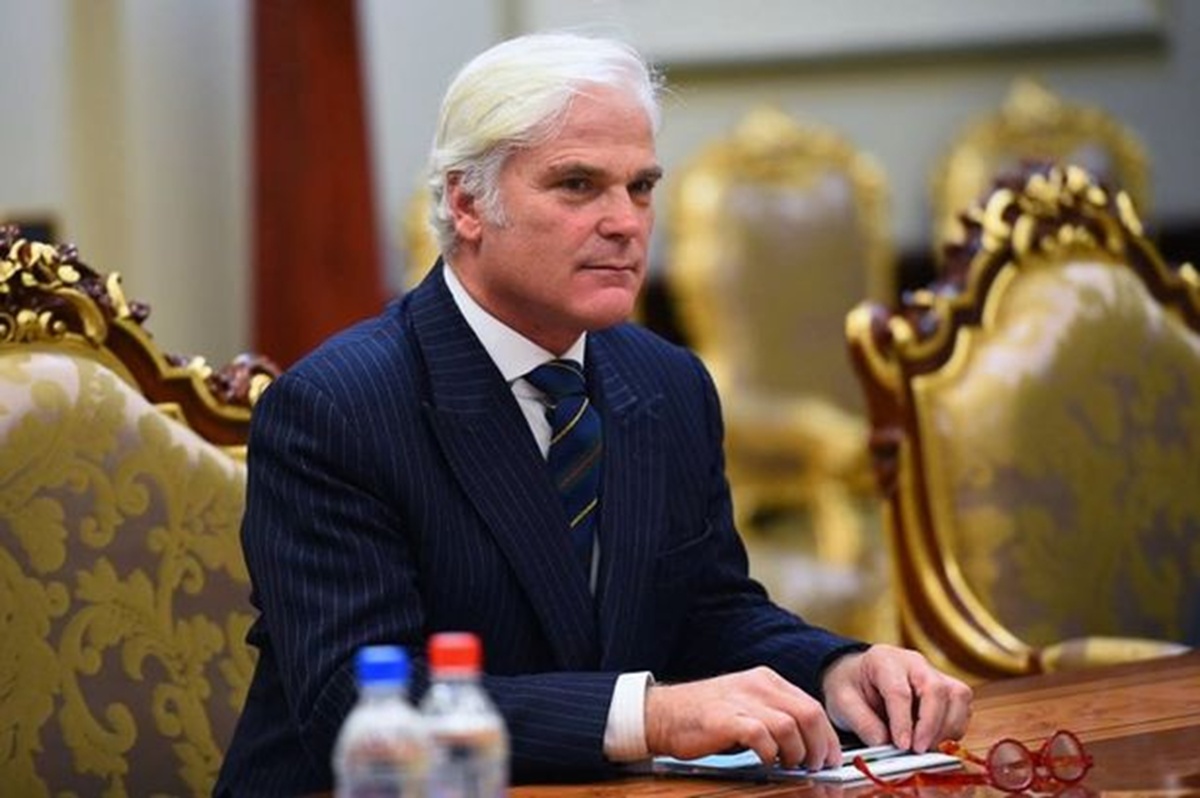

A senior Conservative MP has admitted he is “£300,000 richer than he should be” simply because of the year he was born, and used the confession to launch a blunt attack on the UK’s state pension system, warning that its generous triple lock is “unsustainable” and risks turning future generations into “beggars.”
In a blog post published on his personal website on Sunday (12 April), Sir Desmond Swayne, the MP for New Forest West, highlighted research from the Centre for Policy Studies showing that the average person born in 1956 will receive nearly £300,000 more in lifetime benefits than they paid in taxes.
“I am fortunate that I was born in 1956. Lucky me,” Swayne wrote. “This is largesse unstainable.”
The veteran MP, who served as a government minister under David Cameron and Boris Johnson, zeroed in on the state pension and its triple lock, the mechanism that guarantees annual increases by the highest of average earnings growth, inflation, or 2.5%.
“This year alone it adds £18 billion to the bill, a total current State Pension bill of some £150 billion annually,” he said.
A “pay-as-you-go” system, not a personal pot
Swayne attacked the common misconception that the state pension is an earned right akin to a private pension. National Insurance contributions, he argued, are simply a tax that flows into general government spending.
“There is no fund where your contributions are invested to pay for your pension,” he explained. “Current taxes pay for current state pensions, and future taxes will pay future state pensioners.”
The benefit is not linked to the amount an individual paid in, higher earners contribute more but receive the same flat-rate pension as lower earners. Even the contributory principle has been eroded, Swayne noted, as people can qualify for credits while claiming benefits.
The entire system relies on an implicit “contract between generations”. Today’s workers fund today’s pensioners in the hope that tomorrow’s workers will do the same for them. But that contract is under strain.
The UK’s working-age population is shrinking as a share of the total, while retirees are living longer. Meanwhile, Swayne’s own generation, the “class of 1956”, benefited from soaring house prices and strong private pension provision that younger cohorts are unlikely to enjoy.
“The generosity of our state pension depends not on our contributions but upon a ‘contract’ between generations,” he wrote. “This expectation that future generations will continue to be able to afford to pay pensioner benefits is put in jeopardy by the Triple Lock.”
Triple lock was temporary medicine – now it’s the problem
Swayne acknowledged that the triple lock was introduced with a legitimate goal: to restore the value of the state pension after years of erosion under previous governments. But he argued it has outlived its purpose.
“The State Pension was conceived as a minimum provision in old age, with the expectation that it would be augmented by pensioner’s own savings,” he said. “Residual pensioner poverty must be addressed by targeted help. The nation cannot afford to make ever more generous provision to all pensioners.”
He called on politicians to agree on a target relationship between average wages and the pension, then phase out the triple lock once that target is met.
“Otherwise we’ll all end up as beggars,” he warned.
A growing fiscal headache
Swayne’s intervention comes as the triple lock delivered another significant uplift this month. From 6 April, the full new state pension rose 4.8% to £241.30 per week (£12,547.60 annually), while the basic state pension increased to £184.90 per week.
The government has repeatedly pledged to maintain the triple lock, arguing it protects pensioners from poverty.
However, independent analysts and think tanks have long flagged the policy’s long-term cost amid demographic pressures. The Office for Budget Responsibility has previously projected that pension spending could rise sharply as a share of GDP over the coming decades unless reforms are made.
Swayne’s comments echo a growing debate in Westminster about intergenerational fairness. Younger workers face higher housing costs, student debt, and slower wage growth, while footing an ever-larger bill for an ageing population’s pensions and healthcare.
The MP stopped short of proposing specific alternatives but made clear that blanket generosity to all pensioners, regardless of wealth, is no longer viable.
“Hold politicians to account as to what the proper target relationship is between average wages and the pension, and an expectation of when that target relationship will be achieved,” he said.