The UK just tried a basic income pilot – here’s what happens when you give people free money


In a bold experiment that could reshape how governments support vulnerable youth, Wales handed out no-strings-attached cash to hundreds of young people leaving the foster care system.
The result was a mix of empowerment, improved wellbeing, and some unexpected pitfalls, according to a newly released evaluation report.
Launched in July 2022, the Basic Income for Care Leavers in Wales pilot provided £1,600 per month to eligible 18-year-olds for up to two years. The program targeted “care leavers”, young adults ageing out of the child welfare system, who often face steep challenges like poverty, housing instability, and mental health issues without family safety nets.
Uptake was remarkably high: 97% of the 644 eligible participants signed up, making it one of the most comprehensive basic income trials for this demographic.
The pilot wrapped up in 2025, with the last payments issued in November, but its evaluation by researchers from Cardiff University and other institutions continues until 2027.

The third annual report, published in February 2026, draws on qualitative interviews with participants at the midpoint and shortly after the programme ended, as well as focus groups with professionals like social workers and managers.
It paints a nuanced picture of what happens when you give “free money” to those who need it most.
A safety net that boosted autonomy and wellbeing
For many participants, the unconditional payments were a game-changer, acting as a safety net that reduced financial stress and opened doors to a more normal young adulthood.
“Before the money, I felt very restricted… during the money… I felt like I was able to do what I wanted and live my life the way I wanted, which made me feel good,” one young person reflected in an end-of-pilot interview.
The report highlights improvements in mental health and overall wellbeing, with recipients reporting less anxiety about basic needs and more confidence in planning for the future.
The cash fostered a sense of dignity and control, contrasting sharply with their often restrictive care experiences, where decisions were made for them. It enabled everyday joys like socialising, hobbies, travel, and even holidays – activities many had previously skipped due to cost or reliance on others.
In terms of physical health, the income indirectly helped by allowing better access to nutrition, transport, and leisure, though direct links were less pronounced.
Relationships also benefited as the participants invested more in social bonds, using the money for outings or gifts, strengthening ties with friends and family.
Education and work: More choices, but less urgency?

The pilot’s impact on work, education, and training was varied – a key area of interest for economists debating universal basic income (UBI).
On the positive side, the financial security let some pursue education they couldn’t otherwise afford, covering costs for courses, equipment, and travel. It gave them ‘space’ to explore career options without rushing into low-paying jobs out of necessity.
However, the report also notes a key downside: reduced motivation for employment among some. With a steady income, the urgency to find work diminished, leading a few to disengage from job searches or quit existing roles.
Professionals echoed this, with one head of service observing that “people… stopped working, because they had income that they didn’t have to work for.”
This raises questions about UBI’s potential to alter labour market dynamics, though the report notes that effects were individual and context-dependent.
Housing security and financial lessons learned
Housing emerged as a strong positive. The payments helped recipients save for deposits, afford independent living, or maintain stable accommodations. “I’ve got that money saved up to be able to live alone… and not worry about losing the place I’m at,” said one at the midpoint.
Yet, broader market issues like limited affordable housing capped the benefits.
Financial management was a mixed bag. Many built budgeting skills and felt the amount was just right, “not too little… not too much”, to cover needs without excess.
But others struggled with impulsive spending, and saving was the top regret in hindsight. Few took up offered financial advice sessions, suggesting a preference for independence or perhaps better-tailored support.
Engagement with support services shifted too. The income reduced reliance on formal aid for basics, freeing up conversations with personal advisors to focus on aspirations and wellbeing rather than crises.
The cliff edge: Life after the pilot
The report’s most sobering insights come from post-pilot interviews, where many grappled with the sudden drop in income.
Transitioning to benefits like Universal Credit often meant depleted savings, new debts, or curtailed choices.
“I did (save during the pilot), but I’ve ended up getting through it now, trying to get used to living on a lower income,” one shared.
Emotionally, it felt like losing a “comfort blanket,” with some describing a return to stress and restriction.
For vulnerable participants, the cash sometimes exacerbated issues like addictions or exploitation, highlighting the need for complementary safeguards.
Social workers and managers described the pilot as an “opportunity”, the most common word in their feedback, enabling choices in spending, education, and life paths.
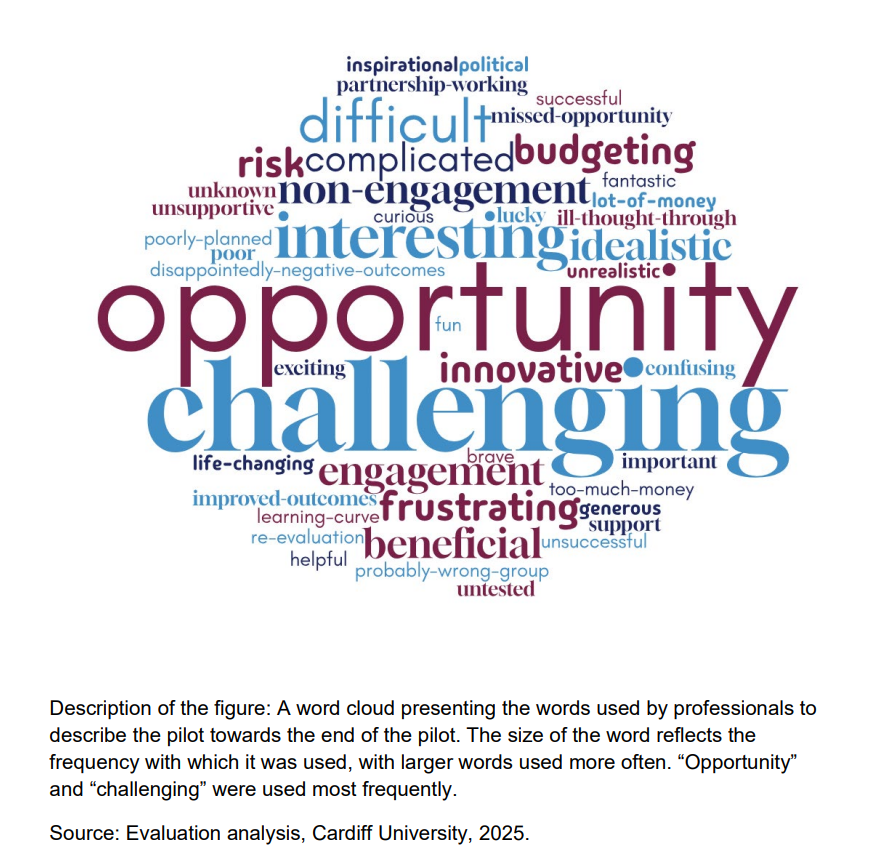
It shifted their roles toward holistic support, away from constant financial firefighting. “For all of our young people, it gave them opportunities… everyone had, to an extent, a choice how they wanted to utilise that money,” said a team manager.
But there were also clear concerns. Fears of dependency, disengagement (some youth “disappeared” after gaining financial independence), and worsened outcomes for those with addictions or mental health challenges.
Housing gains were tempered by supply shortages, and while mental health often improved via reduced stress, it deteriorated for a minority.