UK researchers: Loose shirt buttons beat Apple Watch tracking
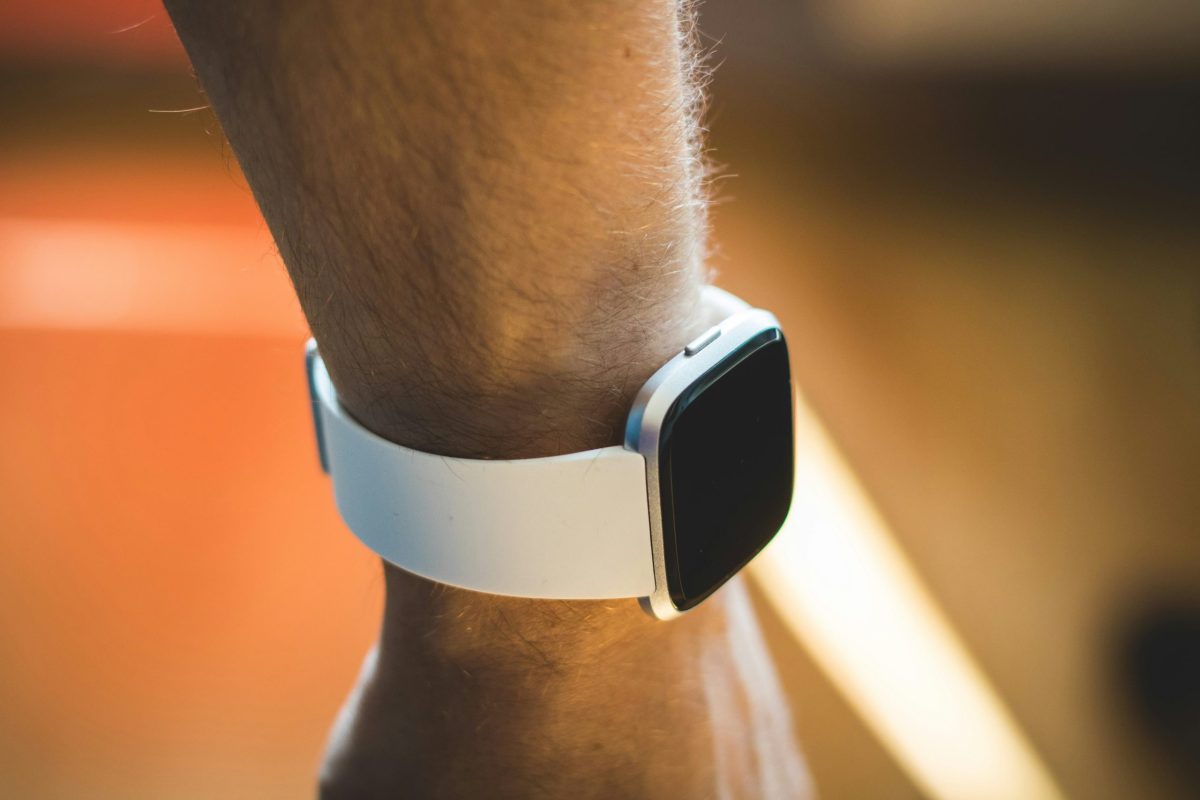

Measuring human movement with tracking devices on loose clothing is more accurate than on tight body suits or straps, new UK research shows.
The discovery by scientists at King’s College London could mark a potential breakthrough for a range of technologies, including improving accuracy on personal health devices, such as Fitbits and smart watches, to enhancing motion capture for CGI movie characters.
It could also support health and medical research by making it easier to gather data on conditions affecting mobility such as Parkinson’s, the researchers said.
The research, published in journal Nature Communications, found that loose fabric can predict and capture the body’s movements with 40% more accuracy and needing 80% less data, than if a sensor were stuck to your skin.
“When we think about technology that tracks movement – like a Fitbit on your wrist or the suits actors wear to play CGI characters – we had thought that the sensors need to be tight against the body to produce the most accurate results. The common belief is that if a sensor is loose, the data will be ‘noisy’ or messy,” said Dr Matthew Howard, paper co-author and a reader in engineering at King’s College London.
“However, our research has proven over multiple experiments that loose, flowing clothing actually makes motion tracking significantly more accurate. Meaning, we could move away from ‘wearable tech’ that feels like medical equipment and toward ‘smart clothing’ – like a simple button or pin on a dress – that tracks your health while you feel completely natural going about your day.”
A mechanical amplifier
The research found that loose fabric acts like a ‘mechanical amplifier’ which means that movement is easier to detect.
Dr Howard explains that “when you start to move your arm, a loose sleeve doesn’t just sit there; it folds, billows, and shifts in complex ways – reacting more sensitively to the movements than a tighter fitting sensor.”
This could bring smart clothing one step closer, with the potential to add sensors to buttons on shirts as a discrete alternative to bulky and uncomfortable devices.
The researchers also believe the findings have potential to transform the field of robotics research as well as automated technologies that use gesture-based control to turn on the lights or a tap.
Scientists tested sensors on a wide range of different fabrics with human and robot subjects undertaking a variety of different movements.
They compared the findings from loose fabrics with standard motion sensors attached to straps and tight clothing and found that every time the fabric-based approach was able to detect movements more quickly, more accurately, and needed less movement data to make predictions.
Looser fabric was also able to distinguish between very similar or subtle, barely detectable movements.
A revolution for wearables
For Dr Howard, an expert in robotics research, this work opens the exciting possibility to revolutionise data collection on human mobility to develop better, smarter robots.
“A lot of robotics research is about learning from human behaviour for robots to mimic, but to do this you need huge amounts of data collected from every day human movements, and not many people are willing to strap up in a Lycra suit and go about their daily business,” he explained.
“This research offers the possibility of attaching discreet sensors to everyday clothing, so we can start to collect the internet-scale of human behaviour data, needed to revolutionise the field of robotics.”