How much time the average Brit spends online each day – and the apps they are using


Communications regulator Ofcom has published its latest Online Nation report, which explores how adults and children in the UK experience life online.
The data shows that adults now spend an average of four and a half hours online a day – up by 10 minutes on last year. Women spend 26 minutes a day longer online than men, with a daily average of 4 hours 43 minutes.
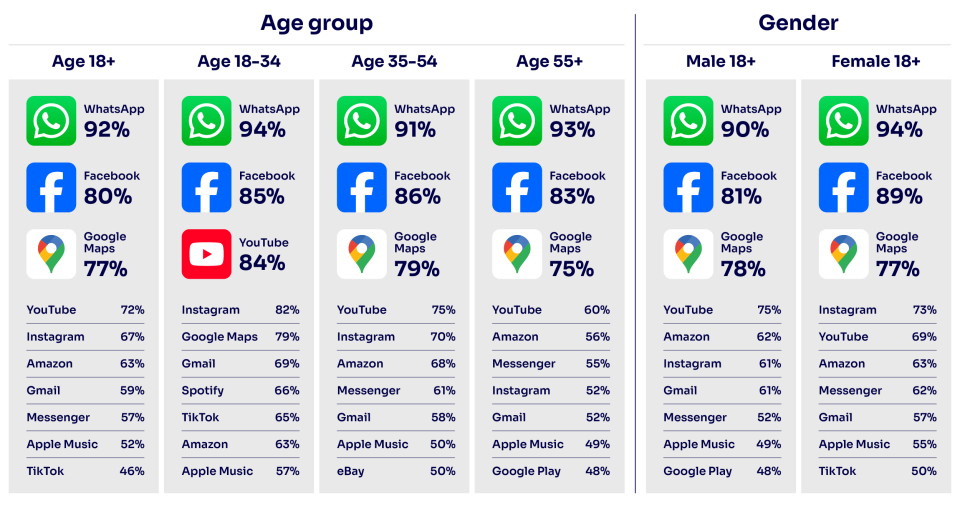
Most of the time, online is spent on a smartphone, where adults use an average of 41 apps a month. WhatsApp, Facebook, and Google Maps are the three most commonly used apps among adults.
This means that two major tech firms now account for more than half of the time people in the UK spend online.
YouTube is the most used Alphabet-owned service, used by 94% of adults. Time on YouTube is increasing, reaching an average of 51 minutes a day, not including the TV set. The combination of Facebook and Messenger (93% adults) is the most widely used Meta service, followed by WhatsApp (90% adults).
The rise of AI
Google Search is used by four in five (82%) adults. It is by far the most used search service in the UK, with three billion searches a month.
However, AI is changing the UK’s search experience. About 30% of searches now show AI overviews, and more than half (53%) of adults say they see these summaries often. In most cases, they aren’t seeking these but finding them now included by their search services.
Generative AI services are also gaining traction, with more people actively seeking them out. ChatGPT had 1.8 billion UK visits in the first eight months of 2025, up from 368 million in the same period of 2024.
This year, only a third of adults (33%) said they feel the internet is good for society – down from 40% last year. And while nearly two-thirds (65%) of adults believe the personal benefits of being online outweigh the risks, this figure has declined steadily from 71% two years ago.
Fewer adults feel freer to be themselves online than offline this year (25%, down from 30% last year), and only 35% feel they can share opinions more easily online than offline.