Plans to expand Luton Airport take a step closer

The High Court has dismissed a challenge against the government’s approval of plans to expand Luton Airport.
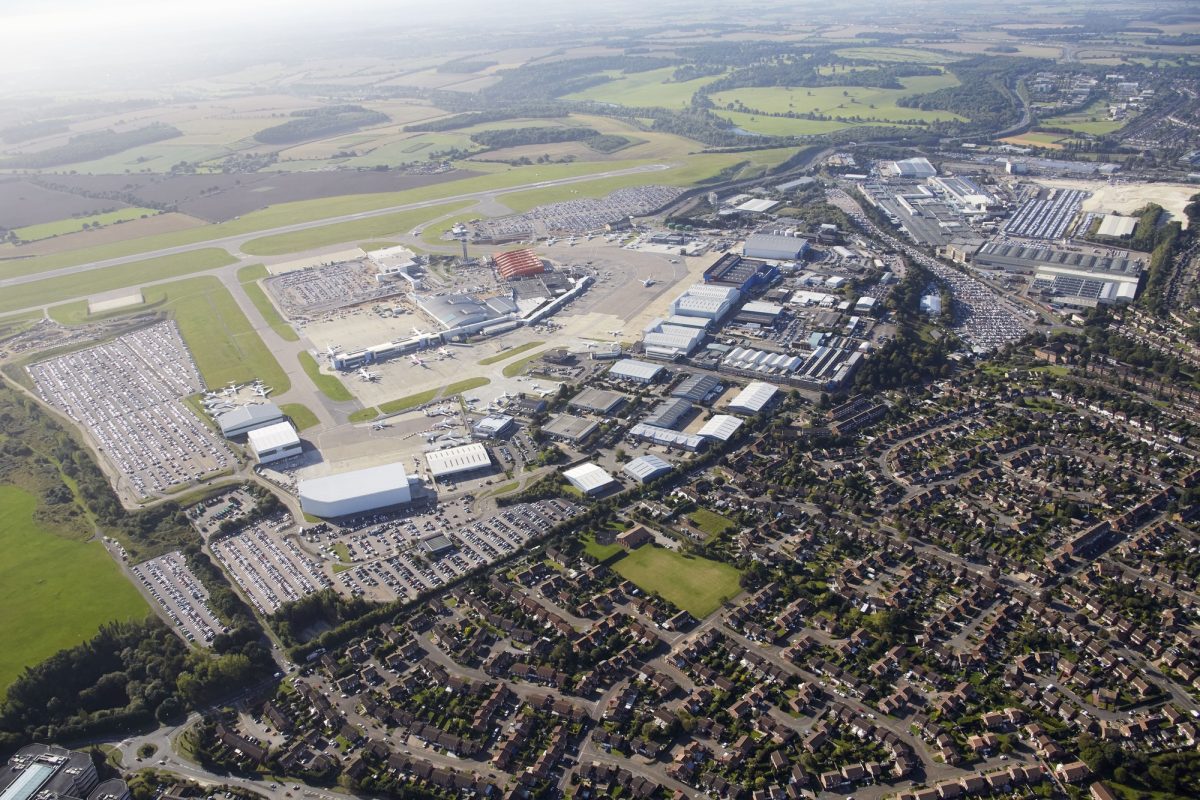
In April, the government granted consent to expand London Luton Airport’s passenger capacity to 32 million per annum by the mid-2040s.
The scheme allows for:
- Expansion of the existing terminal
- A new second terminal
- Additional aircraft stands
- Improved taxiway system
- Supporting operational infrastructure
- Enhanced surface access (road traffic) arrangements
- Powers of compulsory acquisition over specified parcels of land and property
- A significant upgrade to the existing noise insulation scheme.
In 2019, the airport supported a £1.1 billion contribution to GDP and sustained 16,500 jobs across the Three Counties. Growing the airport to 32 million passengers per annum is forecast to bring an extra £900 million annual economic activity and 6,100 new jobs to the region.
Court challenge
A campaign group, the Luton & District Association for the Control of Aircraft Noise (LADACAN), brought the challenge to the High Court.
The group has now indicated that it is considering appealing the High Court ruling, which could further delay the airport’s expansion plans. It’s concerns are primarily focused on the environmental damage that the airport expansion could cause.
“The Luton Airport case is a watershed moment for the UK’s climate future. The government’s expert advisers have warned that we cannot meet Net Zero while continuing to expand aviation on the basis of partial or outdated climate assessments,” it said.
“Yet the Government is still approving airport growth using narrow CO₂ accounting that excludes inbound flights and ignores aviation’s much larger non-CO₂ warming impacts.”
It added that the Supreme Court’s Finch ruling made it clear that all significant climate effects must be assessed, even if scientific methods are still developing.
“The High Court’s decision cements a planning system that looks backwards while the climate crisis accelerates. LADACAN’s challenge aimed to push the system toward rational, evidence-based decisions that properly account for aviation’s full climate footprint.”