Reform and Green party members are the most ideologically removed from the average voter


Against the backdrop of a fragmenting political system, the 2025 party conference season in the UK has been an unusual one.
The Greens and Reform, having secured strong results in the 2024 election, enjoyed an unprecedented level of interest in their events. Members were interviewed in the media and party leaders’ speeches were scrutinised.
Attention is almost always squarely focused on Labour and the Conservatives, perhaps with some Liberal Democrat coverage too. And there have been times when party members have seemed very out of sync with the general public.
This was a strong theme during the years of Jeremy Corbyn’s leadership of the Labour party. But it has also affected the Conservatives. Party members strongly supported Brexit at a time when the Conservative leadership opposed it.
But these days, it’s Reform and Green party members who are most ideologically at odds with the voting public – something their leaders will need to be mindful of as they prepare for the next election. Labour and Liberal Democrat party members are the most aligned, followed by the Conservatives.
To show this, we can use data from a large-scale national survey conducted just prior to the general election in 2024 by the British Election Study. With more than 30,000 respondents the survey makes it possible to compare the views of party members with those of voters to see how much they differ.
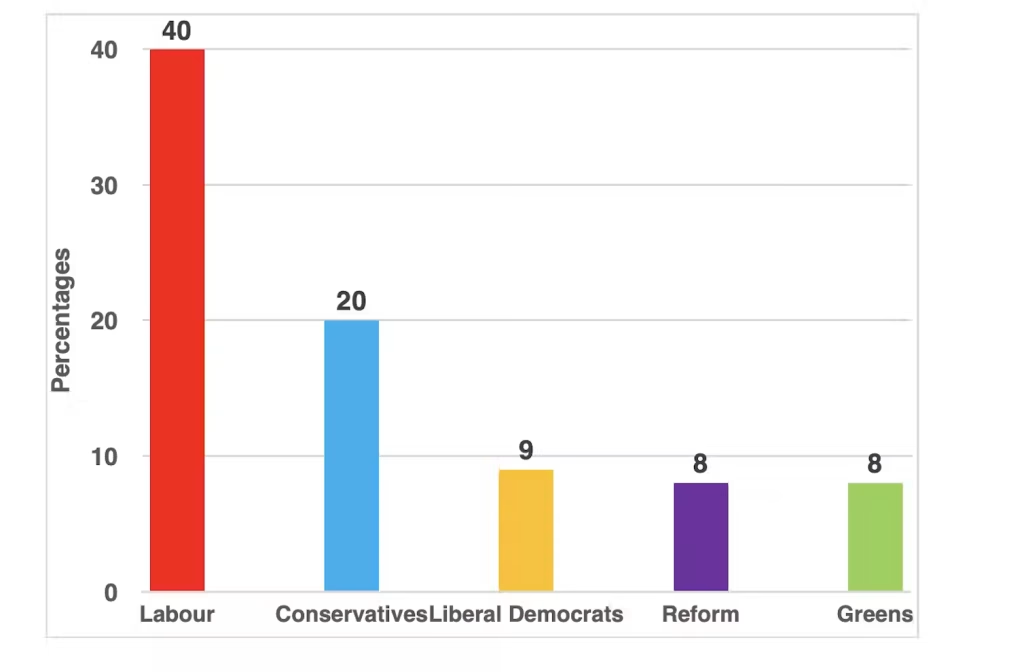
The survey asked respondents if they were members of a political party and a total of 1,191 said they were, making up 4% of all respondents. The chart shows the percentage shares of these members in each of the five national parties at that time.
Labour membership was twice as large as that of the Conservatives and they in turn were just over twice as large as the Liberal Democrats. Reform and the Greens had the same percentage of members.
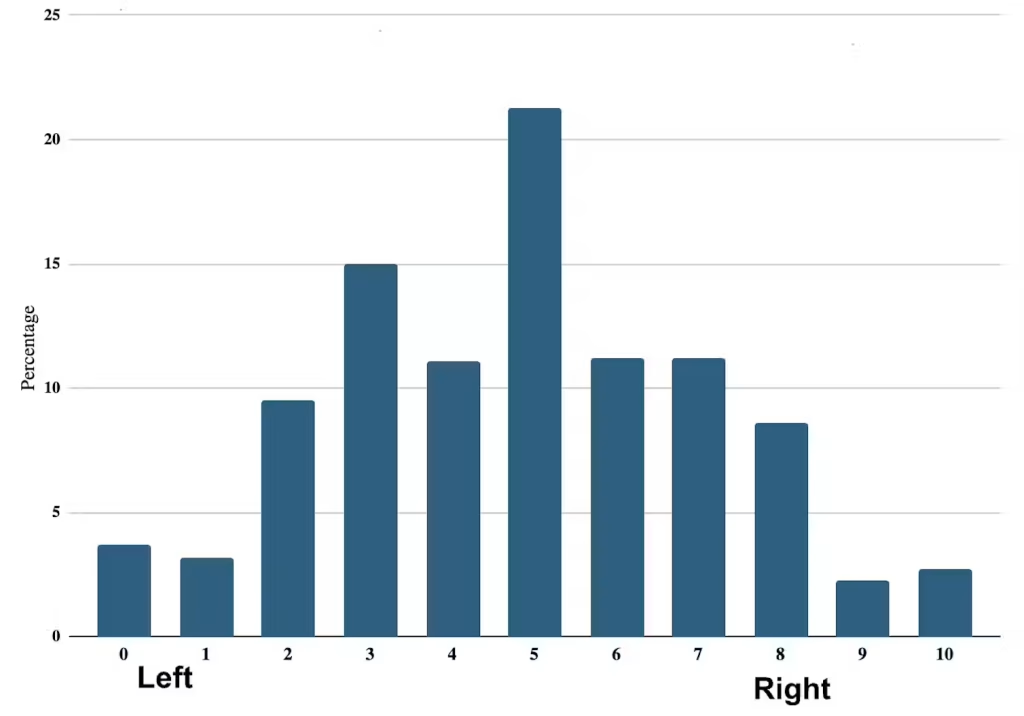
To judge whether party members were extreme in their views compared to the average population, we can use responses to a question which asked: “In politics people sometimes talk of left and right. Where would you place yourself on the following scale?” The scale runs from 0 (far left) to 10 (far right).
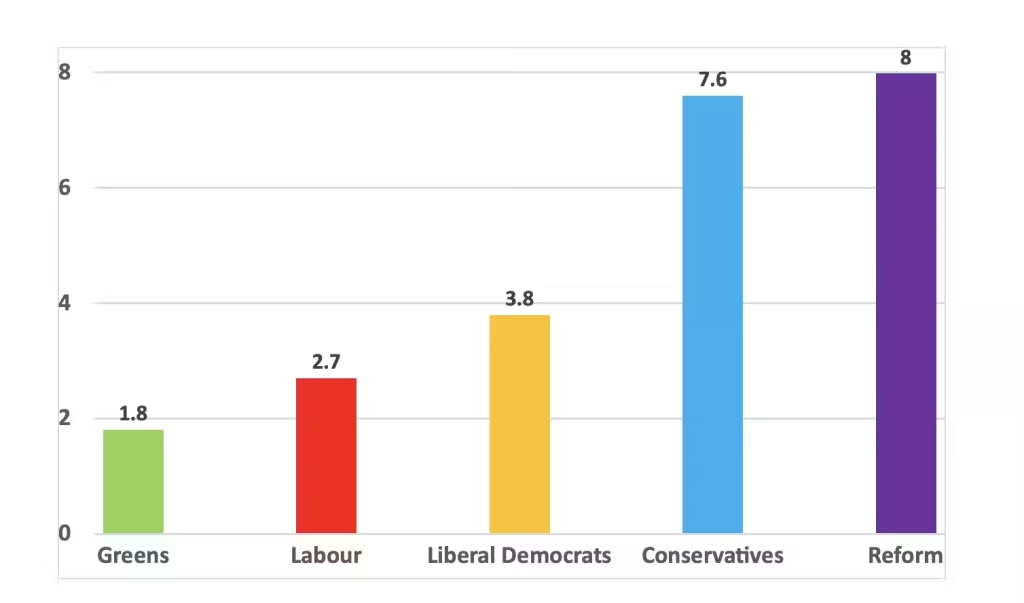
The third chart shows the scores of party members on this left-right scale. It shows that the Liberal Democrat members are closer to the voter mean of 4.8 than any other party. They have a score of 3.8. The second closest party is Labour on 2.7, followed by the Conservatives on 7.6.
The two clear outliers are the Greens on 1.8 who are well to the left of Labour and Reform on 8, which is well to the right of the Conservatives.
Political polarisation can weaken the relationship between ideology and voting because it flattens the distribution of voters on the left-right scale. It creates more extremists so that the distribution has fatter tails.
That said, the chart does not show large numbers of extremists in the British electorate, since the great majority of voters are clustered in the centre. This makes it unwise for any party to be too leftwing or rightwing – something which is likely to cause problems for both Reform and the Greens.
“Performance politics” also plays a role. This refers to the extent that incumbent parties deliver on their promises.
This has been a major problem for the Conservatives in the past and it is now affecting the Labour government. Voters want fast action to solve their problems, making this an issue for centre parties as much as for fringe parties.
Both Reform and the Greens have not had to struggle with delivery at the national level, although their recent successes in local government elections will provide evidence of this by the time of the next general election.
Overall Reform and the Greens should note that it is better to be close to what the electorate want than far away when voters start to look at what the parties are offering during an election campaign.
- Written by Paul Whiteley (Professor, Department of Government, University of Essex).
- This article first appeared in The Conversation. You can read the original here.