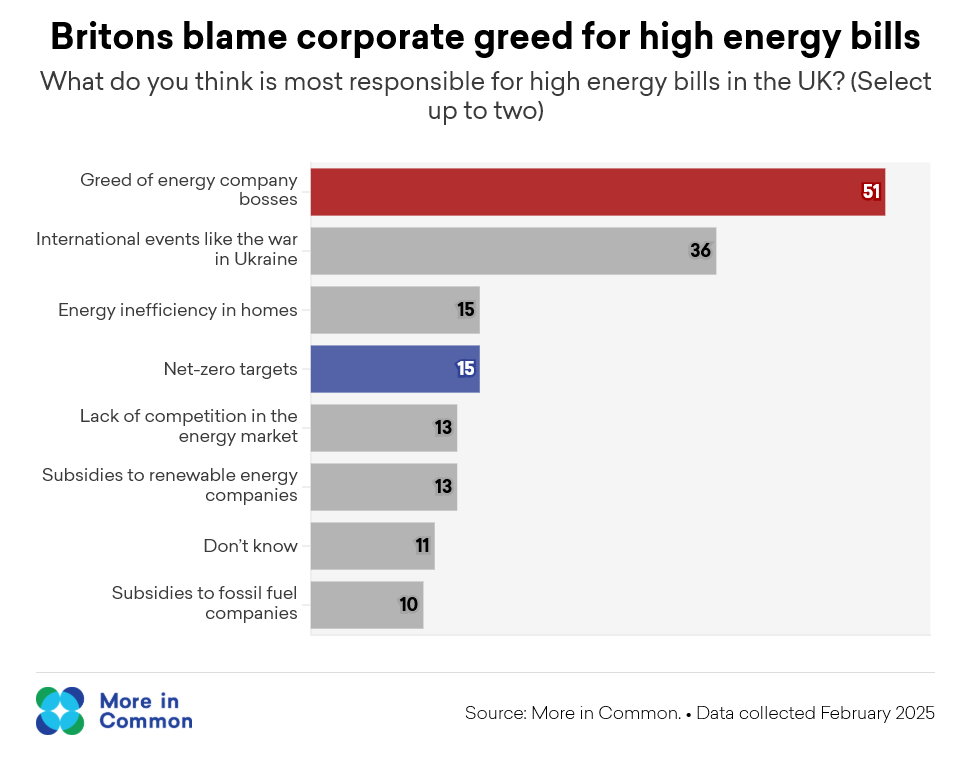
Brits blame greedy energy companies for rising bills


New polling data from More in Common shows that Brits blame corporate greed for the UK’s rising energy bills, not net zero initiatives.
The data shows that the public has little trust in both energy companies and the government, with the majority of those surveyed placing the blame for higher energy bills at the feet of greedy energy companies.
This held true for Labour, Liberal Democrat, and Reform UK voters, with only 15% of those polled blaming net-zero targets for soaring energy costs.
In fact, polling showed the public are generally in favour of renewables, with 40% stating they believed their energy bills would be cheaper if their energy came from renewable energy such as wind and solar, whereas only 17% believed energy would be cheaper if it was generated from oil and gas.
Despite this openness to renewable generation, the British public remains skeptical of energy companies’ motives, with many believing that renewable energy companies are pushing the climate agenda to receive huge profits.
Trust in government direction over climate change and energy policy is low, with 52% of those surveyed believing it is likely that governments delay action on climate change because they are influenced by fossil fuel lobbyists. Additionally, 53% of Brits polled believed big oil companies are secretly funding climate denial narratives to protect their profits.
All of these theories are more likely to be believed by people in financial difficulty, More in Common noted.
Those who said they are struggling financially were twice as likely to believe that electric car policies only exist to raise money for companies, and 9 percentage points more likely to say it is definitely true that renewable energy companies are pushing the climate agenda because they stand to make huge profits.
Only 26% of Britons think that the country’s climate policies have made a difference in tackling climate change and reducing emissions. This is despite the UK having reduced its emissions by 52% since 1990.
“This perception that Britain has made no progress risks driving a sense of hopelessness about tackling climate change, itself undermining support for transition and furthering the public’s belief that energy policy is designed around energy companies not the environment.”