London ranked one of the worst European cities for indoor mobile signal
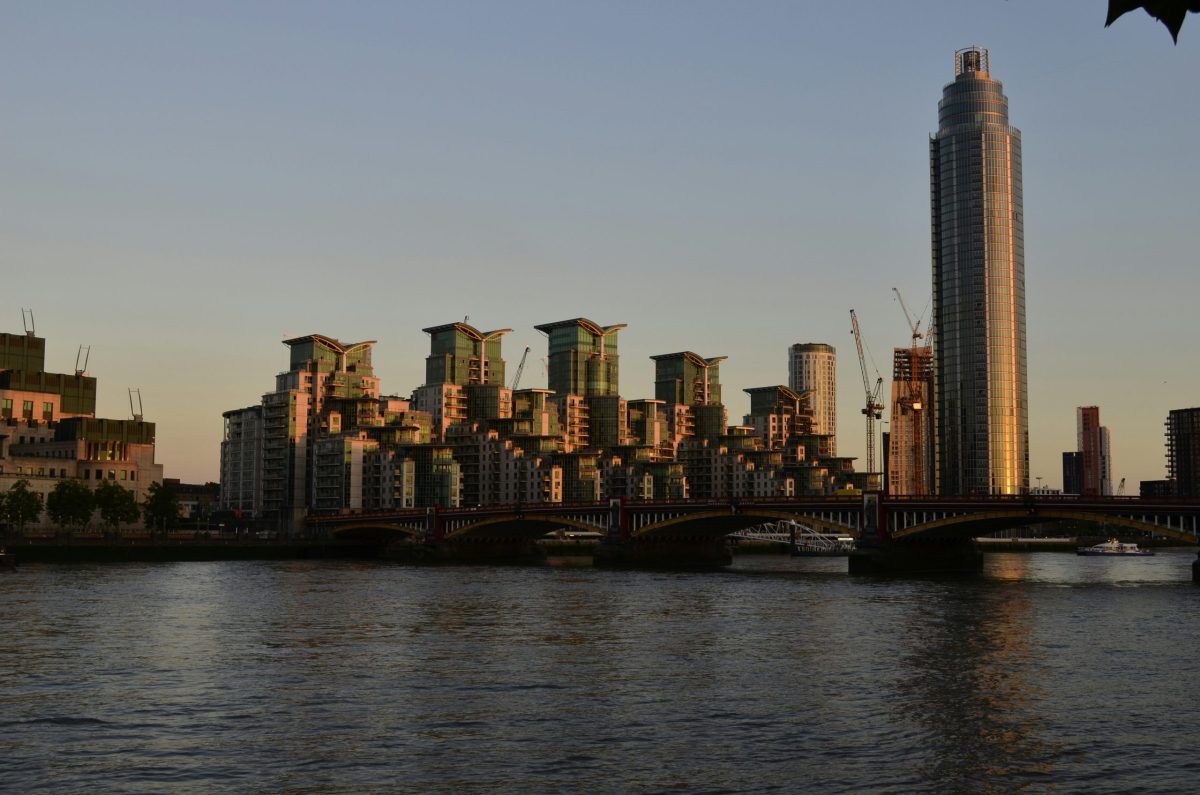

New research ranks London among the worst European cities for indoor mobile signal, with 4G dropping off inside a third of buildings in the city.
A study by speedtest platform Ookla looked at the falloff of mobile signal inside buildings in cities across the world, ranking which were the best and worst for indoor 4G signal.
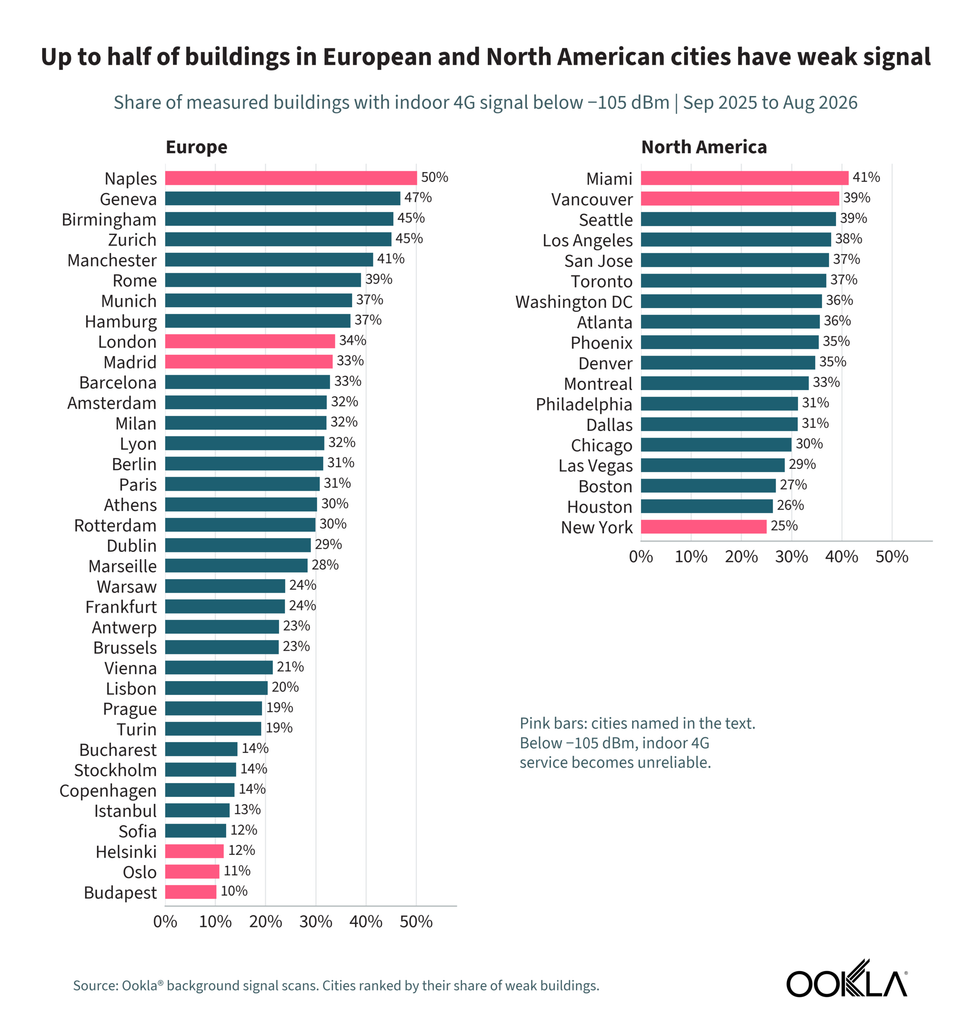
Cities were ranked by their share of measured buildings where indoor 4G signal fell below -105dBm. With a signal this weak, mobile connectivity becomes unreliable indoors.
London ranks in the top 10 for the proportion of measured buildings with weak indoor connectivity, with 34% of buildings recording 4G signal strengths below this threshold, just above Madid at 33%.
Topping the list is Naples, which recorded unreliable 4G signals inside 50% of measure buildings, while the cities with the best indoor 4G connectivity included Helsinki, Oslo, and Budapest.
Weaker signal strength reduces connection speeds, meaning that even if an indoor signal is above this defined threshold, it will likely perform worse than outdoors, especially in cities like London where indoor connectivity has been shown to be worse than many of its European counterparts.
The median mobile signal strength in London drops by 5dB when a handset moves indoors, which is a much larger deficit than many other cities, including New York, Bangkok, and Riyadh.
One of the biggest factors affecting the weakening of mobile signals indoors is the construction material of buildings in cities. Brick, stone, and concrete buildings are much more effective at blocking signals than those made from timber, which may explain the relatively poor performance of London’s indoor connectivity.
“Buildings in cold places tend to be better insulated, and insulation blocks more signal,” Ookla said.
“Measured by heating degree days, a standard gauge of how much heating a climate needs, cities in the coldest quarter lose a median 5.0 dB on moving indoors, against 3.4 dB in the warmest quarter.”
London, a relatively cold city with older buildings made from sturdy material, is therefore more likely to see poorer indoor mobile connectivity than cities like Tokyo, which are warmer and have more buildings made from lighter materials.
Indoor signal in central Tokyo is 7dB stronger than that in central London, Ookla found. Additionally, in buildings where smartphones spend most of their time connected to Wi-Fi, the indoor connectivity is generally slightly weaker than in those without heavily-used Wi-Fi connections.