Burnham says he will scrap the triple lock on pensions in 2030

Key Points
- Prime Minister Andy Burnham has confirmed that he reform the triple lock on state pensions.
- The pension triple lock ensures that state pensions increase by whichever is highest among inflation, average wage growth, or 2.5%.
- From April 2030, the state pension will continue to rise annually at least by price inflation or 2.5%, and assured that it would hold its value relative to earnings over time.
- Speaking at the Labour Party Conference, Burnham said he would consider reforming the mechanism to fund a new national care service.
- Burnham's speech focused on hope and honesty, noting that he would be honest about the sacrifices and hard conversations needed to make politics, and the country, work for everyone.
- He also announced his intentions on housing, energy, and water reform, alongside two key changes that will immediately impact the cost of living in the next six months.
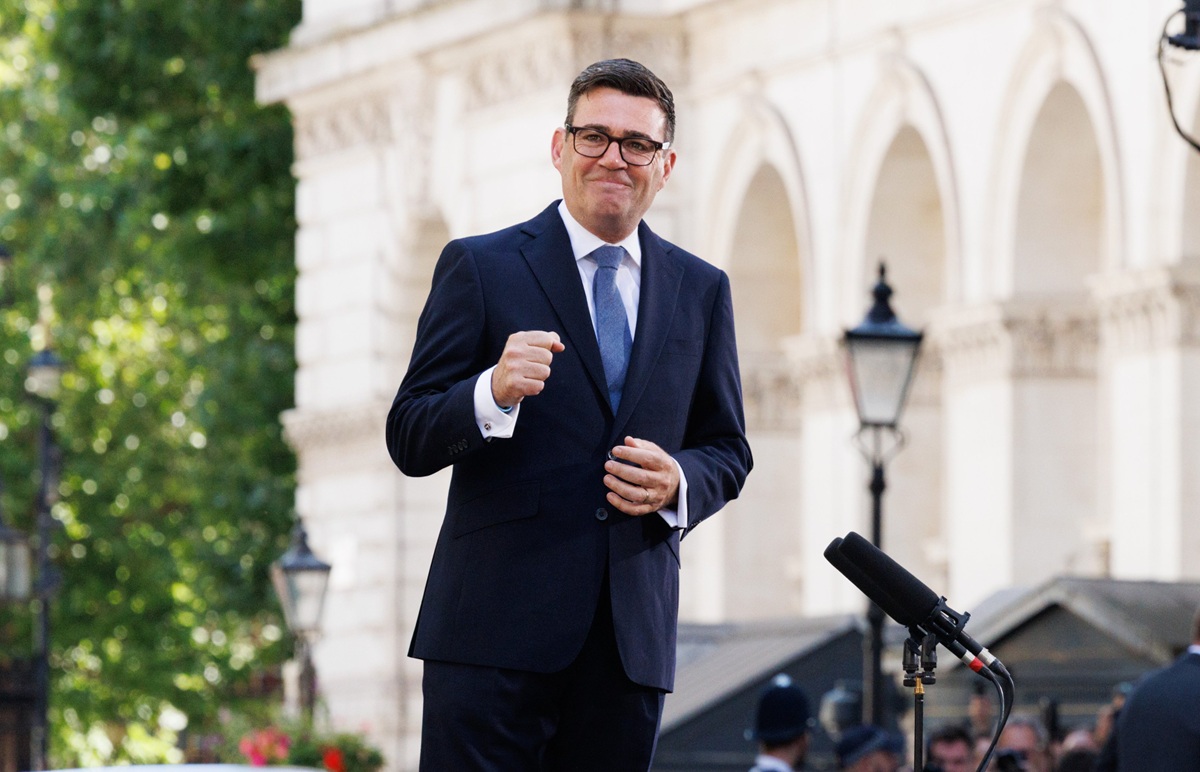
Prime Minister Andy Burnham has said that from April 2030, the triple lock on state pensions will be reformed to fund a new national care service.
Speaking at the Labour Party Conference in Liverpool on Tuesday (29 September), Burnham said that from April 2030, the triple lock would be changed to a new mechanism and the savings would fund a new National Care Service.
The pension triple lock ensures that the state pension increases every by whichever is highest among inflation, average wage growth, or 2.5%. Many have called for this mechanism to be revised in recent years as the cost of welfare increases while the UK’s population becomes older.
Burnham’s speech centred on the idea of delivering hope for people across the UK, and as part of this mission, he aimed to address the issues the country faces head-on and would remain honest with the public about what is needed to deliver change.
“Today we draw the line on a decade of division. We stop doomscrolling on posts running Britain down, and we put the country on a new path: Britain with belief again, people with hope again,” Burnham said.
“More of the same isn’t good enough – that’s why I feel I have to break the mold today.”
“Hope comes from honesty, and we will have hope again. But first, honesty – it comes from saying the things politicians usually avoid,” he said.
Reforming the state pension
Burnham said that it was time for a new social contract for the 21st century, and announced the creation of a National Care Service funded by reforming the triple lock.
“There is only one real answer: a person-centred high-quality care service that starts in the home. A system in the best traditions of this party where everyone contributes and everyone is covered.”
“Free at the point of use and no care charges paid out of your basic state pension. This is the National Care Service we will deliver,” he said.
“It will be fully funded and not through borrowing. I accept I may pay a political price, but someone has to go through the pain barrier and rip the plaster off.”
Burnham said that from April 2030, the state pension mechanism will be adjusted.
This keeps the manifesto commitment of retaining the triple lock this Parliament but ensures that the required reform is made to fund Burnham’s National Care Service.
From April 2030, Burnham said the state pension would continue to rise annually at least by price inflation or 2.5%, and he assured that it would hold its value relative to earnings over time. This will effectively turn the state pension mechanism into a double-lock, no longer tied to average earnings increases.
The savings generated by this pension reform would be used to help fund the new National Care Service, and that this would mean pensioners would not need to dig into their state pensions to pay for care.
A break with the past on housing and public ownership
Burnham’s speech also took aim at Thatcherism and privatisation, condemning the hollowing out of public services, the weakening of immigration controls and the economy caused by Brexit, and the shift in control to the private sector.
“I will say it straight: Britain has been on the wrong path for a long time. Deindustrialisation, deregulation, privatisation, austerity, Brexit – and what has it given us? A country run for vested interests, not in the public interest,” Burnham said.
“I am ready to do things my predecessors wouldn’t. The British right talk about taking back control. Never forget, they are the ones who gave it away in the first place.”
Burnham said that later this year, his government would publish a comprehensive plan of how it would take restore these services to acting in the public interest.
He said that his government would support the biggest public housebuilding programme in Britain’s recent history, with a focus on social housing that will last generations to come. Burnham pointed to new schemes to help young people get into their first home, as well as reform to the leasehold system coming later this year.
“This is the break we are making with the flawed thinking of the last 40 years – not seeing housing as a market with winners and losers, but as an essential everyone needs for a good life,” Burnham said.
Burnham also said a new Bill would be introduced to Parliament this year which would repeal what he said was “Margaret Thatcher’s ideological ban on the public ownership of water companies”, signalling the start of a journey towards taking public ownership of water companies and holding them to account.
He announced a new branch of Great British Energy called Great British Grid, which will be publicly owned and challenge private sector operators to help businesses get connected and grow more quickly.
“Energy, water, housing – back under stronger, public control. We rely on them, we pay for them, and once again we will have power over them,” Burnham said.
Key changes for cost of living
He also announced two key changes for cost of living relief that take effect soon.
From Thursday, Burnham said that VAT would be removed from consumers’ electricity bills, making it easier for them to cope with the rising cost of electricity.
Additionally, from January next year, bus rides will be capped at £2 everywhere across Britain.
“These things are not everything, but I hope you will see it as a sign of our intent to get your bills and fares down as you wait for the bigger changes to come,” Burnham said.